
The 1980s represent the golden age of arcade gaming, a transformative era when pixelated graphics, addictive gameplay loops, and competitive high-score chasing captivated millions worldwide. These machines weren’t just entertainment devices—they were cultural phenomena that defined an entire generation’s relationship with interactive media. From dimly lit arcade cabinets in shopping malls to the competitive esports scenes of today, the legacy of 80s arcade games continues to influence modern game design and inspire passionate retro enthusiasts.
Whether you’re a seasoned collector seeking nostalgic thrills or a curious newcomer exploring gaming history, understanding the top arcade titles of this era is essential. These games established fundamental design principles that remain relevant decades later, proving that exceptional gameplay transcends technological limitations. The innovations introduced in 80s arcades—from joystick responsiveness to pixel-perfect collision detection—laid the groundwork for everything we play today.
This comprehensive guide explores the most influential and entertaining arcade games that defined the 1980s, examining what made them special and why they remain beloved by the gaming community. Whether you’re interested in high-score challenges, timeless mechanics, or simply want to expand your retro gaming knowledge, you’ll discover why these titles earned their place in gaming history.
Pac-Man and Maze Runners
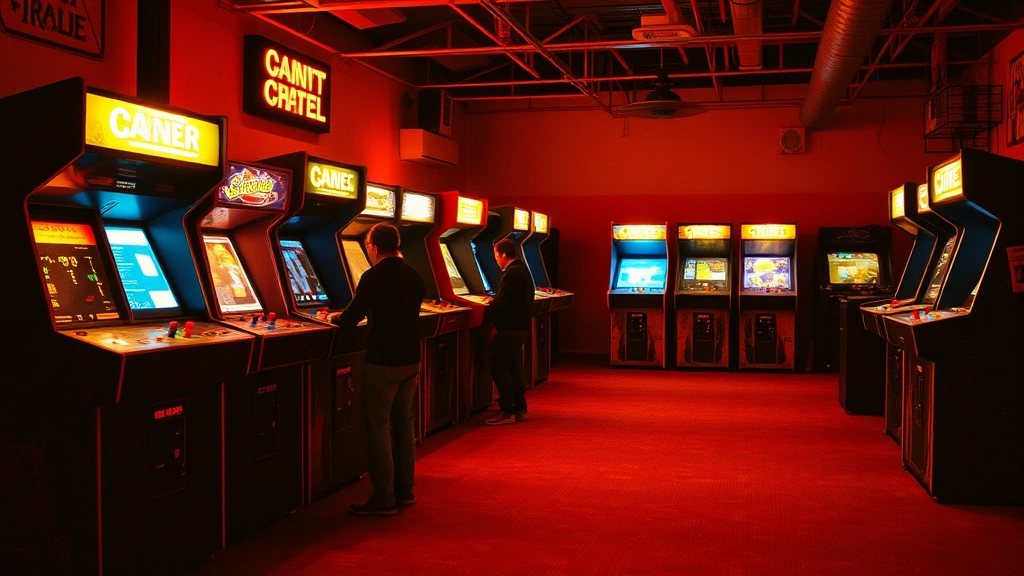
Pac-Man stands as perhaps the most iconic arcade game ever created, launching in 1980 and fundamentally changing the arcade industry. Developed by Namco, this deceptively simple game about a yellow character navigating mazes and consuming dots became a global sensation. The genius lies in its elegant design: intuitive controls, escalating difficulty, and the introduction of AI-driven ghost enemies with distinct personalities and behaviors.
The game’s cultural impact cannot be overstated. Pac-Man transcended arcades to become a legitimate pop culture phenomenon, spawning merchandise, cartoons, and even a novelty song that charted on the Billboard Hot 100. For gamers exploring the best single player games, Pac-Man represents the perfect single-player experience where mastering patterns and predicting enemy movement becomes meditative.
Maze Runner games flourished in Pac-Man’s wake. Ms. Pac-Man offered subtle improvements and feminine representation in gaming, while Dig Dug introduced digging mechanics that added strategic depth. Super Pac-Man expanded the formula with power-ups and keys, proving the genre had room for evolution. These games taught players that gameplay simplicity paired with strategic complexity creates lasting appeal.
Space Invaders Legacy
While technically released in 1978, Space Invaders’ dominance throughout the 1980s cannot be ignored. This groundbreaking title essentially created the shooter genre and demonstrated arcade gaming’s commercial potential. Players controlling a laser cannon at the screen’s bottom faced descending rows of aliens, with tension mounting as enemies accelerated their approach.
Space Invaders revolutionized arcade design by introducing the concept of high scores as primary motivation. Players weren’t just trying to beat a game—they were competing for bragging rights and immortality on leaderboards. This competitive element transformed arcades into social spaces where players gathered to witness impressive performances and attempt personal records.
The game’s influence spawned countless variations and imitators throughout the 80s. Galaga, Centipede, and numerous other shooters borrowed Space Invaders’ fundamental structure while introducing innovations. The alien descent mechanic became gaming language, referenced and remixed in countless titles. Understanding Space Invaders is essential for comprehending modern arcade design philosophy and shooter mechanics.
Donkey Kong and Platform Revolution
Donkey Kong (1981) marked Nintendo’s arcade breakthrough and introduced gaming’s most famous character: Mario (originally called Jumpman). This wasn’t merely a platformer—it was a revolutionary design that proved arcade games could tell stories through gameplay. Players navigated scaffolding while avoiding barrels and fireballs, rescuing a damsel in distress at the level’s apex.
The game’s brilliance emerged from its level design philosophy. Each stage presented unique challenges with escalating difficulty, teaching players new mechanics progressively. The famous kill screen at level 22, caused by a programming quirk, became legendary—a natural skill ceiling that challenged even master players. This created a compelling progression fantasy where dedicated players could theoretically achieve ultimate victory.
Donkey Kong’s success launched the platformer genre into prominence. Jumpman’s sequel, Mario Bros., evolved into the massively successful Super Mario Bros. franchise. For those interested in platform games’ evolution, exploring indie games for PC reveals how modern developers continue refining platformer mechanics established in the 80s arcade era.
Galaga and Shoot-Em-Ups
Galaga (1981) perfected the vertical shooter formula, improving upon Space Invaders with superior graphics, smoother controls, and innovative gameplay mechanics. The game introduced the “Challenging Stage” concept, where risk-taking players could earn bonus points by deliberately avoiding enemy fire. This design choice rewarded aggressive, skilled play while punishing passive survival strategies.
What distinguished Galaga was its enemy capture mechanic—certain enemies could abduct your ship, forcing players into desperate rescue missions. Successfully retrieving a captured ship granted temporary dual-fire capability, introducing risk-reward decision-making. These design innovations transformed shooter gameplay from simple point accumulation into strategic contests requiring pattern recognition and tactical thinking.
The vertical shooter genre exploded throughout the 80s with titles like Xevious, Dig Dug II, and Phoenix. Each iteration introduced novel mechanics: power-ups, weapon variations, environmental hazards, and complex enemy patterns. Japanese arcade manufacturers, particularly Namco and Taito, competed fiercely to innovate within the genre. This creative competition elevated arcade design standards and established Japan as the arcade industry’s dominant force.
Street Fighter and Fighting Games
Street Fighter (1987) launched the one-on-one fighting game phenomenon that would define arcade culture for decades. Developed by Capcom, this revolutionary title featured multiple playable characters, each with distinct fighting styles, special moves, and strategies. Players discovered that memorizing move combinations and understanding matchup dynamics created genuine competitive depth.
The innovation wasn’t merely technical—it was philosophical. Street Fighter proved that arcade games could support competitive multiplayer experiences rivaling traditional sports. Two players facing each other across an arcade cabinet became iconic imagery, symbolizing arcade gaming’s social nature. The game’s balance, responsiveness, and character variety created an esports foundation that persists today.
Street Fighter’s success spawned the fighting game genre explosion. Mortal Kombat, Fatal Fury, and King of Fighters franchises emerged, each adding innovations and cultivating passionate fanbases. If you’re interested in competitive gaming’s evolution, exploring cooperative gaming experiences shows how multiplayer concepts evolved from arcade foundations.
Centipede and Arcade Classics
Centipede (1980) represented early arcade innovation, featuring colorful graphics, intuitive controls, and addictive gameplay. Players controlled a small character at the screen’s bottom, shooting at a descending centipede that fractured into smaller segments upon impact. The game introduced mushroom obstacles that created strategic complexity—destroying mushrooms revealed paths while creating barriers.
What made Centipede remarkable was its accessibility combined with depth. Casual players could enjoy simple shooting mechanics, while serious competitors discovered advanced strategies involving mushroom placement, movement patterns, and enemy prediction. This dual-appeal design attracted diverse arcade audiences, proving that games needn’t choose between casual accessibility and competitive depth.
Other notable 80s arcade classics included Asteroids, Tempest, Robotron: 2084, and Defender. Each title contributed unique mechanics and design philosophies. Robotron’s twin-stick controls influenced decades of future game design. Defender’s side-scrolling perspective and enemy variety created memorable experiences. These games collectively established arcade design principles emphasizing responsive controls, clear visual feedback, and escalating challenges.
Collecting and Preserving Arcade History
Modern arcade enthusiasts face an exciting challenge: how to experience these classic games authentically. Original arcade cabinets command premium prices, with rare titles fetching thousands of dollars. Fortunately, emulation technology has democratized access, allowing anyone with a computer to experience arcade history. Popular emulators like MAME (Multiple Arcade Machine Emulator) preserve thousands of arcade titles with remarkable accuracy.
For those seeking authentic hardware experiences, arcade cabinet restoration has become a thriving hobby. Collectors source original cabinets, repair deteriorating components, and restore artwork and bezels. This community-driven preservation effort ensures that future generations can experience arcade gaming as originally intended. Many enthusiasts create custom arcade cabinets, combining modern convenience with retro aesthetics.
Legal considerations matter when preserving arcade games. While emulation exists in legal gray areas, numerous legitimate options provide official access to classic arcade titles. Nintendo Switch Online includes NES and SNES arcade titles, PlayStation offers arcade compilations, and Steam features various official arcade collections. Supporting these official releases ensures continued preservation efforts and respects original creators’ intellectual property.
For those building gaming setups, understanding PC build requirements helps determine whether modern hardware suits your arcade emulation needs. Most arcade games demand minimal processing power, making even modest systems perfectly adequate for retro gaming.
The arcade community thrives through speedrunning competitions, high-score tournaments, and shared passion for preserving gaming history. Online communities dedicated to specific arcade titles maintain active discussions, share strategies, and celebrate record-breaking performances. This sustained engagement demonstrates arcade games’ timeless appeal and their continued relevance within modern gaming culture.
Arcade preservation also extends to academic study. Universities and museums increasingly recognize arcade gaming’s cultural and historical significance. The Smithsonian Institution has featured arcade games in exhibitions, acknowledging their impact on interactive entertainment and American culture. This institutional recognition validates arcade gaming as legitimate historical artifacts worthy of preservation and study.
FAQ
What was the first arcade game ever made?
Pong (1972) is typically credited as the first commercially successful arcade game, though Computer Space (1971) predates it. However, Space Invaders (1978) launched the arcade industry’s explosive growth and commercial viability that defined the 1980s arcade boom.
Why are 80s arcade games still popular today?
80s arcade games succeeded through elegant design, addictive gameplay loops, and perfect difficulty balancing. These timeless principles transcend technological limitations. Modern players appreciate the pure, uncluttered game design that emphasizes skill and pattern recognition over graphics or narrative complexity. Additionally, nostalgia drives interest among players who grew up experiencing arcade culture firsthand.
Can I play 80s arcade games legally online?
Yes, numerous legitimate options exist. Official compilations are available on modern consoles, PC platforms like Steam host authorized arcade collections, and subscription services like Nintendo Switch Online provide access to classic arcade titles. These official channels support original creators and ensure legal, quality experiences.
What makes arcade games different from home console games?
Arcade games prioritized immediate accessibility, quick gameplay sessions, and continuous challenge escalation—designed to encourage repeat plays and coin insertion. Home console games typically offered longer narratives and different pacing. Arcade games’ design philosophy emphasized mastery through practice, while home games emphasized story progression.
How do I start collecting arcade cabinets?
Begin by researching specific games you love, then explore the collector community through forums and social media. Expect significant investment—original cabinets range from hundreds to thousands of dollars. Many enthusiasts start with custom-built cabinets combining emulation with authentic arcade aesthetics, offering more affordable entry points. Check our gaming news and reviews for recommendations on arcade preservation resources.
Which 80s arcade game is easiest for beginners?
Pac-Man offers the most accessible entry point with intuitive controls and straightforward objectives. The learning curve accommodates casual players while offering surprising depth for serious competitors. Ms. Pac-Man and Dig Dug provide similarly accessible experiences with unique mechanics worth exploring.