
Top Card Games for Two People: Expert Recommendations for Competitive Play
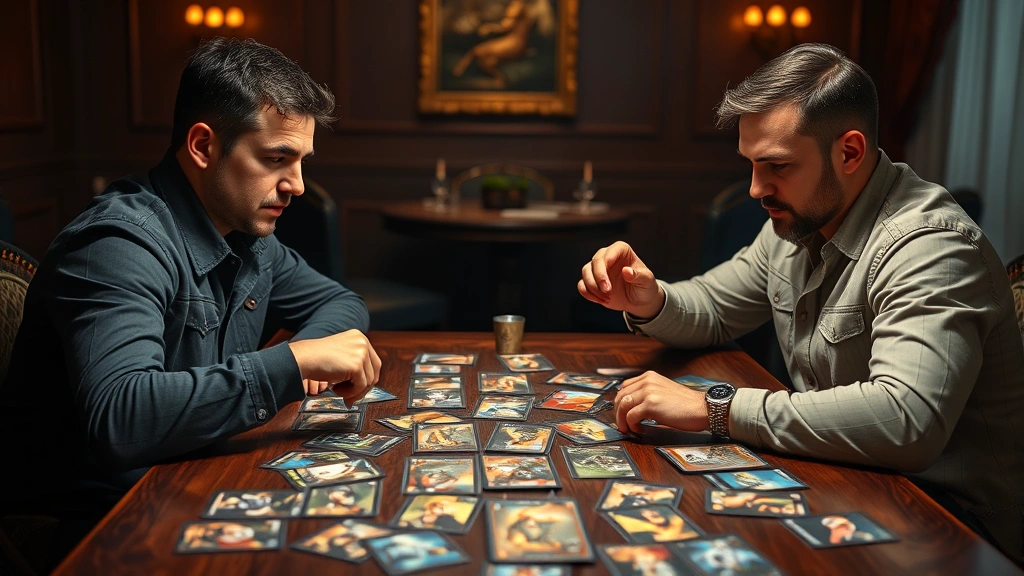
Card games have captivated players for centuries, and when it comes to two-player experiences, the options are absolutely phenomenal. Whether you’re looking for quick tactical duels, strategic masterpieces, or cooperative adventures, card games for two people offer an incredible variety of gameplay styles that rival any other gaming format. The intimate nature of head-to-head card gaming creates intense moments, meaningful decisions, and memorable victories that keep players coming back for more.
The beauty of two-player card games lies in their accessibility and depth. Unlike board games that often require lengthy setup or video games that need expensive hardware, card games deliver premium entertainment with minimal investment. You can enjoy them anywhere—at home, in cafes, during travel, or at gaming conventions. This guide explores the absolute best card games designed specifically for two players, featuring expert recommendations that cover everything from classic favorites to modern innovations that have revolutionized the genre.
Best Classic Card Games for Two Players
When discussing card games for two people, we must honor the classics that have entertained millions. Gin Rummy remains a timeless masterpiece of hand management and point optimization. Players draw and discard cards strategically, attempting to form sets and runs while minimizing unmatched cards. The psychological warfare involved—deciding which cards to discard and reading your opponent’s intentions—makes every hand engaging even after hundreds of plays.
Cribbage brings mathematical elegance to card gaming with its unique scoring system based on combinations, runs, and pairs. The cribbage board itself becomes a visual representation of the match’s progress, making victory feel more tangible. This game rewards both luck and skill, ensuring that even experienced players face unpredictability while newer players can still compete effectively.
War deserves mention as the simplest possible two-player card game, perfect for introducing children to card gaming fundamentals. Though entirely luck-based, its straightforward nature makes it ideal for young players learning game rules and turn-taking concepts. Veterans often modify War with additional rules to introduce decision-making elements.
Spit (also called Speed) combines luck with rapid reflexes. Both players simultaneously flip cards and race to play matching cards on center piles. The frantic pace creates exciting moments where quick thinking determines victory. Many gaming enthusiasts consider Spit the perfect warm-up game before longer, more cerebral card games.
Modern Strategy Card Games
Contemporary card game design has evolved dramatically, introducing sophisticated mechanics that appeal to serious gamers. 7 Wonders Duel stands as arguably the finest two-player strategy card game ever created. This civilization-building game features simultaneous card selection through a unique draft mechanism where players choose from an array of cards arranged in various formations. Each decision impacts both your civilization’s development and your opponent’s options, creating deeply interconnected gameplay.
The game brilliantly balances three victory paths: military dominance, scientific advancement, and cultural prestige. No single strategy guarantees success, forcing players to adapt and react to their opponent’s choices. With exceptional component quality and beautiful artwork, 7 Wonders Duel has earned recommendations from IGN and countless board game enthusiasts as the premier two-player strategy experience.
Jaipur delivers merchant trading excitement in a compact package. Players compete as traders in an Indian marketplace, collecting goods and negotiating their values strategically. The push-your-luck element—knowing when to cash in goods for points versus holding for better deals—creates thrilling tension. Each round plays quickly, but the strategic depth ensures meaningful decisions throughout.
Codenames Duels transforms the party game formula into a competitive experience perfect for two players. One player gives clues while the other guesses, then roles reverse. The asymmetrical gameplay creates moments where one player holds significant advantage, but clever clue-giving can shift momentum instantly. This game works wonderfully for couples or friends seeking cooperative elements within competitive frameworks.
Patchwork presents quilting as a surprisingly engaging competitive experience. Players collect fabric patches of varying shapes, sizes, and point values while managing a limited budget and timeline. The spatial puzzle element combined with resource management creates satisfying gameplay loops. Victory requires balancing immediate gains against long-term board control, making every action consequential.

Cooperative Card Games for Pairs
Not all card games for two people feature direct competition. Cooperative games where both players work together against the game itself create entirely different experiences. Pandemic stands as the gold standard for cooperative board and card games. The two-player version scales perfectly, presenting manageable challenges that still require careful planning and coordination.
Players take roles as disease-fighting specialists, traveling globally to treat outbreaks and discover cures. Communication and strategic planning separate victory from defeat. The game’s difficulty levels ensure that beginners face appropriate challenges while veterans encounter intense, nail-biting scenarios. The satisfaction of defeating Pandemic as a team creates bonding experiences that competitive games rarely achieve.
Hanabi revolutionized cooperative card gaming with its information-hiding mechanic. Players hold cards facing away, seeing their teammates’ cards but not their own. Through strategic clues using colors and numbers, players deduce their cards and play them in correct sequences. The limited clue tokens create scarcity that forces difficult decisions. Hanabi’s elegance lies in its simplicity—just cards and clues—yet the strategic depth rivals games with elaborate components.
If you enjoy cooperative gaming experiences, you should explore our guide on best co-op games on Steam, which covers digital alternatives and team-based adventures. Many principles from cooperative card games translate beautifully to digital platforms.
Forbidden Island offers lighter cooperative gameplay perfect for casual gaming sessions. Players work together to collect treasures from a sinking island before it disappears underwater. The escalating danger creates mounting tension as the island deteriorates. Though simpler than Pandemic, Forbidden Island maintains engaging decision-making and genuine challenge.
Fast-Paced Dueling Card Games
Players seeking quick, intense matches should explore dueling-focused card games. Magic: The Gathering remains the king of collectible card games, with formats specifically optimized for two-player play. The game’s incredible depth comes from deck construction—building cohesive strategies from thousands of available cards. Competitive Magic tournaments draw elite players worldwide, with GameSpot regularly covering major events and meta-game developments.
Magic’s learning curve intimidates some newcomers, but the core gameplay loop—casting spells, attacking with creatures, managing resources—remains intuitive. Starter decks allow new players to experience the game immediately, while competitive decks represent significant investments for serious players. The game’s rotating card pool ensures the meta-game evolves constantly, preventing stagnation.
Sushi Go delivers card drafting excitement in rapid rounds. Players select sushi cards simultaneously, building sets for points. The simple premise masks surprising strategic depth—reading opponents’ intentions, blocking their scoring opportunities, and timing your selections perfectly separates winners from losers. Multiple rounds ensure that early luck doesn’t guarantee victory.
Exploding Kittens combines Russian roulette mechanics with quirky humor. Players draw cards, attempting to avoid exploding kittens while deploying action cards strategically. The game’s chaotic nature makes it perfect for casual gaming, though experienced players develop sophisticated strategies around card counting and probability assessment. The artwork by The Oatmeal adds memorable personality.
Love Letter represents the absolute minimum in components—just sixteen cards—yet delivers maximum entertainment. Players deduce opponents’ cards through elimination, using special cards strategically. The deduction elements and bluffing opportunities create surprising depth from such minimalist design. Tournament play exists for serious Love Letter enthusiasts, proving the game’s competitive viability.
Deck-Building Card Games
Deck-building games represent a modern innovation where players construct their card collections during play. Dominion pioneered this genre, creating a template that countless games have followed. Players start with identical modest decks, then purchase cards from a shared market. Building powerful synergies between cards drives victory. Each game features different card combinations, ensuring variety across numerous plays.
The strategic decision-making in deck-building games surpasses traditional card games. Rather than playing fixed decks, you’re constantly optimizing and adapting your collection. Understanding which cards synergize, recognizing when to pivot strategies, and managing your deck’s consistency versus power creates incredibly engaging gameplay. Dominion’s numerous expansions provide tremendous variety for long-term players.
Star Realms delivers deck-building in a science fiction setting with beautiful starship artwork. Players purchase spaceships and bases, building fleets that attack opponents directly. The immediate player interaction—damaging opponents rather than just building scores—creates aggressive, exciting gameplay. Quick rounds mean players can easily play multiple matches in single sessions.
For players interested in narrative-driven experiences, check out our best story games guide, which explores how card games increasingly incorporate rich narratives. Many modern deck-builders weave storytelling throughout gameplay.
Legendary combines deck-building with cooperative Marvel superhero adventures. Players recruit heroes and fight supervillains threatening the world. The game scales perfectly for two players, providing appropriate difficulty and memorable moments. Hundreds of card combinations create unique scenarios across plays.
Card Games with Deep Lore
Some card games for two people feature rich fictional universes that enhance gameplay. Android: Netrunner presents asymmetrical hacking duels in a cyberpunk future. One player controls a hacker attempting to steal corporate secrets, while the other plays a megacorporation defending its servers. The asymmetrical roles create entirely different gameplay experiences for each side.
The game’s narrative depth comes through flavor text that reveals cyberpunk world details. Cards reference major factions, corporations, and characters populating this universe. Players invested in the lore find additional enjoyment discovering story connections between cards. Though the game’s publisher discontinued it, thriving communities continue supporting competitive play.
Flesh and Blood has emerged as a modern trading card game with exceptional lore depth. The game features heroes with distinct personalities, abilities, and story arcs. Each hero plays differently, encouraging diverse deck construction approaches. The game’s beautiful artwork showcases the world’s characters and environments gorgeously. Major tournaments and official support continue growing the competitive scene.
Keyforge revolutionized card games with procedurally generated unique decks. Every deck ever printed features a different card combination, eliminating pay-to-win concerns while ensuring no two games feel identical. The game’s alien creatures and mystical houses create fascinating worldbuilding. Players collect numerous unique decks, each becoming a collectible with individual character.
Our best indie games for PC article covers digital card games that explore creative storytelling, many of which inspired physical card game innovations. The relationship between digital and physical card games continues enriching both mediums.
Arkham Horror: The Card Game delivers cooperative horror storytelling through card-based mechanics. Players investigate supernatural mysteries, gathering clues while managing sanity and resources. Campaign play across multiple scenarios creates narrative continuity where earlier decisions impact future challenges. The game’s thematic integration—where card effects represent story events—creates immersive experiences.
FAQ
What’s the best card game for two beginners?
Sushi Go represents the ideal entry point for card gaming newcomers. The rules fit on a single page, gameplay is intuitive, and rounds complete quickly. Players immediately understand the core mechanic—selecting cards simultaneously—and can focus on strategy rather than rules comprehension. The game’s beautiful artwork and quick pacing keep new players engaged throughout.
Are there card games that work for both competitive and cooperative play?
Absolutely! Many modern games offer flexible difficulty settings or rule variants. Pandemic includes solo and competitive variants. 7 Wonders Duel exclusively serves two players competitively but pairs beautifully with cooperative communication. Some players create house rules transforming competitive games into cooperative experiences, though official variants generally provide better balance.
How much should I expect to spend on quality card games?
Quality two-player card games typically range from fifteen to sixty dollars. Classic games like Sushi Go cost around fifteen dollars and provide hundreds of hours of entertainment. More complex games like 7 Wonders Duel cost thirty-five to forty-five dollars but offer exceptional depth justifying the investment. Collectible card games like Magic represent larger ongoing investments as players build competitive decks, though starter sets allow affordable entry.
Can I play trading card games casually without competitive decks?
Yes! Most trading card games include casual formats and starter products designed for casual play. Magic: The Gathering offers Commander format which welcomes diverse deck power levels. Many gaming stores host casual play nights where competitive decks aren’t required. Casual gaming communities typically emphasize fun and social interaction over winning.
What’s the difference between card games and deck-building games?
Traditional card games use fixed decks that players bring to matches. Deck-building games feature shared card markets where players purchase cards during play, constructing their decks as the game progresses. Deck-building games emphasize strategic decision-making around card selection and synergy building, while traditional card games focus on playing fixed decks optimally.
Are there card games suitable for long gaming sessions?
Definitely! Games like 7 Wonders Duel, Arkham Horror: The Card Game campaigns, and Magic: The Gathering provide multi-hour entertainment. Campaign-based games like Arkham Horror span multiple sessions, creating ongoing narratives. For single-session marathons, consider playing multiple quick games like Sushi Go or Love Letter back-to-back, allowing players to track cumulative victories.
Where can I find gaming communities for card games?
Local game stores typically host card game nights and tournaments. Online communities exist on Reddit, Discord servers, and dedicated forums for nearly every card game. Many games have official tournament circuits with esports coverage for competitive players. Social media communities connect casual and competitive players worldwide.
Can I play these card games with digital versions?
Many card games have digital adaptations. Magic: The Gathering Arena allows free-to-play digital matches. Sushi Go has mobile versions. Arkham Horror and Dominion feature official digital releases. Digital versions provide convenience and instant matchmaking against global opponents, though some players prefer physical card interactions and social experiences.