
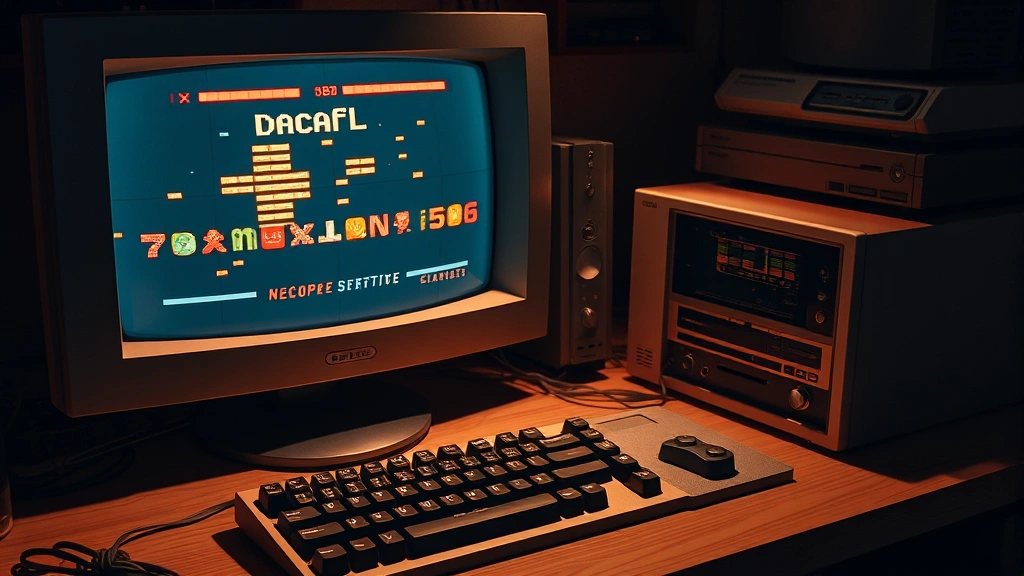
Early PC Games: Hidden Gems or Overrated? A Retro Review
The debate surrounding early PC games has raged for decades among gaming enthusiasts, and for good reason. When we look back at titles from the 1980s and 1990s, we find ourselves caught between nostalgia and honest critique. Were these games truly groundbreaking masterpieces that defined an entire medium, or have we simply romanticized them through rose-tinted glasses? The answer, as it turns out, is far more nuanced than a simple yes or no. Early PC gaming represented a wild frontier where innovation thrived, technical limitations sparked creativity, and developers took risks that modern studios rarely dare to attempt.
The personal computer revolution transformed gaming forever, offering players experiences impossible on consoles of the era. Games like Ultima, Wizardry, and King’s Quest weren’t just entertainment—they were pioneering experiences that established entire genres. Yet some titles that commanded shelf space in software stores have aged remarkably poorly, with clunky interfaces and obtuse design decisions that frustrate modern players. Understanding which early PC games deserve their legendary status and which ones merely benefited from being first requires a careful examination of their historical context, lasting influence, and actual playability today.
The Golden Age of PC Gaming
The 1980s and early 1990s marked what many consider the true golden age of PC gaming. Unlike console gaming, which was heavily restricted by hardware manufacturers and licensing agreements, PC gaming existed in a relatively open ecosystem. Independent developers could create ambitious projects without seeking corporate approval, leading to an explosion of creativity and experimentation. This period saw the birth of real-time strategy games, immersive first-person RPGs, and text-based adventures that captured imaginations through sheer narrative power rather than graphical prowess.
During this era, games weren’t designed around monetization schemes, battle passes, or engagement metrics. Developers focused on creating complete experiences that justified their purchase price through hours of compelling gameplay. The Game Forged Daily Blog has extensively documented this period, noting how early PC developers prioritized player agency and freedom over handholding tutorials and linear narratives. Titles like Deus Ex, Baldur’s Gate, and Planescape: Torment gave players genuine choices that affected outcomes, a philosophy that many modern AAA titles have abandoned in favor of cinematic linearity.
The accessibility of PC gaming also meant that bedroom coders and small teams could achieve what only well-funded studios could accomplish on consoles. This democratization of game development resulted in an incredible diversity of titles, from obscure text adventures to ambitious strategy games that pushed the boundaries of what computers could do. However, this also meant that quality control varied wildly—not every early PC game was a gem, and many were experiments that taught developers valuable lessons through spectacular failure.
Technical Limitations That Sparked Genius
One of the most fascinating aspects of early PC gaming is how technical limitations actually forced developers to be more creative. With limited RAM, processor speed, and storage capacity, developers couldn’t rely on brute-force solutions. Instead, they had to think cleverly about code optimization, elegant systems design, and meaningful gameplay mechanics that didn’t require flashy graphics to be engaging.
Consider the difference between early PC games and their modern equivalents. Games like Civilization and Master of Orion proved that turn-based strategy could be endlessly engaging without real-time action or 3D graphics. The beauty of these titles lay in their systems—how different mechanics interacted, how player decisions cascaded into unexpected consequences, and how the computer AI provided meaningful challenge without cheating. Modern strategy games often deliver superior graphics and more units on screen simultaneously, yet many players still prefer the strategic depth of these retro classics.
The constraint of limited visual fidelity also meant that early PC games had to excel at worldbuilding through text and atmosphere. Games like System Shock and The Secret of Monkey Island created immersive worlds through clever writing, sound design, and clever use of limited graphics. This approach often resulted in more imaginative worlds than games that could simply throw photorealistic graphics at the problem. When you couldn’t show everything, you had to make players imagine, and imagination remains gaming’s most powerful tool.
Understanding these technical constraints is crucial when evaluating whether early PC games are overrated or underrated. A game that seems simplistic by modern standards might represent an absolutely staggering achievement given 1990s hardware limitations. The best indie games for PC today often embrace similar constraints, proving that technical limitations don’t prevent brilliant game design.
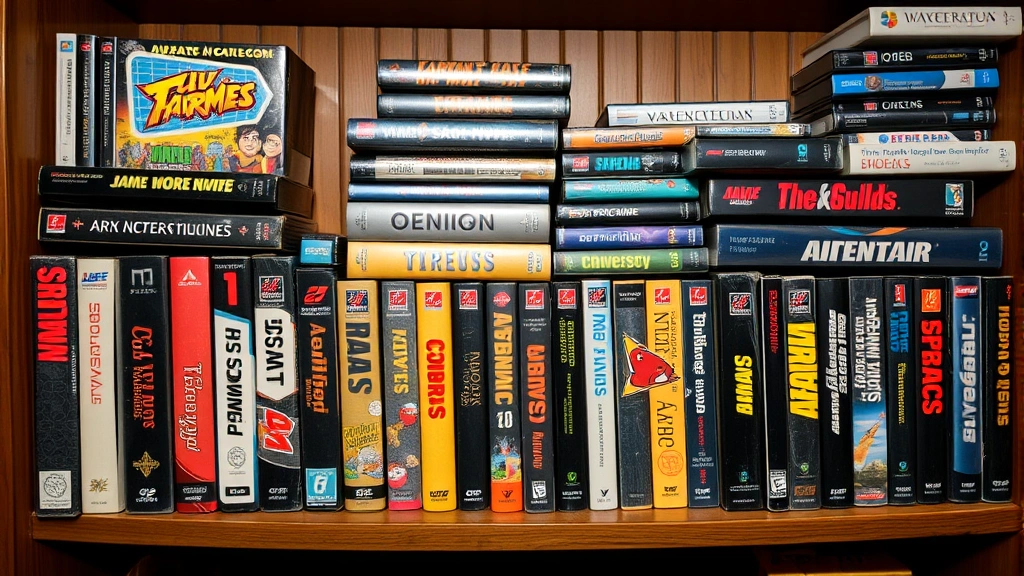
” alt=”Retro PC gaming setup with CRT monitor displaying classic game interface, mechanical keyboard, and vintage computer hardware” />
Genre-Defining Classics Worth Your Time
Separating genuine masterpieces from overrated nostalgia trips requires honest assessment of which early PC games actually remain playable and engaging today. Several titles absolutely deserve their legendary status and remain worthwhile experiences for modern players, though they may require patience and adjustment to dated interfaces.
Role-Playing Games: The early PC RPG renaissance, led by games like Baldur’s Gate and Planescape: Torment, established design principles that influenced every RPG released since. These games proved that computer RPGs could rival tabletop experiences in terms of storytelling, character development, and player agency. Enhanced editions have modernized these classics, making them accessible to contemporary audiences while preserving their essence. The depth of these games—where your character class, background, and choices genuinely matter—contrasts sharply with many modern RPGs that prioritize spectacle over substance.
Strategy Games: Civilization and its sequels remain engaging even today, a testament to how excellent core mechanics transcend technical limitations. The “one more turn” addiction these games create stems from brilliant systems design rather than flashy graphics. Real-time strategy games like StarCraft proved that PC gaming could deliver competitive, skill-based gameplay that remained relevant for decades. Checking out the best co-op games on Steam reveals how modern titles still use design principles established by early PC strategy games.
Adventure Games: Point-and-click adventure games like The Day of the Tentacle, Grim Fandango, and Full Throttle created narratives and characters that rivaled film and literature. These games proved that interactive storytelling could achieve emotional depth impossible in other media. While their puzzle design sometimes bordered on obtuse, their writing, voice acting, and artistic vision remain exceptional. The recent revival of adventure games proves that these classics’ appeal wasn’t merely novelty.
First-Person Shooters: Doom and Duke Nukem 3D didn’t just popularize the FPS genre—they essentially invented the template that modern shooters still follow. Playing these games today reveals why they were revolutionary: responsive controls, level design that encouraged exploration, and gameplay that remained fun long after the novelty wore off. While Doom especially remains playable, some other early shooters haven’t aged as gracefully.
Overhyped Titles That Haven’t Aged Well
Not every early PC game deserves reverent treatment, and honest retrospectives must acknowledge which titles have aged poorly. Several games that commanded enormous attention and resources have become nearly unplayable by modern standards, not because of graphics alone, but because of design decisions that don’t hold up to scrutiny.
Obtuse Puzzle Design: Some adventure games from the era featured puzzle logic that made sense only to the developers. Adventure game communities became necessary because players had no way to intuitively solve certain puzzles without external help. While this created community engagement, it also meant that solo players faced frustration rather than satisfaction. Modern adventure games learned from these mistakes, creating puzzles that challenge without resorting to illogical leaps.
Clunky User Interfaces: Many early PC games featured interfaces that required reading manuals and memorizing keyboard shortcuts. While part of this reflected the era’s design philosophy, some games simply had poor UX that made them tedious to play. Games that prioritized realistic simulation over intuitive control schemes often became exercises in frustration. Modern games understand that interface clarity enhances rather than diminishes challenge.
Repetitive Gameplay: Some titles that seemed innovative in 1990 reveal themselves as repetitive when played for extended periods today. Technical limitations sometimes resulted in games that reused assets and scenarios excessively. What seemed acceptable then—grinding through identical enemy encounters or navigating repetitive dungeons—feels like padding now. The limited game libraries of the era meant players tolerated repetition that modern audiences would reject immediately.
Artificial Difficulty: Several early games compensated for limited content by using artificial difficulty spikes, instant-death scenarios, and trial-and-error gameplay. These weren’t examples of challenging design but rather design laziness. Players without save-scumming capabilities had to replay significant portions when hitting unexpected difficulty walls. Modern understanding of difficulty curves has shown that genuine challenge differs fundamentally from cheap difficulty.
Why Emulation and GOG Matter Today
The ability to play early PC games today owes much to emulation and digital distribution platforms that preserve these titles. GOG (Good Old Games) has become essential for accessing early PC games, offering them with compatibility layers that make them playable on modern systems. Without these preservation efforts, an entire era of gaming history would become inaccessible as hardware became obsolete.
Emulation raises interesting questions about how we evaluate early PC games. Playing a game through emulation with save-states, rewind functionality, and resolution upscaling provides a different experience than the original release. This isn’t necessarily negative—modern players shouldn’t suffer through archaic technical limitations to experience a game’s core content—but it’s important to acknowledge that what we’re playing isn’t identical to the original experience. The gaming PC build guide discusses how modern hardware has changed gaming entirely, making historical preservation increasingly important.
Digital distribution has also enabled a more honest assessment of early PC games. When these games were new, limited distribution meant only dedicated players experienced them. Now, anyone can try classics easily, allowing for more comprehensive evaluation of their actual quality versus their historical significance. This broader access has revealed some games to be genuine masterpieces and others to be historically important but not particularly fun by contemporary standards.
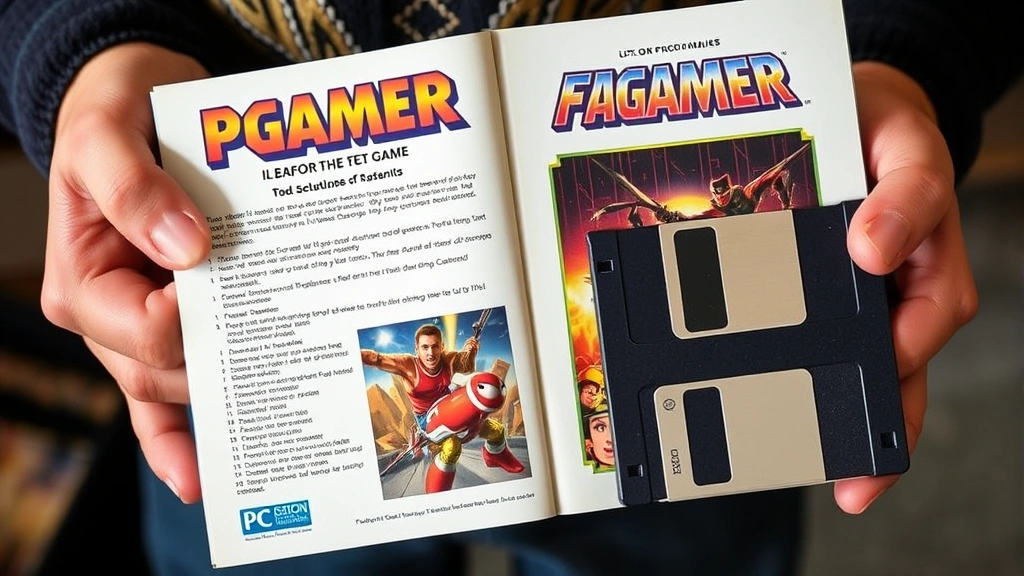
” alt=”Vintage PC gaming collection featuring colorful game boxes and manuals arranged on wooden shelf with nostalgic lighting” />
The Legacy That Still Influences Modern Games
Whether we consider early PC games hidden gems or overrated artifacts, their influence on modern gaming remains undeniable. Nearly every game genre and design principle we recognize today originated during this era. Understanding this legacy provides context for evaluating these games fairly.
Genre Foundations: Real-time strategy, turn-based strategy, immersive sims, point-and-click adventures, roguelikes, and many other genres were essentially invented on early PCs. Games that pioneered these genres deserve credit even if specific examples haven’t aged perfectly. The design principles established by StarCraft, Civilization, Deus Ex, and The Secret of Monkey Island remain foundational to how developers think about game design.
Player Agency: Early PC games, freed from console manufacturers’ restrictions, pioneered the idea of player choice mattering mechanically and narratively. This philosophy influenced modern games like The Witcher 3 and Baldur’s Gate 3, which prioritize meaningful player agency over linear storytelling. The emphasis on player freedom that characterized the best early PC games represents a design philosophy that modern AAA gaming has largely abandoned in favor of cinematic control.
Modding and Community: Early PC games established the culture of modding and community-created content that remains vibrant today. Games like Doom and Quake spawned incredible modding communities that extended game lifespans indefinitely. This approach to games as platforms rather than finished products influenced everything from Skyrim to Minecraft, proving that player creativity remains gaming’s most valuable resource.
The question of whether early PC games are hidden gems or overrated misses the point. Some are undeniable masterpieces that remain engaging today, others are historically important but technically dated, and some were never particularly good in any era. What matters is that these games collectively shaped modern gaming and deserve evaluation on their own terms rather than through nostalgia or dismissal.
FAQ
Are early PC games worth playing in 2024?
Absolutely, but selectively. Genuine masterpieces like Baldur’s Gate, Civilization, and Deus Ex remain engaging with modern enhancements. Many others benefit from understanding their historical context but may frustrate players expecting modern conveniences. Start with enhanced editions or ports that modernize controls and interfaces while preserving core gameplay.
What’s the best way to play classic PC games today?
GOG offers the most convenient approach, providing games with compatibility layers that handle modern system issues. For more technical options, emulation provides greater control but requires more setup. Avoid piracy—legitimate preservation services ensure these games remain accessible legally. The how to record gameplay on PC guide includes information about capturing these classic experiences.
Why do some early PC games feel so dated?
Technical limitations of the era influenced design in ways that don’t translate well to modern sensibilities. Obtuse puzzle design, clunky interfaces, and artificial difficulty were sometimes necessary given hardware constraints but feel arbitrary now. However, the best games from this era transcended these limitations through brilliant core design that remains compelling today.
How did early PC games influence modern gaming?
Nearly every genre and design principle in modern gaming originated with early PC titles. Real-time strategy, immersive sims, complex RPGs, and the entire concept of player choice mattering mechanically were pioneered on PC. The modding culture, emphasis on player agency, and approach to games as platforms rather than finished products all trace directly to this era.
Which early PC games are most overrated?
Games that relied heavily on obtuse puzzle design or artificial difficulty haven’t aged well. Some adventure games became more about trial-and-error than clever puzzle-solving. While historically important, titles that prioritized simulation complexity over intuitive interface design often frustrate modern players. However, “overrated” depends on evaluating them fairly within their historical context rather than by contemporary standards.
Can early PC games compete with modern titles?
In different ways, yes. While modern games excel at graphics, audio, and technical presentation, many early PC games offered deeper systems, more player agency, and more imaginative worldbuilding than contemporary AAA titles. The best approach treats them as different experiences rather than direct competitors. A game like Planescape: Torment offers narrative and choice depth that most modern RPGs don’t match, even if its graphics are dated. Understanding what is cloud gaming reveals how preservation and accessibility of these classics remains important as gaming infrastructure evolves.