
Tipsy Land Board Game: Expert Strategy Guide
Tipsy Land is one of the most entertaining party board games designed for adult gatherings, combining strategic gameplay with hilarious drinking mechanics that keep everyone engaged throughout the night. Whether you’re a seasoned board game enthusiast or discovering this gem for the first time, mastering the strategies and nuances of Tipsy Land can dramatically improve your chances of victory while maximizing the fun factor at your table.
This comprehensive guide explores everything you need to know about Tipsy Land, from fundamental rules and game mechanics to advanced tactics that separate casual players from champions. We’ll break down winning strategies, optimal player positioning, resource management techniques, and psychological gameplay elements that give you a competitive edge. By the end of this guide, you’ll understand how to navigate the whimsical world of Tipsy Land with confidence and finesse.
Game Overview and Setup
Tipsy Land is a party board game that combines traditional board game mechanics with drinking challenges, making it perfect for adult game nights. The game typically accommodates 2-8 players, though it’s most enjoyable with 4-6 participants. Each player navigates a whimsical game board filled with various spaces, challenges, and opportunities to advance toward victory.
The game board features different colored zones, each with unique rules and challenge types. Players move around the board based on dice rolls or card draws, depending on the specific version you’re playing. The objective is straightforward: reach the end of the board first while completing challenges and collecting victory points along the way.
Setup is remarkably simple. Place the game board in the center of your playing area where all participants can see it clearly. Distribute player tokens to each participant, ensuring everyone has a distinct color or identifier. Shuffle the challenge deck and place it within reach of all players. Prepare your beverages—this is crucial for the Tipsy Land experience—and ensure everyone has their drink of choice ready. Set up the dice roller or card draw mechanism, and you’re ready to begin.
Before starting, establish ground rules about participation. While Tipsy Land is designed as a drinking game, make sure everyone at the table is comfortable with the drinking elements. Non-drinkers can participate with non-alcoholic beverages, and players can always opt to take alternative challenges instead of drinking-related ones. This inclusive approach ensures everyone has fun regardless of their beverage preferences.
Core Mechanics Explained
Understanding the core mechanics of Tipsy Land is essential for developing effective strategies. The game operates on a turn-based system where players take actions in sequential order around the table. On your turn, you typically roll the dice to determine how many spaces you advance on the board.
When you land on a space, you trigger whatever effect or challenge is associated with that location. Spaces can contain drinking challenges, trivia questions, dares, mini-games, or special rule modifications. Some spaces offer bonuses like extra moves or immunity from challenges, while others present penalties or mandatory drinking rounds.
The challenge system is the heart of Tipsy Land. Challenges vary widely and might include physical tasks, memory games, creative challenges, or social dares. Completing a challenge successfully often rewards you with points, bonus moves, or special advantages. Failing a challenge typically results in drinking penalties or movement setbacks.
Resource management plays a subtle but important role in Tipsy Land. While it’s not a resource-heavy game like strategy board games, managing your hydration, energy levels, and mental sharpness as the game progresses becomes strategically relevant. Players who pace themselves effectively maintain their competitive edge longer than those who burn out early.
Victory points accumulate throughout the game through various mechanisms: completing challenges, reaching certain board positions, winning mini-games, or collecting special cards. The player who reaches the end of the board with the most victory points wins. This dual-victory condition—both reaching the finish and accumulating points—creates interesting strategic decisions about whether to prioritize speed or point accumulation.
Strategy Fundamentals
Successful Tipsy Land play begins with understanding fundamental strategic principles that apply across all game situations. The first principle is pacing awareness. Since this is a drinking game, maintaining consistent energy and mental acuity throughout the game is crucial. Don’t exhaust yourself early; instead, adopt a sustainable approach that keeps you competitive through the final rounds.
The second principle involves challenge selection and risk assessment. Not all challenges are created equal. Some challenges favor certain player types—physical challenges might favor athletic players, while trivia challenges favor knowledgeable players. Assess your strengths and weaknesses, and when you have the option to choose challenges, select ones that play to your advantages.
Third, understand board position advantage. Being ahead on the board isn’t always better than you might think. In some versions of Tipsy Land, trailing players receive bonus moves or easier challenges, while leading players face increased difficulty. Sometimes strategically falling behind can position you for a late-game surge to victory. Study your specific game version’s rules to understand these dynamics.
Fourth, develop psychological awareness. Tipsy Land is as much a social game as a competitive one. Pay attention to other players’ energy levels, drink consumption, and mental state. This information helps you anticipate who poses the greatest threat and when certain opponents might be vulnerable to challenges.
Fifth, master dice management psychology. While dice rolls are random, how you react to outcomes influences table dynamics. Celebrate others’ successes genuinely, handle your losses gracefully, and maintain enthusiasm regardless of current board position. Players who maintain positive energy often find opponents more willing to make favorable trades or challenge selections.
If you enjoy party games like Tipsy Land, you might also appreciate exploring our best co-op games on Steam ultimate 2024 guide, which features other excellent social gaming experiences for groups.
Advanced Tactics
Once you’ve mastered the fundamentals, advanced tactics separate elite players from casual participants. The first advanced tactic is calculated risk-taking. Identify moments when taking a risky challenge with potentially high rewards makes mathematical sense. If you’re trailing significantly with few turns remaining, conservative play guarantees defeat. Instead, seek high-risk, high-reward challenges that could dramatically shift the game state in your favor.
The second advanced tactic involves challenge trading psychology. When you can negotiate or trade challenges with other players, use this to your advantage. Offer to take challenging challenges in exchange for future favors, or propose trades that seem fair but actually benefit you disproportionately. Build a reputation as a fair trader so opponents accept your proposals without excessive scrutiny.
Third, employ momentum management. Winning consecutive challenges builds confidence and psychological advantage. Losing streaks work oppositely. When you’re on a winning streak, maintain aggressive play to capitalize on positive momentum. When losing, deliberately slow your pace and reset mentally before resuming competitive play.
Fourth, master table reading and prediction. Experienced Tipsy Land players develop the ability to predict challenge types before they’re revealed. Observe patterns in challenge distribution, remember which challenges have appeared recently, and anticipate what’s likely to come next. This prediction ability lets you make informed decisions about whether to advance quickly or stall your movement.
Fifth, use alliance building tactically. In multiplayer games, subtle alliances can emerge. Without explicit collusion, you might naturally help certain players while hindering others. If one player is running away with victory, other players often unconsciously make decisions that help slow that player down. Understanding and leveraging this natural dynamic can dramatically improve your chances.
Finally, develop challenge-specific expertise. If Tipsy Land includes trivia challenges, study common trivia categories. For physical challenges, practice relevant movements. For dares, develop clever responses. Being exceptionally skilled at certain challenge types gives you confidence and actual advantages when facing those challenges.

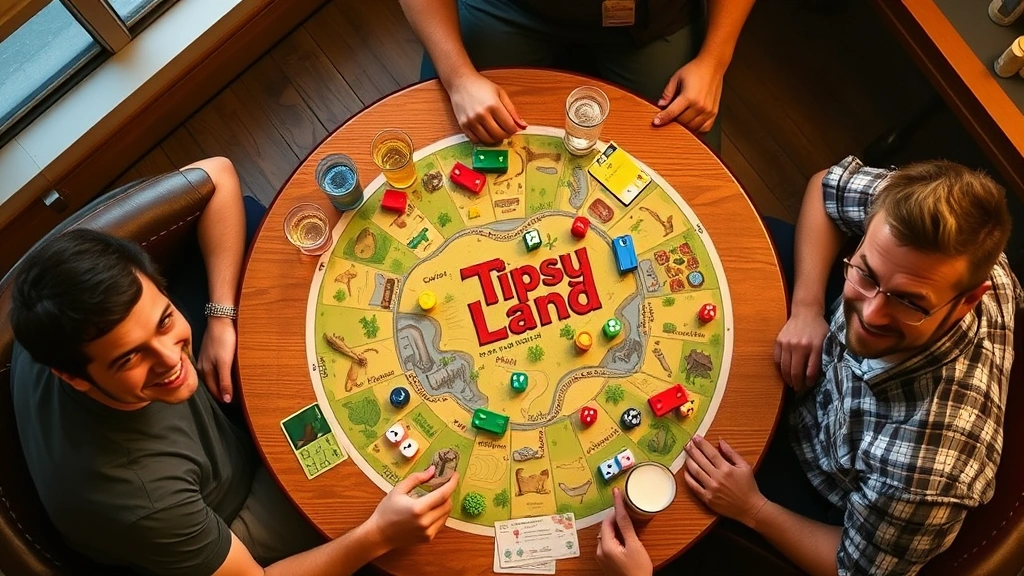
” alt=”Players gathered around Tipsy Land board game during evening game night, showing engaged expressions and casual seating arrangement, with game pieces and dice visible on the board”>
Player Dynamics and Psychology
Tipsy Land’s unique appeal stems partly from the psychological and social elements that emerge during gameplay. Understanding these dynamics significantly enhances your strategic approach. The first dynamic is social pressure management. As players consume beverages throughout the game, social inhibitions decrease, making people more willing to accept dares or complete silly challenges. Use this knowledge—challenges that seem unreasonable early in the game become acceptable later.
The second dynamic involves target selection. Observant players notice that certain individuals become targets for challenges or dares. Sometimes this targeting is based on perceived weakness, sometimes on friendships or rivalries. If you become a primary target, adjust your strategy accordingly. Conversely, if you’re not being targeted, use that to your advantage by accumulating points quietly.
Third, recognize energy level variance. As the game progresses, players experience different energy trajectories. Some maintain enthusiasm throughout, while others fade. Identify who’s fading and who’s surging, then time your aggressive play accordingly. Push hard when your energy is highest and opposition is lowest.
Fourth, understand competitive shift psychology. Early in games, players often cooperate and make suboptimal moves for entertainment value. As victory becomes possible, competition intensifies. Recognize this shift and adjust from entertainment-focused play to victory-focused play at the right moment.
Fifth, leverage expectations and surprise. If you’ve been playing conservatively, suddenly becoming aggressive surprises opponents and disrupts their strategic calculations. Conversely, if you’re known as aggressive, occasionally playing conservatively can throw off their planning. Strategic unpredictability provides genuine advantage.
Winning Strategies by Position
Your starting position and current board position significantly influence optimal strategy. Players beginning in early positions should prioritize accumulating victory points through challenge completion rather than pure board advancement. You have time to make up distance later, so focus on building a point advantage that opponents struggle to overcome.
Players in middle positions enjoy the most flexibility. You’re not so far ahead that you’re a target, nor so far behind that you’re desperate. Use this to your advantage by playing conservatively while building relationships with both leading and trailing players. Position yourself as a potential ally to whoever seems likely to win.
Players in trailing positions should embrace aggressive play. You have little to lose and everything to gain. Seek high-risk challenges, make bold moves, and don’t worry about conservative strategy. Your only path to victory involves dramatic board position changes, so pursue aggressive tactics relentlessly.
When you’re leading the board, shift to a defensive, point-accumulation strategy. Accept fewer risks, focus on completing reliable challenges, and avoid situations where lucky opponents could catch up. Your goal is maintaining your lead while quietly accumulating points that secure victory even if someone overtakes your board position.
When trailing significantly, assess whether you can realistically catch up. If victory seems impossible, shift your mindset to playing for fun and helping determine who wins among the remaining contenders. This mental shift actually improves your play by removing pressure and allowing you to make better tactical decisions.
Common Mistakes to Avoid
Even experienced players make preventable mistakes in Tipsy Land. The first mistake is overcommitting to drinking. Remember, the goal is winning the game, not consuming the most beverages. Pace yourself strategically, and don’t feel pressured to drink excessively just because it’s a drinking game. Your mental sharpness directly impacts your competitive performance.
The second mistake involves ignoring other players’ progress. New players often focus exclusively on their own board position while ignoring what others are doing. Successful players constantly monitor all opponents’ positions, point totals, and momentum. This awareness prevents being surprised by sudden victories or dramatic position shifts.
Third, avoid challenge selection paralysis. When you have choices, don’t spend excessive time deliberating. Make decisions confidently and move the game forward. Lengthy deliberations slow the game’s pace and frustrate other players, while quick decisions maintain momentum and demonstrate confidence.
Fourth, don’t neglect physical and mental wellness. Tipsy Land can last several hours, and your performance degrades significantly if you’re uncomfortable, hungry, or exhausted. Eat before playing, take bathroom breaks when needed, and don’t push yourself beyond reasonable limits. A healthy, comfortable player outperforms someone struggling with physical discomfort.
Fifth, avoid excessive celebration or grief. While emotional reactions are natural and part of the fun, excessive celebration after your wins or excessive grief after losses disrupts table dynamics and makes other players less willing to cooperate with you. Maintain emotional balance throughout the game.
Sixth, don’t make permanent enemies. Tipsy Land is ultimately a social game meant for fun. Avoid taking competition so seriously that you damage real relationships. If you’re getting frustrated or angry, take a break or step back from aggressive play. The game should enhance your social experience, not damage it.
If you’re interested in other strategic games that develop competitive thinking, check out our best indie games for PC which features numerous strategy-heavy titles that sharpen your tactical skills.
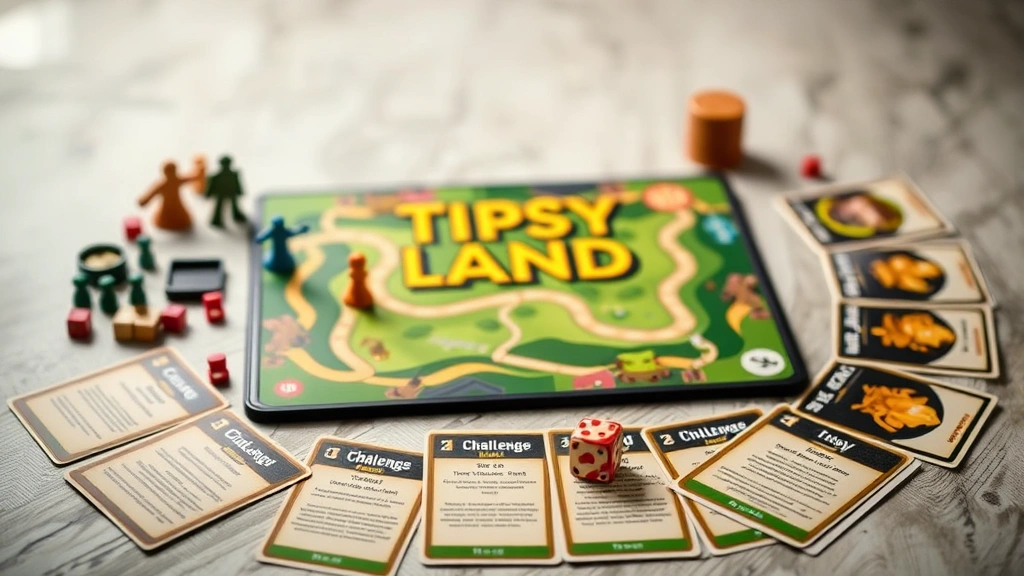
” alt=”Close-up of Tipsy Land game board showing colorful spaces and game pieces, with players’ hands visible holding cards and dice, demonstrating active gameplay moment”>
FAQ
What’s the ideal number of players for Tipsy Land?
Tipsy Land works with 2-8 players, but the sweet spot is 4-6 participants. With fewer than four players, the game feels rushed and less socially engaging. With more than six players, turn sequences become tediously long and downtime between turns increases significantly. Four to six players provides optimal balance between social interaction and game pacing.
Can non-drinkers enjoy Tipsy Land?
Absolutely! Tipsy Land remains entertaining even without alcohol consumption. Non-drinkers can substitute non-alcoholic beverages, or players can offer alternative challenges instead of drinking penalties. The core game mechanics and competition remain intact regardless of beverage choices. Many groups successfully play with mixed drinkers and non-drinkers by respecting individual preferences.
How long does a typical game last?
Average Tipsy Land games last 60-90 minutes, though this varies based on player count, game speed, and challenge complexity. With experienced players focusing on efficient decision-making, games can finish in 45 minutes. With casual, social players prioritizing fun over speed, games might extend to two hours. Set realistic time expectations before starting.
What challenges are most common in Tipsy Land?
Common challenge types include trivia questions, physical dares, creative tasks, social challenges, and memory games. Trivia challenges test knowledge, physical challenges test athleticism, creative challenges test imagination, social challenges test interpersonal skills, and memory challenges test cognitive ability. Diverse challenges ensure all player types have opportunities to succeed.
Should I play aggressively or conservatively?
Strategy depends on your current board position. Leading players should play conservatively to protect their advantage. Trailing players should play aggressively to catch up. Middle-position players enjoy flexibility to play either style. Adjust your approach based on current game state rather than committing to one style throughout.
How do I improve my Tipsy Land skills?
Practice regularly, study other players’ strategies, develop expertise in specific challenge types, and maintain awareness of psychological dynamics. Watch experienced players and learn from their decision-making. Reflect on your games afterward to identify mistakes and improvement areas. Most importantly, approach each game as a learning opportunity rather than just entertainment.
Are there official Tipsy Land rule variations?
Different versions and editions of Tipsy Land may include rule variations. Check your specific game’s rulebook for official variations. Many groups also create house rules that modify standard gameplay. Establish clear rules before starting and ensure all players understand and agree to them.
What if players disagree about challenge completion?
Establish a clear challenge completion standard before playing. Decide whether challenges require objective completion (like trivia answers being correct) or subjective approval (like dares being acceptably silly). Appoint a challenge judge if necessary, or let the group vote on whether a challenge was completed satisfactorily. Clear standards prevent arguments and keep the game fun.