

Squid Game: Why It’s So Terrifying? Fan Reactions and Psychological Breakdown
When Netflix released Squid Game, it didn’t just become a cultural phenomenon—it became a source of genuine fear and psychological distress for millions of viewers worldwide. The South Korean survival drama has sparked countless discussions about why audiences find themselves so deeply unsettled, with fans openly admitting “Squid Game I’m so scared” across social media platforms. This isn’t typical entertainment anxiety; it’s something far more profound that taps into our deepest human vulnerabilities and societal fears.
The show’s terror operates on multiple levels simultaneously. Unlike traditional horror that relies on jump scares and supernatural elements, Squid Game frightens us with something far more insidious: the realistic portrayal of desperation, betrayal, and the complete devaluation of human life. Every game, every twist, and every character decision forces viewers to confront uncomfortable truths about human nature, economic inequality, and our capacity for cruelty when survival is at stake.

The Psychology Behind the Terror
Squid Game taps into what psychologists call “existential fear”—the primal anxiety about death, loss of control, and the meaninglessness of existence. The show doesn’t rely on gore or supernatural scares; instead, it creates terror through psychological manipulation and moral ambiguity. Viewers aren’t just watching a game; they’re watching innocent people make impossible choices under extreme duress.
The brilliant aspect of Squid Game’s horror is that it forces viewers to participate mentally. As you watch, you’re constantly asking yourself: “What would I do?” This internal dialogue creates a personal investment in the characters’ fates that transcends normal entertainment consumption. You’re not just observing; you’re psychologically placing yourself in their position, experiencing their desperation firsthand.
Dr. Jihoon Park, a media psychology researcher, explains that the show’s effectiveness stems from its grounding in reality. Unlike fantasy horror, Squid Game presents scenarios that feel disturbingly plausible. The games themselves—Red Light, Green Light; Honeycomb; Marbles—are childhood games transformed into instruments of death. This juxtaposition between innocence and violence creates cognitive dissonance that lingers long after viewing.
The financial desperation driving the characters amplifies the horror exponentially. These aren’t wealthy individuals playing for thrills; they’re people drowning in debt, facing homelessness, and watching their families suffer. The show brutally illustrates how poverty creates vulnerability, and how the wealthy exploit that vulnerability. This socioeconomic dimension transforms Squid Game from entertainment into social commentary that hits frighteningly close to home for many viewers.

Deadly Game Mechanics That Haunt Viewers
Each game in Squid Game is meticulously designed to maximize psychological torment alongside physical danger. The games aren’t random; they’re specifically engineered to exploit human weaknesses, force impossible choices, and demonstrate how quickly civilization crumbles under pressure.
Red Light, Green Light serves as the show’s introduction to systemic horror. What begins as a childhood game becomes a mass execution. Hundreds of contestants are shot down indiscriminately, creating a scene of pure carnage that establishes the show’s willingness to kill major characters without warning. The arbitrary nature of deaths—some fall from slight missteps, others from strategic positioning—demonstrates that survival often depends on luck rather than skill.
The Honeycomb Game introduces psychological torture through time pressure. Contestants must carefully extract shapes from honeycomb without breaking them. The simplicity of the task makes failures feel more devastating. Watching intelligent, capable people fail at something so elementary creates uncomfortable cognitive dissonance. It’s not about intelligence or strength; it’s about steady hands, focus, and the ability to remain calm while death awaits.
Marbles represents the show’s cruelest innovation. Contestants pair up with someone they trust, then play games where one partner must inevitably lose everything—including their life. The game forces impossible moral choices: Do you betray your friend? Do you sacrifice yourself? Do you try to find a compromise that doesn’t exist? This game fundamentally breaks participants psychologically before it kills them physically.
The Glass Bridge combines physical danger with mathematical probability. Contestants must cross a bridge where each step could be safe glass or tempered glass that shatters under their weight. Those who go first are essentially sacrifices, providing data for those behind them. This game demonstrates how systems can be optimized through human suffering, and how those at the bottom of hierarchies inevitably bear the greatest cost.
The Squid Game Funko Pop collection may celebrate these characters, but the games themselves are designed to strip away dignity, hope, and humanity. Each game escalates the psychological warfare, ensuring that even winners feel like survivors of trauma rather than victors.
Character Betrayals and Emotional Devastation
The true horror of Squid Game emerges through character relationships and the betrayals that inevitably follow. The show demonstrates that desperation doesn’t just kill people; it destroys the bonds that make us human.
Sung-bum’s friendship with Deok-su begins as genuine connection between two broken men. Over episodes, however, we watch as desperation transforms Deok-su into a predator who manipulates, threatens, and ultimately betrays his friend. This transformation isn’t sudden villainy; it’s a gradual erosion of morality driven by the show’s systemic incentives. The horror lies in recognizing that under sufficient pressure, most people would make similar choices.
Gi-hun and Il-nam’s relationship represents the show’s most devastating emotional betrayal. An elderly man who seemed like a vulnerable grandfather figure is revealed to be one of the game’s architects—someone who orchestrated the deaths of hundreds while pretending to be a fellow victim. This revelation retroactively poisons every scene they shared, forcing viewers to reassess every moment of apparent kindness as manipulation.
Young-hee and her mother’s storyline cuts deeper than any physical violence. Watching a child suffer, knowing her mother is powerless to help, creates a specific type of horror that transcends entertainment. It’s the horror of systemic cruelty toward the most vulnerable members of society, presented without the comfort of narrative justice or redemption.
These betrayals work because the show makes you emotionally invested before devastating you. You root for characters, believe in their connections, and hope for their survival. Then the show systematically destroys those hopes, demonstrating that optimism is a luxury the poor cannot afford.
Societal Reflection and Real-World Parallels
Part of Squid Game’s terror effectiveness comes from how closely it mirrors real-world systems. The show doesn’t present a dystopian fantasy; it presents an exaggerated version of systems that already exist.
The game organizers represent the ultra-wealthy elite who view human life as disposable. They’re not motivated by sadism but by boredom and the desire for novelty. This characterization is horrifying precisely because it’s realistic. Throughout history, the wealthy have entertained themselves through the suffering of others. Squid Game simply makes this dynamic explicit and unavoidable.
The economic desperation driving contestants reflects real-world inequality. Debt, homelessness, and lack of opportunity aren’t fictional elements; they’re daily realities for billions of people. The show forces wealthy viewers to confront uncomfortable truths about their own complicity in systems that sacrifice human welfare for profit.
The games themselves mirror capitalist competition. In capitalism, resources are limited, and success for some requires failure for others. Squid Game takes this inherent logic and presents it literally: for someone to win, others must die. This crystallizes the violence already embedded in economic systems, making implicit horrors suddenly visible.
Many fans report that Squid Game isn’t just frightening entertainment; it’s a wake-up call about social structures. The show’s terror persists because viewers recognize that the systems depicted aren’t fictional—they’re variations on systems they live within daily. This recognition creates a specific type of dread that traditional horror cannot achieve.
Fan Reactions and Community Fear
Across social media platforms, fans openly express their terror. Comments like “Squid Game I’m so scared” appear thousands of times daily, with viewers describing nightmares, anxiety, and difficulty sleeping after episodes. This collective expression of fear has created a community united by shared psychological distress.
Many fans report that specific scenes continue haunting them days or weeks after viewing. The Red Light, Green Light massacre, the marble game, and the glass bridge sequence appear repeatedly in fan discussions about the show’s most disturbing moments. Unlike traditional horror, these scenes aren’t frightening because of special effects; they’re frightening because of their emotional and narrative weight.
Mental health professionals have noted an uptick in anxiety-related concerns following Squid Game’s release. Some viewers report intrusive thoughts about the games, while others experience generalized anxiety about economic instability. The show’s psychological impact extends far beyond entertainment, affecting how viewers perceive their own financial vulnerability and social position.
Fan communities have emerged specifically to process the show’s emotional impact. Discussion forums, Reddit threads, and social media groups allow viewers to share their reactions, discuss the show’s themes, and collectively work through their fear. This communal processing suggests that Squid Game’s terror is so intense that viewers need community support to manage it.
The show has also inspired creative responses—fan art, theories, and analyses that attempt to make sense of the horror. Some fans engage with content like the Squid Game Happy Meal merchandise as a way to process fear through commercialization and humor. Converting terror into collectible products represents a coping mechanism, transforming existential dread into manageable consumer experiences.
Visual and Audio Horror Elements
Director Hwang Dong-hyuk employs sophisticated visual and audio techniques that amplify psychological horror. The cinematography uses color, framing, and composition to create constant visual unease.
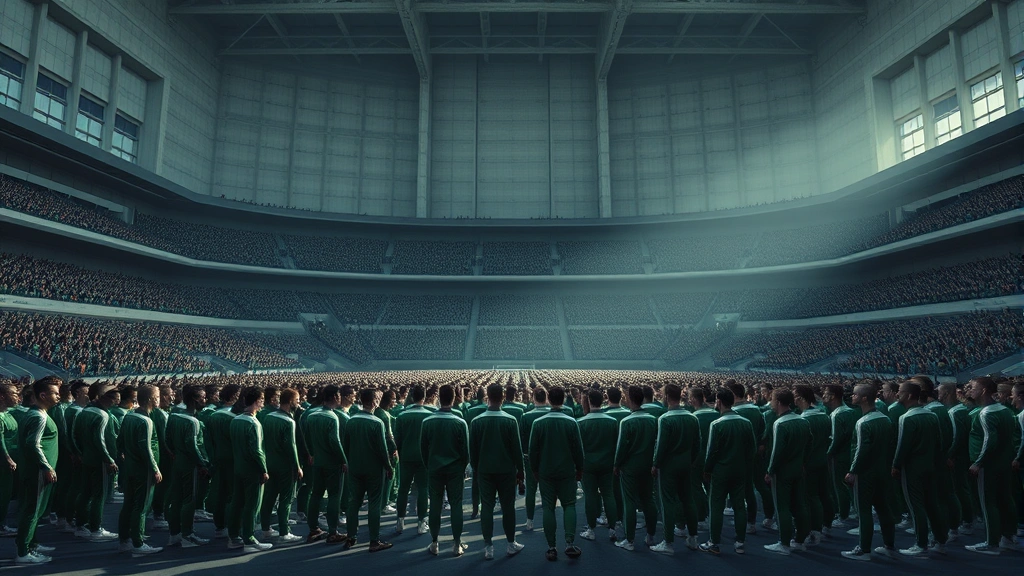
The vast, empty spaces where games occur create a sense of isolation and insignificance. Characters are frequently filmed as small figures within enormous rooms, emphasizing their powerlessness against systems larger than themselves. This visual language communicates hopelessness without requiring dialogue.
The show’s color palette shifts dramatically between scenes. Scenes with hope and connection feature warm tones; scenes approaching death become cold and desaturated. This subtle visual language primes viewers for emotional devastation, creating dread before tragedy occurs.
The sound design deserves particular attention. The show uses silence as a weapon, creating moments where the absence of music becomes more terrifying than dramatic scores. The sounds of footsteps, breathing, and heartbeats become amplified, making viewers acutely aware of their own mortality and vulnerability.
The iconic squid game theme music, while simple, becomes psychologically triggering for viewers. After hearing it associated with death and despair throughout the series, the melody alone can trigger anxiety responses. This classical conditioning effect demonstrates how effectively the show embeds itself in viewers’ psychological responses.
Visual metaphors reinforce the show’s themes throughout. The squid-shaped playground equipment, the geometric shapes in the games, and the constant framing of characters behind bars or within confined spaces all communicate themes of entrapment and loss of agency. These aren’t accidental design choices; they’re deliberate psychological tools.
For those interested in exploring other intense gaming narratives, check out our best indie games for PC guide, which features psychological thrillers and narrative-driven experiences.
FAQ
Why is Squid Game so scary if it’s not a horror show?
Squid Game employs psychological horror rather than supernatural horror. It frightens viewers by presenting realistic scenarios of desperation, betrayal, and systemic cruelty. The terror comes from recognizing these elements exist in real-world systems, making the horror feel immediate and relevant rather than fantastical.
Should I watch Squid Game if I have anxiety?
Viewers with anxiety disorders should approach Squid Game carefully. The show’s psychological intensity and themes of financial desperation, death, and betrayal can trigger or exacerbate anxiety symptoms. Consider reading content warnings and episode summaries before committing to the series. Mental health should always take priority over entertainment.
What makes the character deaths in Squid Game so impactful?
The show invests significant time developing characters before killing them. By the time characters die, viewers have emotionally invested in their survival. Deaths often occur unexpectedly and without narrative justice, mirroring how death works in reality. This unpredictability and the lack of “earned” deaths make every death feel devastating.
Is Squid Game based on real events?
Squid Game is a fictional creation, though it’s inspired by real-world economic inequality and historical examples of the wealthy exploiting the poor. The show exaggerates these elements for dramatic effect, but the underlying dynamics reflect genuine societal problems.
How has Squid Game affected viewers’ real-world perspectives?
Many viewers report that Squid Game has shifted their perspectives on economic inequality, wealth disparity, and systemic injustice. The show has sparked discussions about privilege, debt, and social responsibility. For some viewers, it’s prompted political and personal reflection about their role in maintaining or challenging existing systems.
Why do fans keep watching if it’s so scary?
Despite—or perhaps because of—its terror, Squid Game is compulsively watchable. The show’s narrative momentum, character development, and thematic depth create engagement that transcends fear. Viewers continue watching to understand the story, process their emotions, and witness how the narrative concludes. The psychological intensity becomes part of the appeal rather than a deterrent.