

Gamer Challenger Tips: Expert Advice Inside!
Whether you’re stepping into competitive gaming for the first time or looking to elevate your skills to the next level, becoming a successful gamer challenger requires dedication, strategy, and the right mindset. The gaming landscape has evolved dramatically over the past decade, with esports becoming a legitimate career path for thousands of players worldwide. Today’s gamer challengers face unprecedented competition, but they also have access to more resources, training tools, and communities than ever before. This comprehensive guide will walk you through everything you need to know to dominate your chosen game and establish yourself as a formidable competitor.
The journey from casual player to gamer challenger isn’t just about raw talent—it’s about understanding game mechanics, developing mental resilience, optimizing your setup, and learning from the best players in your community. Throughout this guide, we’ll explore proven strategies that professional players use daily, discuss how to build the perfect gaming environment, and reveal insider tips that can accelerate your improvement dramatically. Whether your passion lies in tactical shooters, MOBAs, fighting games, or strategy titles, these principles will apply across all competitive gaming genres.
Master Game Mechanics and Meta Knowledge
Every competitive game operates within a framework of mechanics, rules, and current meta strategies that define the highest level of play. As a gamer challenger, your first priority should be achieving complete mastery of your game’s fundamental mechanics. This means understanding cooldown timers, damage calculations, positioning principles, resource management, and every nuance that separates average players from champions.
The meta—or most effective tactics available—constantly evolves as developers release balance patches and the community discovers new strategies. Professional gamer challengers dedicate significant time to studying how the current meta shapes gameplay. This might involve watching professional tournaments on esports integrity platforms, analyzing high-level player streams, and experimenting with emerging strategies in ranked matches. Understanding which characters, weapons, or strategies are currently overpowered versus underpowered allows you to make informed decisions about your champion pool or playstyle.
One critical aspect of meta mastery involves learning multiple viable strategies within your game. While specialization is valuable, top gamer challengers develop flexibility to adapt when their primary strategy gets countered. This adaptability separates one-dimensional players from those who consistently climb rankings. Consider studying the GameForge Daily Blog for regular meta analysis and strategy breakdowns that can inform your approach.
Additionally, understanding frame data, hitboxes, or ability ranges—depending on your game genre—provides the technical knowledge that separates challengers from casual competitors. This deep mechanical knowledge becomes your foundation for everything else you’ll build as a player.
Optimize Your Gaming Setup
Your physical gaming environment directly impacts your performance ceiling as a gamer challenger. Professional players invest heavily in their setups because they understand that hardware limitations can prevent you from executing at your highest level. Even if you possess superior game knowledge, latency issues, screen tearing, or uncomfortable ergonomics will hold you back.
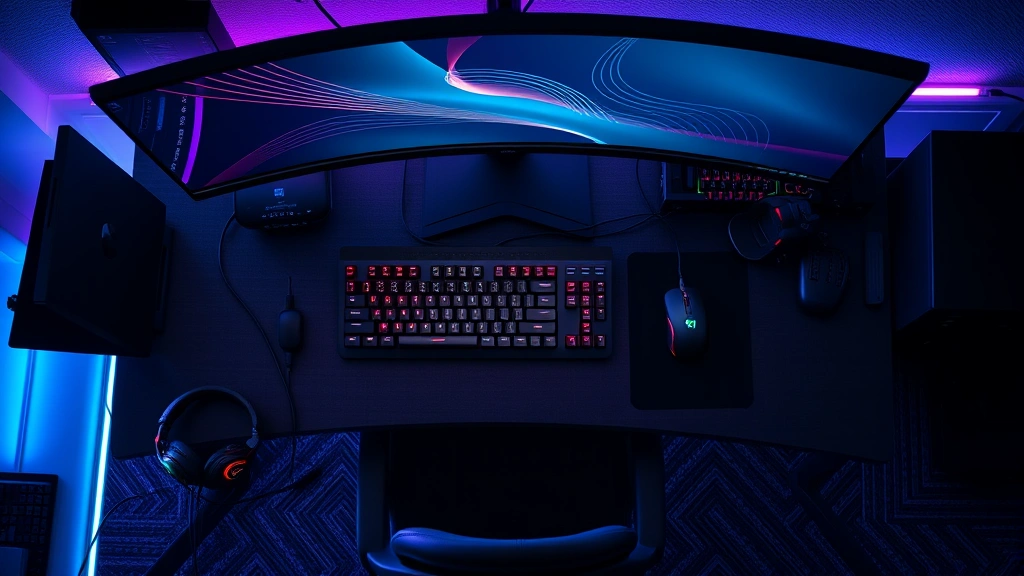
Start with your monitor—this is arguably the most important component for competitive play. Professional gamer challengers typically use 144Hz or higher refresh rate monitors because the smoother visuals provide a competitive advantage, especially in fast-paced games. Lower input lag monitors ensure your actions register as quickly as possible after you input them. If you’re considering upgrades, consult our Gaming PC Build Guide for comprehensive recommendations on matching components.
Your peripherals matter tremendously. A quality gaming mouse with low latency, adjustable DPI, and comfortable ergonomics allows for precise aiming and consistent performance. Similarly, mechanical keyboards offer faster response times and better tactile feedback than membrane alternatives. Invest in equipment that feels natural to you—comfort during marathon practice sessions directly correlates with consistency and injury prevention.
Network connectivity represents another critical optimization area. Wired ethernet connections significantly outperform WiFi for competitive gaming due to reduced latency and packet loss. Even 10-20ms of additional latency can mean the difference between winning and losing crucial encounters. If possible, hardwire your gaming rig directly to your router using quality ethernet cables rated for your internet speed.
Finally, optimize your ergonomics. Position your monitor at eye level approximately 24-30 inches away. Keep your chair at a height where your elbows form 90-degree angles. Proper posture reduces strain during extended gaming sessions and helps maintain focus during critical moments. Many professional gamer challengers work with ergonomic coaches to perfect their setup, recognizing that physical comfort directly impacts mental performance.
Develop Mental Fortitude and Consistency
The mental game separates elite gamer challengers from everyone else. Competitive gaming involves constant high-pressure decision-making, rapid adaptation to changing circumstances, and psychological resilience in the face of defeat. Your mindset determines whether you learn from losses or become discouraged by them.
Developing a growth mindset—viewing challenges as opportunities to improve rather than threats—fundamentally changes your approach to competitive gaming. When you lose, challenger mentality means analyzing what went wrong, identifying specific improvements, and implementing those lessons immediately. This contrasts sharply with fixed mindset thinking, where losses feel personal and discouraging.
Consistency matters enormously in competitive gaming. Rather than playing sporadically with intense focus, top gamer challengers maintain regular practice schedules that allow them to maintain peak performance. Your brain develops muscle memory and decision-making patterns through repetition—inconsistent practice disrupts this development. Aim for daily practice sessions of 2-4 hours focused on improvement rather than casual play.
Emotional regulation during gameplay directly impacts decision quality. When frustrated or angry, players make impulsive mistakes, take unnecessary risks, and lose focus on macro-level strategy. Professional gamer challengers develop techniques to maintain emotional equilibrium—deep breathing between matches, positive self-talk, and realistic expectations about inevitable losses. Taking short breaks when tilted prevents compounding mistakes that create losing streaks.
Building confidence comes from consistent preparation and deliberate practice. When you’ve thoroughly studied your game, optimized your setup, and practiced specific scenarios hundreds of times, confidence emerges naturally. This confidence translates to better decision-making under pressure because you’re operating from a foundation of genuine preparation rather than false bravado.
Join Communities and Find Mentorship
Isolation limits growth for gamer challengers. The fastest path to improvement involves surrounding yourself with players better than you, learning from their approaches, and receiving feedback on your gameplay. Communities provide this essential ecosystem while also offering motivation and accountability.
Discord servers dedicated to your specific game often host coaching channels, scrim coordination, and strategy discussions. These communities connect you with other gamer challengers at similar skill levels, allowing you to form teams, practice together, and push each other toward improvement. The social aspect of community involvement also combats burnout by reminding you why you love gaming in the first place.
Finding a mentor—ideally someone who has already achieved the competitive level you’re targeting—accelerates your improvement dramatically. A mentor can identify specific weaknesses in your gameplay that you might overlook, suggest targeted practice routines, and provide emotional support during frustrating plateaus. Many professional players offer coaching services, though you might also find experienced community members willing to help.
Watching professional players stream their ranked matches provides free mentorship of sorts. By observing how pros handle specific situations, position themselves on maps, or sequence their abilities, you absorb high-level decision-making patterns. Pause streams to think about why they made specific choices rather than passively watching. This active analysis accelerates learning compared to casual viewing.
Consider exploring cooperative gaming communities if your game supports team play, as collaborative environments often foster stronger mentorship relationships and collective growth.
Practice with Purpose and Structure
Not all practice creates equal improvement. Gamer challengers distinguish themselves by practicing deliberately—focusing intensely on specific weaknesses rather than mindlessly grinding ranked matches. Purposeful practice involves identifying gaps in your gameplay, designing practice routines to address those gaps, and measuring improvement through quantifiable metrics.
Structure your practice sessions with clear objectives. Rather than playing for five hours straight, divide your session into focused blocks: mechanical drills (30 minutes), specific scenario practice (60 minutes), ranked matches with focused attention (90 minutes), and review/analysis (30 minutes). Each block targets different aspects of improvement, preventing mental fatigue while maintaining high-intensity focus.
Mechanical drills develop the reflexive skills your game demands. In shooters, this might involve aim training software. In MOBAs, it could mean practicing last-hitting against AI opponents. In fighting games, drilling combos against a training dummy. These repetitive drills build muscle memory so that fundamental execution becomes automatic during actual matches where you can focus on higher-level strategy.
Scenario-based practice involves recreating specific situations you struggled with in recent matches. Did you consistently lose team fights in a particular position? Practice that scenario repeatedly until you develop reliable responses. This targeted approach addresses your actual weaknesses rather than generic practice that doesn’t address your specific limitations.
Recording and reviewing your own gameplay provides invaluable feedback. Watch your replays with a critical eye, noting decision-making errors, mechanical mistakes, and positioning problems. Compare your replays to professional player replays in similar situations, analyzing the differences in their approach versus yours. This comparative analysis accelerates learning because you see exactly where your decision-making diverges from optimal play.
Analyze Your Performance Data
Modern gaming provides unprecedented access to performance data. Gamer challengers leverage this data to identify patterns, track progress, and make informed decisions about their practice focus. Rather than relying on intuition or memory about your gameplay, data provides objective truth about your performance.
Most competitive games provide built-in statistics tracking your win rates, kill-death ratios, positioning heat maps, and ability usage patterns. Analyze this data to identify which characters or roles you perform best on, which map positions you struggle in, and which opponents give you trouble. This analysis directs your practice toward genuine weaknesses rather than perceived problems.
Tracking your climbing progress over time provides motivation and accountability. Whether you’re climbing ranked ladders or tournament brackets, document your progression. Seeing concrete evidence of improvement—even if it’s gradual—maintains motivation during plateaus where improvement feels stagnant.
Many gamer challengers use external tracking tools beyond in-game statistics. Stream software allows detailed analysis of your decision-making process by reviewing your facial expressions and verbal reasoning during gameplay. Some players maintain detailed spreadsheets tracking their performance against specific opponents or in particular matchups, identifying patterns that inform strategy adjustments.
The key principle is converting raw data into actionable insights. Rather than passively viewing statistics, ask yourself what specific changes would improve your numbers. If your win rate plummets in a particular matchup, what strategic adjustments could help? If your kill-death ratio improves significantly in certain roles, should you specialize there? Data-driven decision-making removes guesswork from your improvement process.
Stay Updated with Patch Notes and Balance Changes
Competitive games evolve constantly through balance patches and content updates. Gamer challengers maintain awareness of these changes because they fundamentally alter which strategies work and which fall out of favor. Missing patch note details means you might continue using outdated strategies while competitors adapt to the new meta.
Develop the habit of thoroughly reading patch notes for your game immediately after releases. Note which characters received buffs or nerfs, which abilities were adjusted, and which items or mechanics changed. Think about how these changes affect your main character or preferred strategy. Will your primary pick still be viable, or should you explore alternatives?
Professional esports organizations analyze patches extensively, creating strategic guides within hours of patch release. Following IGN’s gaming coverage and GameSpot’s esports analysis keeps you informed about how the professional scene interprets patch changes. These insights accelerate your understanding of the new meta compared to discovering strategies through solo ranked play.
Balance changes sometimes shift the entire competitive landscape overnight. Champions that were previously dominant might become unviable, while previously overlooked options suddenly become powerful. Gamer challengers who quickly adapt to these shifts gain significant advantages over players who stubbornly stick with outdated strategies. Flexibility and adaptability emerge as defining characteristics of successful challengers.
Set reminders to check patch notes when your game receives updates. Join community discussions analyzing the changes. Experiment with affected champions or strategies in practice games before committing to them in ranked competition. This proactive approach ensures you’re always playing the current meta rather than falling behind.
Consider exploring indie gaming titles that might offer alternative competitive experiences while you’re developing your skills, as diverse gaming exposure often improves overall strategic thinking.
Additionally, understanding how cloud gaming technology might affect competitive play in the future helps gamer challengers prepare for evolving gaming landscapes where latency considerations might change.
Build Your Personal Brand as a Gamer Challenger
Once you’ve developed competitive skills, consider building your personal brand through streaming, content creation, or social media presence. Many professional gamer challengers monetize their skills through these channels while simultaneously building their reputation within competitive communities. Your brand becomes your calling card when seeking sponsorships, team opportunities, or coaching clients.
Streaming your ranked matches exposes you to a broader audience while creating accountability—knowing viewers watch your gameplay often improves your focus and decision-making. Over time, streaming communities become valuable networks for finding scrim partners, teammates, or mentors who might offer guidance.
Content creation—whether through YouTube guides, strategy articles, or educational streams—establishes you as a knowledgeable community member. Sharing your insights helps others while simultaneously reinforcing your own understanding through the process of explaining concepts clearly. This reputation as a knowledgeable player opens doors to opportunities you might not otherwise access.
Professional teams scout promising gamer challengers through their competitive rankings, tournament performances, and community presence. Building visibility through streaming or content creation increases the likelihood that scouts notice your skills. Many professional players started their careers by being discovered through their streaming communities or content creation efforts.

FAQ
How long does it typically take to reach competitive levels as a gamer challenger?
The timeline varies dramatically depending on your starting point, game complexity, and practice intensity. Most players reach intermediate competitive levels within 6-12 months of dedicated daily practice. Reaching professional or elite levels typically requires 2-5 years of consistent, purposeful practice. Some exceptionally talented individuals progress faster, while others require longer timelines—consistency matters more than raw speed.
What games offer the best opportunities for gamer challengers?
Games with established esports ecosystems like League of Legends, Counter-Strike 2, Valorant, and Dota 2 offer substantial prize pools and career opportunities. However, emerging competitive titles also present opportunities for gamer challengers to establish themselves early before competition saturates. Choose games you genuinely enjoy playing—passion sustains you through the grinding improvement process.
Do I need to specialize in one game or can I play multiple competitive titles?
Most successful gamer challengers specialize in one primary game while potentially playing secondary titles. Specialization allows you to develop deeper expertise and climb higher rankings. Dividing focus across multiple games slows your progress in each. However, playing different genres occasionally can improve overall strategic thinking and adaptability.
How important is having the best gaming hardware?
Quality hardware removes performance ceilings but doesn’t create skill by itself. You need solid peripherals and a capable PC, but expensive top-tier equipment won’t compensate for poor fundamentals or weak game knowledge. Mid-range quality equipment paired with excellent fundamentals beats top-tier equipment with weak fundamentals every time. Invest in decent hardware, then focus on improving your gameplay.
Should I attend local tournaments or online competitions first?
Online competitions offer more accessibility and lower barriers to entry, making them ideal for beginning gamer challengers. As you improve, local tournaments provide valuable experience competing against known opponents in person. Eventually, many players progress to regional and international competitions. Start where you can access opportunities, then progressively seek higher-level competition.
How do I handle losing streaks and maintain motivation?
Losing streaks are inevitable for every gamer challenger. During slumps, focus on process rather than results—play with deliberate focus on improving specific skills rather than fixating on rank. Take breaks if you’re tilted, as continuing to play while frustrated typically extends losing streaks. Remember that losing streaks often precede skill jumps as your brain integrates new patterns.
What’s the best way to find teammates for team-based competitive games?
Discord communities, Reddit communities, and in-game team recruitment tools connect potential teammates. Attend local gaming events or esports venues to meet people in person. Many gamer challengers start by playing with friends, then gradually expand their network. Focus on finding teammates with compatible skill levels and communication styles—chemistry matters enormously in team-based games.

