

Rules for Bags Game? Expert Breakdown
The bags game, commonly known as cornhole or bean bag toss, has exploded in popularity over the past decade. What started as a casual backyard pastime has evolved into a competitive sport with standardized rules, professional tournaments, and dedicated fan communities. Whether you’re looking to play casually with friends or compete at higher levels, understanding the rules for the game bags is essential for maximizing your enjoyment and improving your skills.
In this comprehensive guide, we’ll break down everything you need to know about bags game rules, from basic setup and scoring to advanced techniques and tournament play. We’ll also explore how this simple yet strategic game has become a staple at social gatherings, tailgates, and esports venues worldwide. If you’re curious about competitive gaming formats, you might also enjoy exploring the best single player games 2025 that require similar strategic thinking.

What is the Bags Game?
The bags game, officially recognized as cornhole in most competitive circuits, is a tossing game where players throw bean-filled bags at elevated wooden platforms with holes in them. The objective is straightforward: score points by landing your bags on the board or through the hole. However, the strategy, precision, and competitive depth of the game make it far more complex than it initially appears.
The game traces its roots back centuries, with similar tossing games documented in ancient Rome and China. The modern American version gained significant traction in the Midwest before spreading nationally. Today, organizations like the American Cornhole Association and the Professional Cornhole Association oversee official tournaments with substantial prize pools.
What makes bags game rules so important is that standardization allows players to compete fairly across different venues and regions. Whether you’re playing at a casual neighborhood gathering or a professional tournament broadcast on ESPN, the fundamental rules remain consistent. This universal structure is what has transformed bags from a simple pastime into a legitimate competitive pursuit.
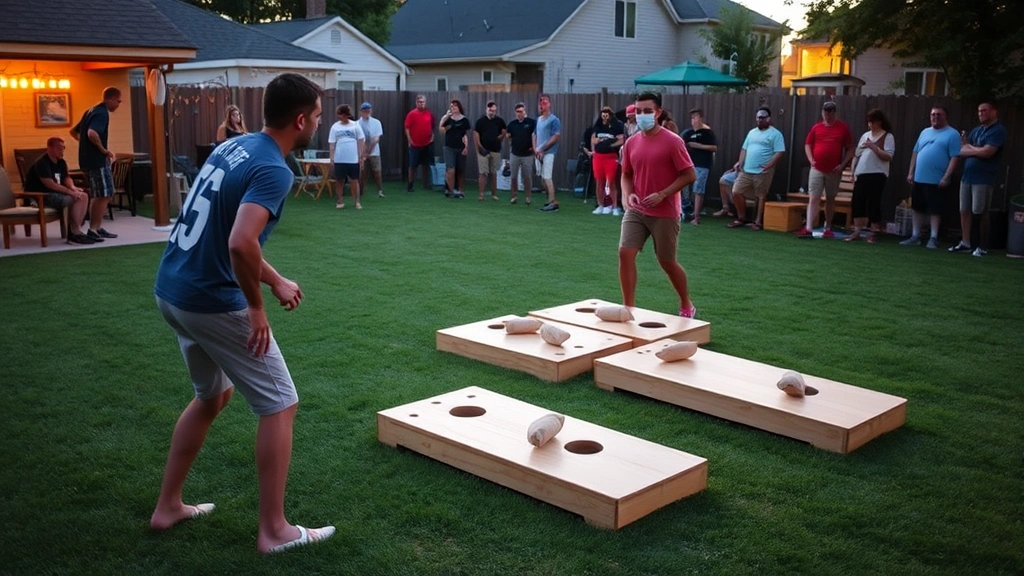
Official Game Setup and Equipment
Understanding the proper setup is the foundation for playing bags game correctly. The official equipment and dimensions are regulated by major cornhole organizations to ensure fair play across all competitions.
Cornhole Boards: Each board measures 2 feet wide by 4 feet long and is elevated at one end, creating an incline. The board sits 12 inches off the ground at the low end and 12 inches higher at the opposite end, creating roughly a 21-degree angle. This elevation is crucial for gameplay dynamics and scoring opportunities.
The Hole: Each board features a single hole that measures 6 inches in diameter. The hole is positioned 9 inches from the top of the board and centered horizontally. Bags that go through this hole are worth significantly more points than bags landing on the board itself.
Bean Bags: Official tournament bags weigh between 14 and 16 ounces and measure approximately 6 inches by 6 inches. The bags are typically filled with corn kernels, plastic pellets, or similar materials. Most competitive players prefer specific bag brands known for consistent weight distribution and flight characteristics.
Court Layout: Two boards are positioned 27 feet apart, with a foul line marked 10 feet from the front of each board. Players stand behind this foul line when throwing. The space between boards is considered the court, and bags landing outside designated areas don’t count toward scoring.
For casual play, many people use homemade boards or less precise setups. However, if you want to practice seriously or eventually compete, investing in regulation equipment is worthwhile. If you’re interested in gaming setups, check out our gaming PC build guide for equipment recommendations.
Basic Scoring Rules
The scoring system for bags is elegantly simple at its core but becomes nuanced with strategy and opponent interaction. Mastering scoring rules is essential for competitive play.
Point Values: Bags landing on the board are worth 1 point each. Bags going through the hole are worth 3 points each. Only bags that remain on the board or go through the hole count toward scoring; bags that fall off the board contribute nothing to your score.
Skunking: Many casual games employ a skunking rule where if one player reaches 21 points while their opponent has zero points, the game ends immediately. This prevents lopsided matches from continuing unnecessarily. However, official tournament play typically doesn’t use skunking rules and plays to 21 regardless of the score differential.
Cancellation Scoring: This is where bags game strategy becomes interesting. In cancellation scoring, both players’ bags are counted, and points cancel each other out. If you score 5 points and your opponent scores 3 points, only 2 points are added to your score. This means defensive play and blocking opponent bags becomes strategically important.
Bag Placement Strategy: Because of cancellation scoring, experienced players often position their bags to block access to high-value areas or to protect bags from being knocked off the board. The hole becomes a contested zone where skilled players can knock opponent bags away while protecting their own scoring opportunities.
Advanced Gameplay Rules
Once you understand basic scoring, advanced rules add depth and complexity to competitive play. These rules are standardized across major tournaments and organizations.
Foul Rules: Players must remain behind the foul line (10 feet from the board) when throwing. If any part of your body crosses this line before releasing the bag, it’s a foul. Fouls result in the bag not counting toward scoring, even if it lands on the board or goes through the hole. This rule prevents players from getting closer to the board for easier shots.
Turn Order: Players alternate throws, typically throwing one bag at a time. In team play, teammates alternate who throws. The player or team that scored in the previous round throws first in the next round. If neither player scored, the player who threw first in the previous round throws first again. This rotation ensures fairness and allows trailing players to respond to scoring.
Bag Interaction: Bags can knock other bags off the board or move them around. A bag that’s initially on the board but knocked off by subsequent throws no longer counts. Similarly, a bag that’s initially off the board but knocked onto the board by another bag now counts. This dynamic creates opportunities for skilled defensive plays.
Hung Bags: Occasionally, a bag will hang on the edge of the board or partially go through the hole. Official rules state that if the bag remains on the board after all throws are complete, it counts. If it falls off, it doesn’t count. Bags must be completely through the hole to earn the 3-point value.
Tiebreaker Rules: If both players reach 21 points simultaneously, play continues until one player reaches a 2-point lead. Some tournaments use sudden-death overtime where the next player to score wins. Always clarify tiebreaker rules before beginning a match.
Tournament Play Standards
Competitive bags tournaments operate under stricter rules than casual play. Understanding tournament standards is crucial if you’re considering serious competition.
Match Format: Tournament matches typically feature best-of-three games, where the first player to win two games advances. Some larger tournaments use round-robin formats where players compete against multiple opponents, with records determining final standings.
Time Limits: Professional matches have time limits to ensure events run on schedule. Players typically have 30 seconds to throw each bag. If a player exceeds the time limit, their bag is considered a foul and doesn’t count toward scoring.
Officiating: Sanctioned tournaments employ trained officials to monitor gameplay, make judgment calls, and ensure rule compliance. Officials watch for fouls, verify bag placement, and settle disputes about scoring.
Equipment Inspection: Before tournament play, all equipment is inspected to ensure it meets official specifications. Boards are measured, holes are verified, and bags are weighed. This standardization prevents equipment-based advantages.
Handicapping: Some tournaments use handicapping systems to level the playing field between players of different skill levels. A player with a higher handicap receives bonus points at the start of each game.
For those interested in competitive gaming more broadly, explore our Game Forged Daily Blog for coverage of emerging competitive gaming trends.
Common Variations and House Rules
While official rules standardize competitive play, many casual players enjoy variations that add unique twists to the traditional game.
Cutthroat Three-Player Variation: Three players each throw bags of a different color. Players compete individually, with the first to 21 winning. All scoring rules apply equally to all players simultaneously.
Team Play: In four-player matches, players pair into teams. Teammates sit at opposite ends of the court. Teams alternate throws, and both boards are used. This variation emphasizes communication and strategy between partners.
Around the World: Players must score on each board in sequence before advancing. The first player to complete the circuit wins. This variation adds a positional element to traditional scoring.
Reverse Scoring: Some casual players invert point values, making bags on the board worth 3 points and bags through the hole worth 1 point. This unusual variation rewards consistency over precision.
No Cancellation Scoring: Instead of cancellation scoring, both players’ points are added to their respective scores each round. This variation speeds up games and reduces strategic bag blocking.
House Rules: Many groups establish custom rules about skunking, mulligans (do-overs), or equipment specifications. Always clarify house rules before playing with a new group to avoid confusion and disputes.
Tips for Mastering the Game
Understanding rules is only half the battle. Mastering bags requires practice, strategy, and mental discipline. Here are expert tips for improving your game.
Develop Consistent Technique: Practice throwing the same way every time. Consistency matters more than power. Develop a repeatable release, follow-through, and approach. Many top players use a smooth underhand or side-arm throw that maximizes control.
Study Board Dynamics: Different boards have slightly different characteristics based on wear, temperature, and construction. Spend time on each board before competition to understand how bags slide and stop.
Master Defensive Play: The best bags players don’t just score; they prevent opponents from scoring. Learn to knock opponent bags away strategically while protecting your own scoring opportunities.
Understand Cancellation Scoring Strategy: Because of cancellation scoring, sometimes preventing opponent points is more valuable than scoring yourself. If your opponent is about to score 3 points, knocking their bag off the board is as valuable as scoring 3 points yourself.
Practice Distance Control: Develop the ability to throw bags that land exactly where you want them. Practice landing bags near the hole without going through, positioning them as obstacles for opponents.
Manage Pressure: Competitive bags is as much mental as physical. Develop routines that help you stay calm and focused during high-pressure moments. Many professional players use breathing techniques or visualization.
Watch Professional Play: Study how top players approach the game. Many tournaments are broadcast on ESPN and available on YouTube. Observing professional technique and strategy accelerates your improvement.
If you enjoy competitive gaming and strategic thinking, you might appreciate exploring the best indie games for PC that emphasize tactical gameplay.
FAQ
What are the official rules for bags game?
Official bags game rules include: boards positioned 27 feet apart, players standing behind a 10-foot foul line, bags on the board worth 1 point, bags through the hole worth 3 points, and cancellation scoring where opponent points subtract from your score. The first player to 21 points wins. Organizations like the American Cornhole Association and Professional Cornhole Association maintain comprehensive official rulebooks.
How many points is a bag in the hole?
A bag that goes completely through the hole is worth 3 points. This is significantly more than bags landing on the board, which are worth 1 point each. The hole’s value encourages accuracy and precision rather than simple board contact.
What happens if a bag lands on the board but gets knocked off?
If a bag is initially on the board but subsequently knocked off by another bag, it no longer counts toward scoring. Conversely, if a bag lands off the board but is knocked onto the board by another bag, it does count. Only bags remaining on the board or through the hole at the end of a round contribute to scoring.
Can you throw from anywhere behind the foul line?
Yes, players can throw from any position behind the foul line. However, the entire body must remain behind the line at the moment of release. Stepping over the foul line during the throw results in a foul, and the bag doesn’t count regardless of where it lands.
What is cancellation scoring in bags?
Cancellation scoring means that both players’ points are calculated each round, and the lower score is subtracted from the higher score. Only the difference is added to the leading player’s total. For example, if you score 5 points and your opponent scores 2 points, only 3 points are added to your score. This system emphasizes defensive play and strategic bag positioning.
How do professional bags tournaments work?
Professional tournaments use standardized equipment, official officials, time limits (typically 30 seconds per throw), and best-of-three match formats. Players compete in brackets or round-robin formats depending on tournament structure. Major tournaments are sanctioned by organizations like the American Cornhole Association or Professional Cornhole Association and often feature substantial prize pools.
Is bags the same as cornhole?
Yes, bags and cornhole are the same game. “Cornhole” is the most common term used in competitive contexts and by major sanctioning organizations. “Bags” is often used colloquially, particularly in casual play settings.
What’s the difference between casual and tournament rules?
Casual play often includes house rules like skunking (ending the game if one player reaches 21 with the opponent at 0), modified equipment, and relaxed foul enforcement. Tournament play uses standardized equipment, official officials, strict foul enforcement, time limits, and no skunking rule. Tournament matches are best-of-three and follow exact specifications for board dimensions and hole placement.
Can you play bags indoors?
While bags is traditionally played outdoors, portable boards and indoor setups are available for casual play. However, official tournaments require specific board specifications and outdoor venues. Indoor play is possible for practice or casual games but isn’t standard for competitive play.
How do you win at bags?
To win at bags, be the first player to reach 21 points under cancellation scoring rules. This requires combining accurate throwing with strategic defensive play. Understanding bag interaction dynamics, managing pressure, and adapting your strategy based on board conditions and opponent tendencies are key to winning.