
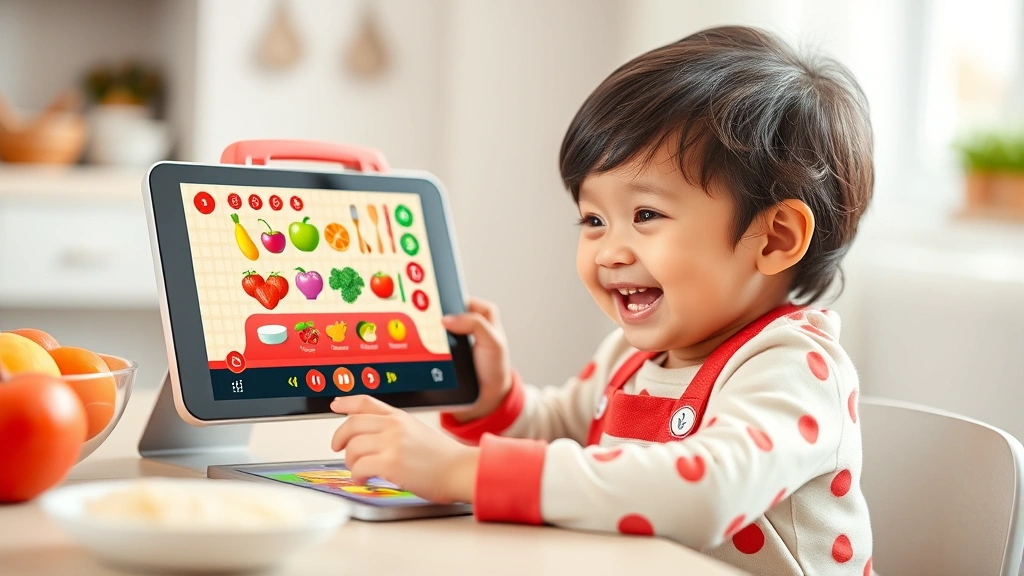
Top Kids Food Games for Learning: Expert Review
Food-themed games have become one of the most engaging educational tools for children, combining entertainment with valuable learning opportunities. These kids food games teach everything from nutrition and cooking basics to math, time management, and creative problem-solving—all while keeping young players thoroughly entertained. Whether your child is interested in culinary adventures, restaurant management, or simply having fun with food-related challenges, the gaming world offers an incredible variety of options that blend learning seamlessly with gameplay.
Parents and educators increasingly recognize that game-based learning creates a dynamic environment where children absorb knowledge naturally through interactive play. Food games, in particular, spark curiosity about real-world applications, from understanding ingredients to managing budgets and understanding customer service. This comprehensive guide explores the best kids food games available today, examining their educational value, age-appropriateness, and what makes each one special for young learners.
Whether you’re looking for games that teach healthy eating habits, develop strategic thinking, or simply provide wholesome entertainment, this expert review covers everything you need to know about selecting the perfect food game for your child.
Why Food Games Matter for Child Development
Educational research demonstrates that games incorporating food themes provide exceptional learning opportunities across multiple developmental domains. Kids food games naturally introduce concepts like sequencing, cause-and-effect relationships, and resource management in contexts that feel intuitive and rewarding. When children engage in virtual cooking or restaurant management, they’re simultaneously developing critical thinking skills, mathematical abilities, and creative expression.
The beauty of food-themed gaming lies in its universal appeal. Every child can relate to eating, cooking, and food preparation, making these games accessible entry points into gaming and learning. Unlike abstract educational games, food games ground learning in real-world contexts. A child managing a virtual bakery learns about profit margins, ingredient costs, and customer satisfaction—concepts they’ll encounter throughout their lives.
Moreover, these games promote healthy eating awareness in engaging ways. Rather than lecturing children about nutrition, food games present dietary choices as part of gameplay mechanics. Children naturally learn about balanced meals, food groups, and healthy habits when these elements become central to achieving game objectives. The interactive nature means learning sticks better than traditional educational methods.
Social-emotional development also benefits significantly. Many kids food games require planning, patience, and dealing with in-game challenges—skills that translate directly to real-world resilience. Cooperative food games teach teamwork and communication, while competitive formats develop healthy competitive instincts and good sportsmanship.
Best Educational Food Games for Younger Kids
Toca Kitchen Series
The Toca Kitchen franchise stands as a gold standard for preschool and early elementary food games. Designed specifically for young learners ages 2-6, these games emphasize exploration and creativity without pressure or failure states. Children select ingredients, combine them in various ways, and serve creations to animated characters who react enthusiastically to their culinary experiments.
What makes Toca Kitchen exceptional is its consequence-free learning environment. Kids can combine peanut butter with ice cream and candy—combinations that would horrify real nutritionists—and the game celebrates their creativity. This freedom builds confidence and encourages experimentation. Meanwhile, children naturally learn ingredient names, colors, textures, and basic cause-and-effect relationships. The game subtly teaches sequencing as kids understand that certain cooking methods (like using a blender) require multiple steps.
The colorful visuals, intuitive touch controls, and immediate feedback make Toca Kitchen perfect for developing fine motor skills alongside culinary concepts. Multiple characters with different reactions encourage children to think about preferences and variations, fostering early social understanding.
Cooking Mama Series
Cooking Mama games (particularly the newer mobile versions) offer slightly more structured gameplay while remaining accessible to children ages 5 and up. These games present specific recipes and guide children through authentic cooking steps: chopping vegetables, stirring ingredients, and timing cooking processes. The games reward accuracy and speed, introducing elements of skill-based gameplay.
The educational value extends beyond cooking knowledge. Children develop hand-eye coordination, timing skills, and the ability to follow sequential instructions. Each completed recipe provides a sense of accomplishment, and the variety of dishes exposes children to different cuisines and cooking techniques. The games also implicitly teach that cooking involves multiple steps performed in specific orders—a foundational understanding of process and procedure.
Diner Dash Lite
For children ages 6-8, Diner Dash Lite introduces basic restaurant management and multitasking. While simplified compared to more complex versions, this game teaches children about customer service, order fulfillment, and time management. Kids must seat customers, take orders, prepare food, and manage tables—all while managing limited resources.
The game naturally teaches prioritization and consequence-management. Ignoring customers leads to decreased satisfaction and lower scores, teaching children that responsiveness matters. The fast-paced gameplay develops quick decision-making abilities and stress management in a low-stakes environment. Children learn that managing multiple tasks simultaneously requires planning and focus.
Top Food Management Games for Older Children
Overcooked and Overcooked 2
These cooperative cooking games represent peak design for children ages 8 and up. Overcooked challenges players to work together in increasingly chaotic kitchens, preparing orders under time pressure. The games feature beautiful pixel art, intuitive controls, and escalating complexity that keeps gameplay fresh throughout.
The educational benefits are substantial. Children develop teamwork and communication skills as they coordinate with other players. The games teach strategic thinking—players must discuss kitchen layouts, assign roles, and adapt strategies when situations change. Time management becomes critical as orders pile up and kitchens become increasingly complex. Players learn that clear communication and defined roles make complex tasks manageable.
Overcooked also subtly teaches real cooking knowledge. Children encounter various food preparation techniques and learn that different dishes require different preparation methods. The games present cooking as a coordinated team effort, reflecting real restaurant kitchens accurately.
Stardew Valley (with parental guidance)
While primarily a farming simulation, Stardew Valley includes significant cooking mechanics appropriate for children ages 10 and up (with some parental discretion regarding mild fantasy violence). Children develop crops, raise animals, and cook dishes using their harvests. The cooking system teaches recipe following, ingredient sourcing, and creative experimentation.
Beyond cooking, Stardew Valley teaches resource management, planning, and long-term goal setting. Children learn that certain crops require specific seasons, that animals need daily care, and that time management directly affects outcomes. The game rewards both careful planning and adaptive thinking, as weather and random events require flexibility. The cooking mechanic provides immediate, satisfying rewards for the farming work, creating a complete economic cycle children can understand.
Check out our best indie games for PC for more titles suitable for family gaming.
Restaurant Tycoon 2 and Cooking Fever
These games introduce sophisticated business management concepts. Players design restaurants, manage finances, hire staff, and expand operations. Cooking Fever (ages 8+) focuses more on cooking speed challenges, while Restaurant Tycoon 2 (ages 10+) emphasizes business strategy and economic management.
Children learn about profit margins, customer satisfaction, and operational costs. They understand that restaurant success requires balancing multiple factors: food quality, customer service, pricing, and efficiency. These games introduce real-world economic concepts in engaging contexts. Players experience consequences when they raise prices too high (customers leave) or when they don’t invest in equipment (service slows).

Multiplayer Food Games for Family Fun
Multiplayer food games create wonderful opportunities for family bonding while children develop social skills. These experiences are particularly valuable in our increasingly digital world, offering shared entertainment that brings families together around screens productively.
Moving Out (Cooperative Cooking Focus)
While technically a moving simulation, Moving Out features food-themed levels and emphasizes the same cooperative teamwork that makes Overcooked special. The colorful presentation and humorous physics-based gameplay appeal to children ages 7 and up, and the cooperative mechanics teach communication and coordination.
Snipperclips
This Nintendo Switch exclusive features food-themed puzzle levels among its creative challenges. The game teaches spatial reasoning, problem-solving, and collaborative thinking. The food-themed levels introduce creative thinking about how shapes and tools can accomplish specific goals—indirect but valuable learning about physics and engineering concepts.
Peglin with Food Themes
Peglin combines pachinko mechanics with roguelike elements and includes food-themed cosmetics and power-ups. While not exclusively about food, the thematic elements appeal to children interested in food games, and the core gameplay teaches probability, strategy, and adaptive thinking as players navigate increasingly complex challenges.
For more multiplayer options, explore our guide to best co-op games on Steam for additional family-friendly experiences.
How to Choose the Right Food Game
Selecting appropriate food games requires considering several factors beyond simple age ratings. Different games serve different developmental purposes, and the best choice depends on your child’s individual interests, learning style, and current developmental stage.
Age Appropriateness and Complexity
Younger children (ages 2-5) benefit from exploration-focused games like Toca Kitchen that emphasize creativity without failure states. Children ages 5-7 can handle games introducing basic sequencing and simple management like Cooking Mama. Older children (8+) engage with strategic complexity in games like Overcooked and Restaurant Tycoon 2.
Learning Objectives
Consider what specific skills or knowledge you want to develop. Games like Toca Kitchen build confidence and creativity. Recipe-based games teach following instructions and sequencing. Management games develop strategic thinking and resource allocation. Cooperative games specifically build teamwork and communication skills.
Screen Time Balance
Quality matters more than quantity. A focused 20-30 minute session with a well-designed educational game provides more learning than hours of passive consumption. Cooperative games offer the bonus of shared screen time with family members, transforming gaming into family bonding.
Platform Considerations
Mobile games offer accessibility and convenience but may include in-app purchases or ads. Console and PC games typically provide deeper experiences with clearer monetization models. Weigh portability benefits against content quality and cost.
Interests and Engagement
The best game is one your child will actually play. If your child loves dinosaurs, find food games incorporating dinosaur themes. If they’re interested in business, prioritize management games. Personal interest dramatically increases engagement and learning retention.
Safety and Parental Controls
While kids food games are generally safe, responsible gaming involves understanding available safety features and monitoring usage appropriately.
In-App Purchases and Monetization
Many free-to-play food games include in-app purchases. Set spending limits on your device, use parental controls to restrict purchases, and discuss spending with older children. Premium versions of games often eliminate ads and purchases entirely—sometimes the better value for families.
Screen Time Management
The American Academy of Pediatrics recommends reasonable screen time limits based on age. Food games provide educational value, but balance is essential. Use built-in parental controls to set time limits, and establish family screen time policies that work for your household.
Content Monitoring
Most kids food games are genuinely child-friendly, but always review games before extended play. Check for age ratings on app stores, read parent reviews on sites like Common Sense Media, and watch gameplay videos if uncertain. Games like Stardew Valley have minor fantasy violence that might concern some parents but seems acceptable to others—make informed decisions for your family.
Online Safety for Multiplayer Games
Games with online multiplayer features require particular attention. Use parental controls to restrict online communication, understand friend request systems, and maintain awareness of who your child plays with. Local multiplayer games eliminate these concerns while providing similar social benefits.
For technical setup guidance, check our resources on gaming PC build guide if you’re setting up dedicated gaming systems for children.
FAQ
What age should children start playing food games?
Children as young as 2-3 years can enjoy exploration-focused games like Toca Kitchen with parental supervision. Recipe-based games work well starting around age 5-6, while management games become appropriate around age 8. Individual maturity and interest levels vary, so consider your specific child’s readiness.
Do food games actually teach children about nutrition?
Yes, but indirectly. Games don’t typically lecture about nutrition, but they expose children to various foods, cooking methods, and food combinations. Games featuring balanced meal components or health mechanics subtly reinforce nutritional concepts. Combine gaming with real-world cooking experiences for maximum impact.
Are food games better than traditional educational methods?
Games aren’t replacements for traditional education but valuable supplements. The interactive, reward-based nature of games increases engagement and retention of certain concepts. Combining game-based learning with real cooking experiences, reading about food, and traditional instruction creates comprehensive learning.
Which food games work best for children with short attention spans?
Toca Kitchen and Cooking Mama offer immediate gratification without complex long-term goals, making them excellent for children with attention challenges. Games with fast-paced action like Cooking Fever also maintain engagement through constant activity and immediate feedback.
Can food games help picky eaters?
Potentially. Games exposing children to various foods in low-pressure contexts may increase curiosity about real foods. The key is avoiding pressure—games work best when children explore voluntarily. Follow game sessions with opportunities to try real versions of foods featured in games, making the connection between virtual and real experiences.
Are there offline food games that don’t require internet?
Many excellent options work offline. Toca Kitchen, Cooking Mama, Overcooked, and most console games function without internet. Check app store listings for “offline” capability if internet access is limited. Offline games also eliminate concerns about online safety and random ads.
What’s the best way to introduce food games to children?
Start with exploration-focused games without failure states, allowing children to develop comfort with gaming mechanics. Progress to games with light objectives and time pressure only after children demonstrate readiness. Play together initially, discussing what’s happening and celebrating discoveries. Let interest guide progression rather than forcing advancement through games.
Do I need special equipment to play kids food games?
Most kids food games work on smartphones and tablets. Console versions (Switch, PlayStation, Xbox) offer superior graphics and multiplayer experiences. PCs provide access to games like Stardew Valley and more complex management games. Start with whatever device you already own—many games work across multiple platforms.
How much screen time is appropriate for food games?
The American Academy of Pediatrics recommends 1-2 hours daily of quality programming for children 6 and older. For children under 6, limit to 30 minutes to 1 hour daily with parental co-viewing. Quality matters more than quantity—30 minutes of focused, educational gaming provides more benefit than hours of passive consumption.
Are there food games for children with learning disabilities?
Many food games offer accessibility features. Toca Kitchen’s exploration-based design benefits children with attention challenges. Games with customizable difficulty like Cooking Fever work for various skill levels. Research specific games for accessibility features, or check resources like IGN’s accessibility coverage for detailed information about specific titles.
Visit the Game Forged Daily Blog for ongoing reviews and gaming recommendations for families.
Kids food games represent an exceptional intersection of entertainment and education, offering children engaging experiences that build real skills while having genuine fun. Whether your child is a creative explorer, strategic thinker, or social butterfly, food-themed games provide options matching their interests and learning styles. Start with age-appropriate selections, monitor engagement, and gradually introduce more complex games as skills develop. The best game is ultimately one your child will play enthusiastically and return to repeatedly—that’s where real learning happens. Combine gaming with real-world cooking experiences for maximum impact, and watch your child develop confidence, creativity, and genuine interest in food and cooking alongside valuable life skills.