

Wilt Chamberlain 100 Game: The Most Legendary NBA Moment Ever Recorded
On March 2, 1962, Philadelphia Warriors center Wilt Chamberlain accomplished something that seemed impossible—he scored 100 points in a single NBA game against the New York Knicks. This monumental achievement remains one of the most iconic moments in basketball history, a record that has stood untouched for over six decades. The significance of this performance extends far beyond sports statistics; it represents the pinnacle of individual athletic excellence and continues to captivate audiences worldwide, much like how gaming communities celebrate record-breaking achievements in competitive esports.
The 100-point game has become a cultural touchstone in sports history, inspiring countless discussions, documentaries, and analyses. Players, coaches, and analysts regularly reference this performance when debating the greatest individual performances in basketball. Understanding the context, execution, and lasting impact of this legendary moment provides insight into what makes certain athletic achievements truly transcendent and unforgettable.
The Night That Changed Basketball Forever
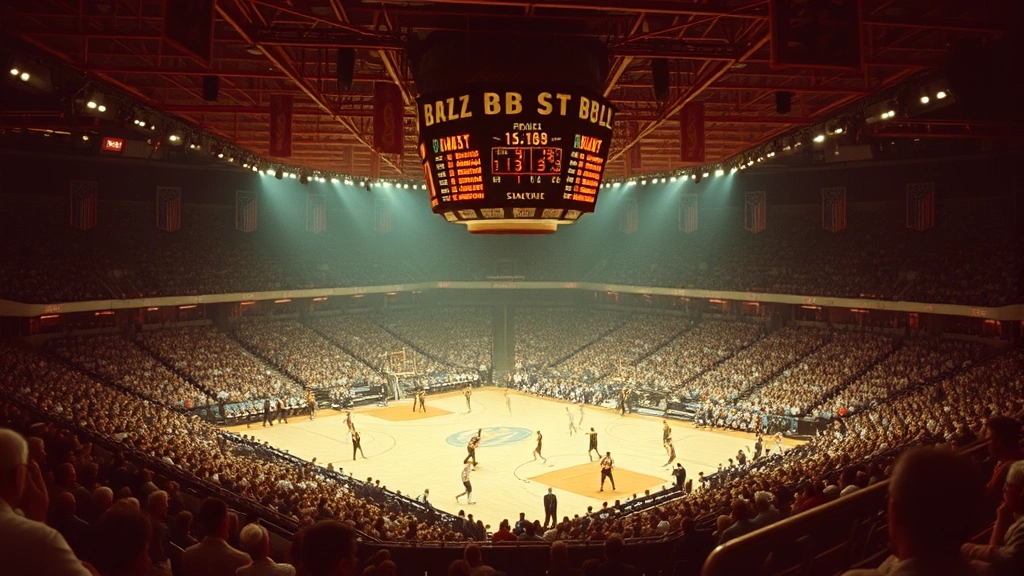
The Philadelphia Warriors traveled to Hershey, Pennsylvania, on March 2, 1962, to face the New York Knicks in what would become the most memorable game in NBA history. Wilt Chamberlain, already establishing himself as a dominant force in professional basketball, entered the game with the intention of performing at his highest level. The arena in Hershey, which held approximately 7,000 spectators, had no idea they were about to witness something that would be discussed for generations to come.
Chamberlain’s physical attributes were unlike anything the NBA had seen before. Standing 7’1″ tall with exceptional athleticism, speed, and strength, he possessed a combination of talents that made him virtually unstoppable in the paint. Throughout the game, he demonstrated remarkable efficiency, dominating both the offensive and defensive ends of the court. His teammates recognized his rhythm early and continued to feed him the basketball, understanding that he was on an extraordinary night.
The game itself was a showcase of Chamberlain’s versatility. He didn’t rely solely on dunking; instead, he employed a diverse offensive arsenal including post moves, jump shots, and free throws. This variety made it nearly impossible for the Knicks’ defense to develop any effective strategy. Every time they attempted to adjust their defensive approach, Chamberlain found another way to score. The momentum never shifted in New York’s favor, and as the game progressed, it became increasingly clear that something historic was unfolding.
Wilt’s Unstoppable Performance Breakdown
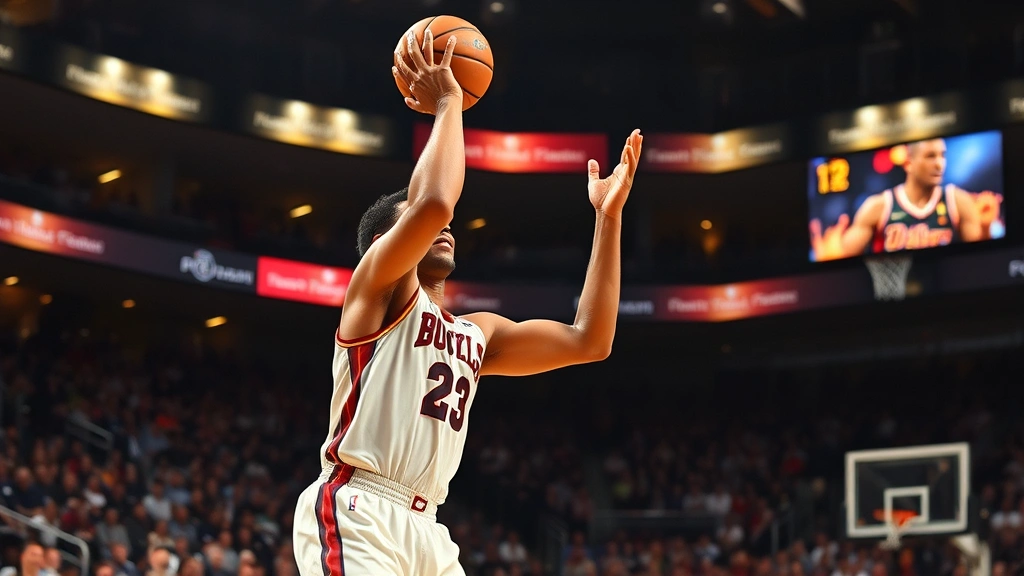
Analyzing Chamberlain’s performance reveals the remarkable consistency he maintained throughout the game. He didn’t experience any significant shooting slumps or cold stretches—instead, he maintained an incredibly high shooting percentage while attempting shots from various distances and angles. His free throw shooting was particularly impressive, as he converted a significant portion of his attempts from the charity stripe.
What made Chamberlain’s 100-point performance even more extraordinary was the pace at which he scored. In the fourth quarter alone, he scored an astonishing number of points, demonstrating that his dominance intensified as the game progressed rather than diminishing due to fatigue. This is particularly noteworthy given the physical demands of professional basketball, where maintaining peak performance throughout an entire game is challenging even for elite athletes.
Chamberlain’s rebounding and overall impact on the game extended beyond scoring. He controlled the boards defensively, preventing second-chance opportunities for the Knicks while simultaneously creating additional scoring opportunities for himself through offensive rebounding. His presence fundamentally altered how the game was played, forcing the Knicks to adapt their entire defensive scheme around containing a single player.
The shooting percentages from that game demonstrate remarkable efficiency. Chamberlain took 63 shots from the field and made 36 of them, while also attempting 32 free throws and making 28. These numbers, while high in terms of volume, showcase an impressive shooting percentage that would be considered excellent by modern standards. This efficiency, combined with the sheer volume, created a scoring total that seemed mathematically impossible at the time.
The Knicks’ Defensive Collapse
The New York Knicks, despite being a competitive team during this era, found themselves completely unable to develop an effective defensive strategy against Chamberlain’s dominant performance. Their defensive players faced an unprecedented challenge: how do you defend against someone who is physically superior, faster, stronger, and more skilled than anyone they had previously encountered? The answer, as it turned out, was that you couldn’t—at least not on this particular night.
New York’s defensive approach evolved throughout the game as they desperately searched for solutions. They attempted to use multiple defenders to double-team Chamberlain, but this strategy backfired by leaving his teammates open for scoring opportunities. When they focused on playing him one-on-one, he simply overpowered his individual defenders. The Knicks were caught in a defensive quandary with no viable answer, a situation somewhat analogous to how competitive gamers face overwhelming opponents in cooperative gaming scenarios.
One of the critical factors in the Knicks’ defensive failure was their inability to physically match Chamberlain’s athleticism. In modern basketball, defensive strategies have evolved to include zone defenses and sophisticated schemes designed to limit individual dominance. However, in 1962, the defensive options available to NBA teams were considerably more limited. The Knicks’ players did their best, but they were fundamentally outmatched by an athlete operating at an unprecedented level.
The psychological aspect of defending against Chamberlain during this game cannot be overlooked. As the score continued to climb and it became apparent that he was approaching the 100-point milestone, the Knicks’ defenders likely experienced demoralization. Knowing that your team is helpless to stop an opponent creates a mental burden that affects decision-making and defensive intensity. By the final quarter, the Knicks seemed resigned to their fate, watching helplessly as Chamberlain added point after point to his historic total.
Records and Statistics That Tell the Story
The statistical achievements from the 100-point game are staggering when examined in detail. Beyond the obvious 100-point total, Chamberlain recorded 25 rebounds in the game, demonstrating his dominance on the boards. He also contributed assists and played significant minutes, showcasing his overall impact on the game beyond scoring. These comprehensive statistics paint a picture of a player who dominated every aspect of the game simultaneously.
To contextualize the significance of this achievement, consider that the second-highest scoring performance in NBA history stands at 81 points, accomplished by Kobe Bryant in 2006. Despite playing in a modern era with different rules, better conditioning, and advanced training methods, Bryant’s 81-point game, while extraordinary, still falls 19 points short of Chamberlain’s record. This gap illustrates just how remarkable the 100-point performance truly was.
Chamberlain’s scoring average during his career was already exceptionally high, but the 100-point game represented an apex that transcended even his own incredible standards. He averaged over 50 points per game during the 1961-62 season, demonstrating that the 100-point game, while extraordinary, was part of a larger pattern of dominance. However, even within that context of sustained excellence, the 100-point game stands apart as the singular greatest scoring performance in NBA history.
The game’s final score of 169-147 indicates that while the Warriors won decisively, the Knicks actually scored a respectable number of points themselves. This means that Chamberlain’s 100 points represented approximately 59% of his team’s total scoring output. In modern basketball, such scoring concentration would be considered unsustainable and inefficient, yet Chamberlain managed to maintain team success while dominating the scoring column to this degree.
The Modern NBA and the 100-Point Game
Contemporary basketball analysts frequently discuss whether a 100-point game could occur in the modern NBA. The consensus among most experts is that such a performance is virtually impossible under current playing conditions and rule structures. Modern defenses are significantly more sophisticated, employing zone defenses, defensive three-second rules, and strategies specifically designed to prevent individual dominance. Additionally, the three-point line, which didn’t exist during Chamberlain’s era, has fundamentally changed how basketball is played.
The physical demands of modern professional basketball are also worth considering. Players compete at a faster pace, with more possessions per game and greater emphasis on conditioning and athleticism across all positions. While this might suggest that scoring more points would be easier, the improved defensive schemes and overall skill level of defenders actually make it more difficult for individual players to accumulate massive scoring totals. The game has evolved in ways that make Chamberlain’s achievement even more impressive in retrospect.
Rule changes implemented since 1962 have also impacted scoring patterns. The elimination of certain defensive tactics, the introduction of the shot clock, and modifications to charging and blocking rules have all influenced how games are played. These changes have generally been designed to create more balanced competition and prevent individual players from dominating to the extent that Chamberlain did. Understanding these rule modifications provides context for why modern scoring records, while impressive, operate within different parameters than Chamberlain’s historic performance.
Some analysts have speculated about hypothetical scenarios where a modern player might approach or exceed 100 points, typically involving extraordinary circumstances such as an opponent’s team being severely undermanned or a player entering an unprecedented shooting rhythm. However, most mainstream basketball commentators agree that the combination of factors that would need to align for such a performance to occur in the modern era is extraordinarily unlikely. This reality further solidifies Chamberlain’s 100-point game as truly unique in basketball history.
Cultural Impact and Legacy
The 100-point game transcends sports statistics and has become embedded in popular culture. It represents the pinnacle of individual athletic achievement and continues to be referenced in discussions about greatness, excellence, and human potential. The game has been documented in films, discussed in podcasts, and analyzed in countless articles, ensuring that new generations continue to learn about this historic moment. Much like how gaming enthusiasts celebrate legendary gaming moments through community discussion, basketball fans celebrate and revisit Chamberlain’s achievement regularly.
Wilt Chamberlain’s legacy extends far beyond this single game, but the 100-point performance serves as the defining moment of his career for many casual fans. While basketball historians recognize his numerous other accomplishments and records, the general public most readily identifies him with this one extraordinary night. This phenomenon illustrates how singular moments can define entire careers and become synonymous with individual excellence.
The game’s impact on basketball strategy and player development has been significant. Chamberlain’s dominance forced the NBA to reconsider defensive strategies and rule structures, leading to modifications designed to create more balanced competition. His influence on the game extended beyond his playing years, shaping how the sport evolved and how teams approached offense and defense. The 100-point game, as the most visible manifestation of his dominance, became the focal point for these discussions about basketball’s future.
In contemporary times, the 100-point game serves as a benchmark for excellence that players aspire to approach, even if surpassing it remains virtually impossible. When young players achieve significant scoring performances, commentators inevitably reference Chamberlain’s record, reminding audiences of the standard he established. This consistent reference keeps the 100-point game relevant in modern basketball discourse, ensuring that Chamberlain’s achievement remains fresh in collective memory.
The record has also become a cultural touchstone beyond basketball. It’s referenced in discussions about human achievement, peak performance, and the limits of individual excellence. The game represents a moment when an athlete operated at such an elevated level that the achievement transcended sport and became a cultural phenomenon. This broader impact demonstrates the profound significance of Chamberlain’s 100-point performance in sports history and popular culture.
FAQ
How many points did Wilt Chamberlain score in his record game?
Wilt Chamberlain scored exactly 100 points on March 2, 1962, against the New York Knicks. This remains the highest-scoring performance in NBA history and stands as one of sports’ most celebrated individual achievements.
What was the final score of the 100-point game?
The Philadelphia Warriors defeated the New York Knicks 169-147. Chamberlain’s 100 points represented approximately 59% of his team’s total scoring output, demonstrating the extent of his dominance in that particular game.
Has anyone come close to breaking Chamberlain’s 100-point record?
Kobe Bryant holds the second-highest scoring performance in NBA history with 81 points, accomplished on January 22, 2006. This remains the closest anyone has come to approaching Chamberlain’s record, falling 19 points short.
Why is the 100-point game considered so significant?
The 100-point game represents the pinnacle of individual athletic excellence and has become a cultural touchstone in sports history. It showcases an unprecedented level of dominance and remains unmatched in professional basketball, making it historically significant and culturally important.
Could someone score 100 points in a modern NBA game?
Most basketball analysts agree that scoring 100 points in a modern NBA game is virtually impossible due to more sophisticated defensive strategies, rule modifications, and improved overall skill levels among defenders. The combination of factors that would need to align for such a performance is extraordinarily unlikely.
What were Chamberlain’s shooting statistics from the 100-point game?
Chamberlain made 36 of 63 field goal attempts and 28 of 32 free throw attempts. These statistics demonstrate remarkable efficiency while taking a high volume of shots, showcasing his dominance and shooting consistency throughout the game.
How many rebounds did Chamberlain grab in the 100-point game?
Chamberlain recorded 25 rebounds in the 100-point game, demonstrating his dominance on the boards in addition to his historic scoring performance. This comprehensive impact on the game extended beyond scoring to include rebounding and overall control of the game.
What was the significance of playing in Hershey, Pennsylvania?
The game was played in Hershey, Pennsylvania, rather than Philadelphia due to scheduling considerations. The location has become part of the game’s historical significance, with the Hershey Sports Arena now recognized as the site of one of sports’ greatest achievements.