

Master Baseball Scorebooks: Expert Insights for Every Fan and Player
Whether you’re a dedicated baseball enthusiast, a player looking to track your performance, or someone discovering the sport for the first time, understanding how to master a baseball game scorebook is an essential skill that deepens your appreciation of America’s pastime. A scorebook isn’t just a record-keeping tool—it’s a gateway to understanding the intricate strategies, statistics, and storytelling that make baseball endlessly fascinating.
The art of scorekeeping has evolved significantly over the decades, blending traditional notation systems with modern digital approaches. Today’s scorebooks offer multiple formats and methods, each designed to capture different levels of detail about every pitch, swing, and play. From casual fans attending their first game to serious statisticians analyzing professional performances, there’s a scorekeeping method suited to your needs.
In this comprehensive guide, we’ll explore everything you need to know about mastering baseball scorebooks, including traditional notation systems, digital alternatives, best practices for accurate record-keeping, and insights from experts who’ve spent years perfecting this craft.
Understanding Baseball Scorebook Basics
A baseball game scorebook serves as the official record of a game’s events, capturing everything from individual at-bats to strategic decisions made by coaches. The fundamental purpose is documentation—creating an accurate historical record that can be referenced for statistics, analysis, and storytelling long after the final out is recorded.
The basic structure of any scorebook revolves around a grid system where each row represents a player and each column represents an inning. Within this framework, scorekeepers use standardized symbols and abbreviations to denote specific plays and outcomes. This universal language allows anyone familiar with scorekeeping conventions to understand what happened during a game, regardless of who recorded it.
Understanding the foundational concepts is crucial before diving into more complex notation systems. The scorebook must clearly show:
- Each batter’s plate appearances and outcomes
- Base running sequences and stolen bases
- Pitching statistics and performance metrics
- Defensive plays and potential errors
- Game-changing moments and situational details
Many scorekeepers find it helpful to explore gaming community resources and guides that discuss systematic record-keeping approaches, which share similar principles with scorekeeping organization.

Essential Notation Symbols and Abbreviations
The language of scorekeeping relies on a standardized system of symbols and abbreviations that have been refined over more than a century. Mastering these notations is absolutely essential for anyone serious about keeping accurate records.
Basic Hit Notations: Hits are typically recorded using simple numbers corresponding to defensive positions. A single is often marked with a line or “1B,” a double with “2B,” a triple with “3B,” and a home run with “HR.” Line drives are distinguished from fly balls, with “LD” indicating a line drive and “F” indicating a fly ball.
Out Notations: Outs follow a specific formula: the position number of the player making the play, followed by the position number of any player involved in the putout. For example, “6-3” means the shortstop fielded the ball and threw to the first baseman for the out. A strikeout is simply recorded as “K,” while a swinging strike is denoted as “K” and a called strike as a backwards “K.”
Advanced Play Notations: Double plays are recorded as “DP” with the specific positions involved. Walks are marked with “BB,” hit by pitch with “HBP,” and sacrifice bunts with “SAC.” Errors are denoted with “E” followed by the position number of the player who made the error.
Learning these notations thoroughly allows you to develop the muscle memory needed for quick, accurate recording during fast-paced games. Many scorekeepers recommend practicing notation systems before attending live games to ensure you can keep pace with the action.
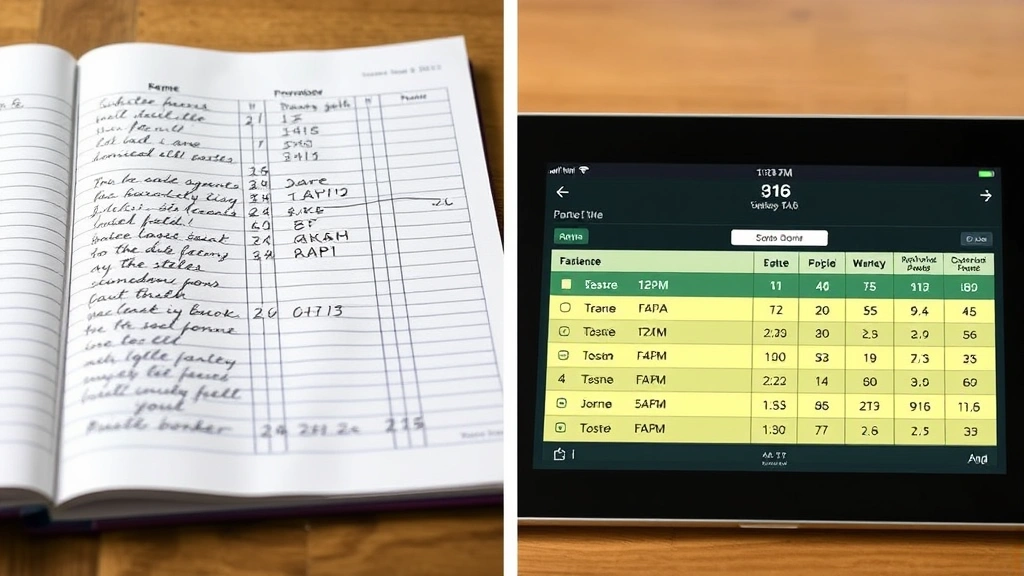
Traditional vs Digital Scorekeeping Methods
The scorekeeping landscape has transformed dramatically with technological advancement, offering enthusiasts multiple pathways to record and analyze games. Understanding the advantages and disadvantages of each method helps you choose the approach that best fits your needs and preferences.
Traditional Paper Scorebooks: Paper scorebooks remain incredibly popular among dedicated fans and official scorekeepers. They offer tactile engagement with the game, require no batteries or internet connectivity, and create permanent physical records that can be preserved and reviewed. The act of writing by hand actually helps many people internalize game details more effectively than digital entry.
Traditional scorebooks come in various formats, from simple blank grids to professionally designed books featuring team logos, player photos, and pre-printed information. The investment in a quality paper scorebook demonstrates commitment to the craft and often becomes a cherished memento of important games.
Digital Scorekeeping Applications: Modern apps and software platforms offer unprecedented convenience and analytical capabilities. Digital scorebooks can automatically calculate statistics, generate charts and visualizations, and sync across multiple devices. Popular platforms include BaseballSavant, which integrates with professional baseball data, and various mobile apps designed for casual fans and coaches.
Digital systems excel at complex analysis and pattern recognition, allowing scorekeepers to quickly identify trends that might take hours to discover manually. However, they require devices, batteries, and internet connectivity, which can be problematic in some stadium environments.
Many serious scorekeepers employ a hybrid approach, combining paper notation during games with digital entry and analysis afterward. This method captures the immediacy and focus of live scorekeeping while leveraging digital tools for deeper insights.
Setting Up Your Scorebook Correctly
Proper setup is foundational to effective scorekeeping. Before the game begins, invest time in organizing your scorebook to ensure clarity and consistency throughout the contest. This preparation prevents confusion and ensures you can quickly reference information when needed.
Pre-Game Preparation: Start by entering the date, teams, final score prediction (optional), and game location. Write the lineup in order, including player names, uniform numbers, and defensive positions. Some scorekeepers include batting statistics or recent performance notes to provide context for the game.
Establish a consistent format for recording information. Decide whether you’ll use capital letters, shorthand, or full abbreviations. Will strikeouts be “K” or “SO”? Will walks be “BB” or “W”? Consistency matters far more than which specific notation you choose.
During-Game Organization: As the game progresses, maintain clear separation between innings. Use distinctive markers or shading to distinguish completed innings from in-progress action. Keep your writing legible—rushed, illegible notation defeats the purpose of record-keeping.
Consider exploring resources about systematic recording methods that emphasize organization and clarity, principles equally applicable to scorekeeping.
Advanced Scorekeeping Techniques
Once you’ve mastered fundamental notation, advanced techniques unlock deeper insights into game strategy and player performance. These methods are particularly valuable for coaches, analysts, and serious enthusiasts seeking competitive advantages.
Situational Analysis: Advanced scorekeepers note the game situation when each play occurs—runners on base, number of outs, inning, score differential, and count. This contextual information reveals how players perform under pressure and which situations favor particular strategies.
Pitch Tracking: Recording pitch types, locations, and velocities requires additional notation but provides invaluable data about pitcher effectiveness. Noting fastballs, breaking balls, and off-speed pitches alongside outcomes reveals which pitches are working and which opponents are sitting on.
Defensive Efficiency Metrics: Beyond simply recording outs, advanced scorekeepers note positioning, dive attempts, and near-misses. This reveals defensive strengths and vulnerabilities that raw statistics might not capture.
Momentum and Game Flow: Some scorekeepers include subjective notes about momentum shifts, crowd energy, and psychological turning points. While not official statistics, these observations provide rich context for understanding how games unfold.
Professional scouts and coaches often employ elaborate scorekeeping systems incorporating multiple pages of notes, video reference markers, and complex statistical formulas. These comprehensive approaches require significant time investment but generate competitive intelligence worth millions of dollars in professional contexts.
Common Mistakes to Avoid
Even experienced scorekeepers make errors that compromise accuracy and usefulness. Recognizing common pitfalls helps you maintain consistent, reliable records.
Illegible Handwriting: Rushed notation that becomes illegible is essentially useless. If you can’t read your own scorebook weeks later, the record-keeping effort was wasted. Slow down and prioritize clarity over speed.
Inconsistent Notation: Switching between different abbreviation systems mid-game creates confusion. Establish your notation system before the game and maintain it consistently throughout.
Incomplete Information: Failing to record essential details like the count, situation, or specific pitch types limits analytical value. Thoroughness during games saves frustration later when reviewing records.
Arithmetic Errors: Double-check calculations for runs, hits, errors, and other cumulative statistics. Simple math mistakes can propagate through your records and undermine their credibility.
Delayed Entry: Waiting days or weeks to transcribe digital notes or complete partial records risks forgetting important details. Complete your scorebook immediately after the game while memories are fresh.
Professional scorekeepers understand that accuracy matters more than speed. Taking an extra few seconds per play to ensure correct notation prevents cascading errors and maintains the integrity of the record.
Using Scorebooks for Player Development
Coaches and player development specialists recognize that detailed scorebooks are invaluable tools for identifying improvement opportunities and tracking progress over time. Strategic use of scorebook data transforms raw numbers into actionable insights.
Identifying Patterns: Reviewing multiple games allows coaches to spot patterns in player performance. Does a batter struggle with fastballs in the strike zone? Does a pitcher throw more breaking balls when ahead in the count? These patterns, revealed through consistent scorekeeping, guide targeted practice and strategy adjustments.
Performance Tracking: Maintaining scorebooks throughout a season creates a comprehensive performance record. Comparing early-season and late-season statistics reveals whether players are improving, declining, or maintaining consistency. This longitudinal data informs playing time decisions, contract negotiations, and development priorities.
Defensive Positioning: Scorebooks recording hit locations, launch angles, and outcomes help coaches optimize defensive positioning. If a particular batter consistently hits ground balls to the right side, positioning adjustments can increase defensive efficiency.
Teams at all competitive levels, from little league to professional organizations, invest heavily in scorekeeping infrastructure because the data directly translates to competitive advantage. Young players interested in strategic gaming and tactical analysis often develop similar analytical skills through scorekeeping that transfer to other competitive pursuits.
Professional organizations maintain massive databases of historical scorebooks, creating institutional knowledge that informs scouting, draft decisions, and game strategy. The value of comprehensive scorekeeping compounds over years and decades.
Expert Resources and Professional Standards
Learning from established experts and professional standards accelerates your mastery of scorekeeping. Several authoritative organizations have published comprehensive guides and established conventions.
Major League Baseball maintains official scorekeeping standards used by professional scorekeepers. These official rules address ambiguous situations and provide definitive guidance for complex plays. Familiarizing yourself with MLB standards ensures your notation aligns with professional conventions.
Baseball-Reference.com offers extensive historical scorekeeping data, allowing you to see how professional scorekeepers record various situations. Studying actual game records from professional contests provides practical examples of notation in action.
The Society for American Baseball Research (SABR) publishes scholarly articles about baseball statistics and scorekeeping methodology. SABR members have pioneered advanced analytical techniques that many modern scorekeepers incorporate into their practice.
IGN’s sports coverage occasionally features articles about baseball analytics and data collection methods that connect to broader themes of systematic record-keeping and analysis.
Coaches often recommend studying scorebooks from famous games or championship contests. Seeing how professional scorekeepers handled complex situations provides practical education impossible to gain from textbooks alone.
FAQ
What’s the best baseball game scorebook for beginners?
For beginners, a simple paper scorebook with clear grid lines and printed instructions works best. Look for books designed specifically for casual fans rather than official scorekeeping books. As you develop skills, you can graduate to more sophisticated formats. Digital apps are excellent alternatives if you prefer technology, offering guided entry systems that help you learn notation naturally.
How long does it take to master scorekeeping?
Basic competency typically develops within 2-3 games of consistent practice. Mastering advanced techniques and developing the muscle memory for rapid notation requires 10-15 games of active scorekeeping. Professional scorekeepers continue refining their craft throughout their careers.
Can I use a scorebook to track my own performance as a player?
Absolutely. Player scorebooks are excellent tools for self-analysis. Record your at-bats, hits, strikeouts, and defensive plays. Over time, you’ll identify personal patterns and tendencies that guide practice priorities. Many successful players maintain detailed scorebooks tracking their development.
What’s the difference between official scorekeeping and casual recording?
Official scorekeeping follows strict MLB standards and determines official statistics. Casual recording offers flexibility to focus on aspects most interesting to you—perhaps emphasizing defensive plays or pitch sequencing. Both have value depending on your objectives.
Should I use paper or digital scorebooks?
This depends on your preferences and circumstances. Paper scorebooks offer tactile engagement and work anywhere without technology. Digital systems provide analytical power and automatic calculations. Many scorekeepers benefit from hybrid approaches using both methods.
How do I record complicated plays in my scorebook?
Complex plays require careful notation of each player involved. For example, a double play with runners in motion might be recorded as “DP: 6-4-3” showing the sequence of throws. Reference official MLB scorekeeping guidelines for ambiguous situations. When in doubt, add clarifying notes explaining what happened.
Can scorekeeping improve my understanding of baseball strategy?
Definitely. Active scorekeeping forces you to focus on every pitch and play, revealing strategic nuances casual watching misses. You’ll understand why managers make specific decisions, how pitchers sequence pitches, and how defenses position themselves. This analytical engagement dramatically deepens baseball knowledge and appreciation.

