
Top Board Games Ever? Expert’s Choice
Board games have experienced an extraordinary renaissance over the past two decades, transforming from nostalgic family pastimes into sophisticated strategic experiences that rival digital entertainment. Whether you’re a hardcore tabletop enthusiast or someone discovering the joy of analog gaming for the first time, the landscape of modern board games offers something truly special. The resurgence has been remarkable—from intimate gatherings around kitchen tables to packed convention halls and professional esports tournaments dedicated to competitive board gaming.
We’ve curated the definitive list of the best board games of all time, combining timeless classics that defined generations with modern masterpieces that revolutionized how we play together. These selections represent the pinnacle of game design, where mechanics, theme, and player experience converge into unforgettable moments. Whether you’re interested in tactical depth, storytelling immersion, or casual fun with friends, this comprehensive guide will help you discover your next favorite game. If you’re also into digital experiences, check out our best co-op games on Steam ultimate 2024 guide for complementary entertainment options.

The Legends: Timeless Classics
Some board games transcend their era, becoming cultural touchstones that remain relevant decades after release. These foundational titles established conventions that modern designers still reference today, proving that exceptional game design never truly becomes obsolete.
Chess stands as perhaps the most analyzed game in human history. Dating back over 1,500 years, chess represents the pinnacle of perfect information strategy gaming. Every piece moves with distinct capabilities, creating a game where the barrier to entry is low but the skill ceiling extends infinitely. Professional players dedicate lifetimes to mastering opening theory, endgame technique, and middlegame strategy. The game’s elegance lies in its simplicity—32 pieces, 64 squares, infinite possibilities.
Go, the ancient Chinese game, offers a different philosophical approach to strategy. With just black and white stones on a 19×19 grid, Go creates more possible game states than atoms in the universe. The learning curve feels gentler than chess initially, yet mastery requires decades of dedicated study. Professional Go players in Asia achieve celebrity status, and the recent AI breakthrough with AlphaGo demonstrated the game’s profound complexity.
Backgammon revolutionized gaming by introducing probability elements to strategy. This ancient race game combines luck and skill in perfect balance, making it accessible to casual players while offering depth for competitive enthusiasts. The doubling cube mechanic remains one of gaming’s most elegant innovations, adding psychological warfare to tactical decisions.
Monopoly defined the commercial board game industry for generations. Love it or hate it, Monopoly’s impact on gaming culture cannot be overstated. The game introduced millions to economic principles through interactive play, though modern designers have largely moved beyond its lengthy gameplay and often frustrating mechanics. Still, its cultural significance remains unmatched, and variations of Monopoly continue selling millions of copies annually across themed versions.
Scrabble transformed word gaming into a competitive sport. The elegant system of tile-drawing, word-building, and scoring has created a robust competitive community. Tournament Scrabble players memorize dictionaries and employ strategies that casual players never discover, yet the game remains perfectly playable for family entertainment.

Modern Masterpieces: New Generation Favorites
The last twenty years witnessed a board game renaissance, with designers pushing creative boundaries and producing games that offer experiences impossible in previous eras. These modern classics have earned their place through innovation, accessibility, and lasting appeal.
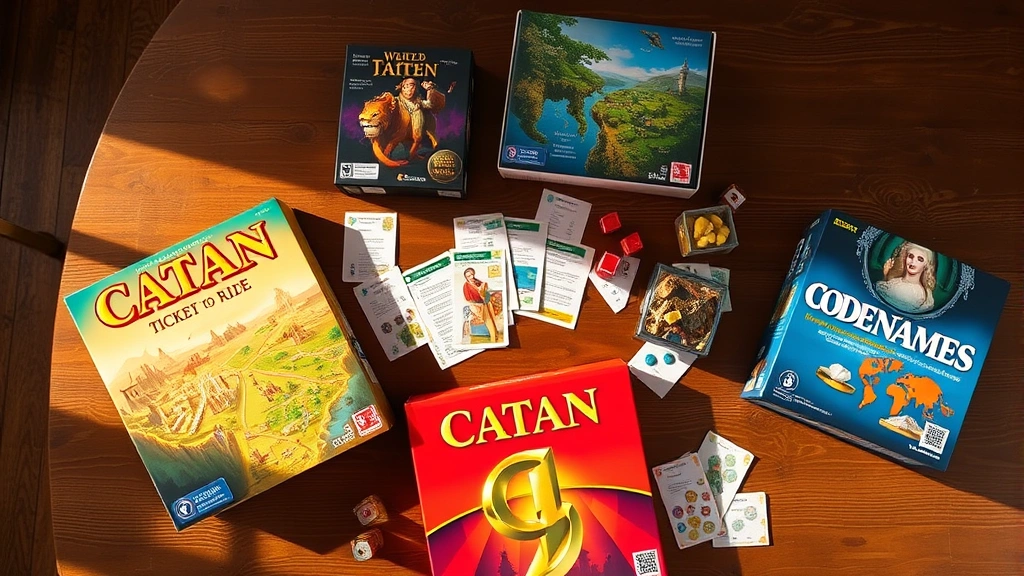
Catan (formerly Settlers of Catan) single-handedly revitalized the board game industry in the 1990s. This resource management game introduced the trading mechanic that became industry standard. Players develop settlements on a hexagonal island, trading resources like wheat, sheep, and ore to expand their territory. The randomized board setup ensures every game feels fresh, while the negotiation element creates memorable social moments. Catan proved that complex games could appeal to mainstream audiences, launching the modern hobby board game movement.
Ticket to Ride made train-themed gameplay accessible and addictive. Players collect colored cards to claim railway routes across various maps, earning points for connected networks. The game’s elegance appeals equally to casual players and strategists. With multiple map editions spanning continents and eras, Ticket to Ride offers incredible replay value. Its success demonstrated that straightforward mechanics combined with beautiful presentation could create lasting appeal.
Carcassonne pioneered tile-laying mechanics that influenced countless subsequent designs. Players build a medieval landscape by placing tiles and positioning followers strategically. The game’s modular nature allows for infinite variations through expansions, yet the core remains perfectly balanced. Carcassonne’s success spawned an entire genre of tile-laying games, proving the versatility of this elegant mechanic.
Dominion invented the deck-building genre, fundamentally changing how games approach progression and player agency. Rather than playing with fixed decks, players build their decks throughout the game by purchasing cards. This innovation transformed card gaming and inspired countless variations. Dominion’s strategic depth comes from deciding which cards to acquire, creating emergent gameplay where no two games follow identical paths.
Strategy Titans: Complex & Competitive
For players seeking substantial strategic challenges, these games deliver incredible depth and replayability. These titles reward study, planning, and tactical execution, offering experiences that unfold differently across multiple plays.
Twilight Struggle represents the pinnacle of two-player board gaming. This Cold War simulation captures the ideological conflict between superpowers through an elegant card-driven system. Each card serves dual purposes—providing historical events or allowing action points—creating constant tension between playing for immediate benefit or preserving options. The game’s 120-minute runtime feels perfectly calibrated, with meaningful decisions occurring throughout. Professional players compete in international tournaments, yet the game remains accessible to newcomers willing to learn its systems.
Food Chain Magnate offers brutal economic simulation where players build restaurant empires. The game features no catch-up mechanics; losing players continue losing, creating a ruthless competitive environment. This simulation captures capitalism’s harsh realities better than any game ever designed. Sessions can extend eight hours or longer, rewarding dedicated players with emergent narratives and genuine business competition.
Agricola revolutionized worker placement mechanics, becoming the template for an entire genre. Players develop farms by strategically deploying workers to gather resources, improve property, and raise livestock. The game’s balanced design ensures multiple viable strategies, preventing dominant tactics from overshadowing alternatives. Its influence on subsequent game design cannot be overstated.
Gloomhaven modernized campaign-based gaming with sophisticated mechanics and engaging storytelling. This dungeon-crawling adventure features persistent progression, where player choices permanently affect the game world. The tactical combat system requires thoughtful positioning and ability sequencing, rewarding strategic thinking. Gloomhaven’s success launched a new category of premium board games, proving audiences would invest in substantial gaming experiences.
Party Favorites: Social Gaming Excellence
Not every great board game requires deep strategy or extended playtime. These social experiences prioritize fun, laughter, and memorable moments with groups of friends and family.
Codenames revolutionized party gaming by creating a team-based word association game of elegant simplicity. One player (the spymaster) provides one-word clues to help teammates identify secret agents among grid cards. The game’s beauty emerges from watching groups interpret vague clues creatively, leading to hilarious misunderstandings and triumphant moments. Codenames works with 4-8 players and plays in 15 minutes, making it perfect for casual gatherings. The game’s success spawned numerous themed variations and digital adaptations.
Dixit creates magical moments through abstract art and storytelling. Players describe cards using cryptic clues, while others guess which card matches the description. The game’s gorgeous artwork inspires creative interpretation, and the scoring system rewards players who craft clues subtle enough to fool some players while remaining guessable to others. Dixit’s gentle pace and beautiful presentation create an almost meditative gaming experience.
Telestrations combines drawing, writing, and telephone game mechanics into hilarious chaos. Players draw interpretations of phrases or previous drawings, with results becoming increasingly absurd as they pass around the table. The game’s humor emerges organically from players’ varying artistic abilities and creative interpretations. Sessions generate countless laughs and memorable moments that players discuss for years afterward.
King of Tokyo delivers exciting monster-battling action in a compact package. Players control monsters competing to control Tokyo, gaining victory points through combat and special abilities. The push-your-luck dice mechanic creates tense moments where players decide whether to push for better results or lock in safe scores. The game’s bright presentation and quick 30-minute runtime make it perfect for casual gaming sessions.
Cooperative Experiences: Playing Together
Cooperative games remove player elimination and competitive conflict, instead focusing on shared objectives. These experiences prove that gaming’s greatest moments often come from working together rather than competing. If you enjoy cooperative gameplay, explore our best indie games for PC which often feature excellent cooperative mechanics.
Pandemic defined cooperative board gaming, establishing the genre’s conventions. Players control disease-fighting specialists racing to cure four global plagues before outbreak conditions spiral into catastrophe. The game’s difficulty scales appropriately, remaining challenging even for experienced players. Pandemic’s success proved audiences wanted games emphasizing teamwork over competition, inspiring countless cooperative games that followed. The game’s relevance increased dramatically following real-world pandemic experiences, resonating with players in new ways.
Spirit Island offers sophisticated cooperative gameplay where players control spiritual entities defending an island from colonizers. Each spirit plays asymmetrically, with unique abilities and power tracks. The game’s complexity rivals dedicated strategy games, yet the cooperative structure ensures players help each other overcome challenges. Spirit Island demonstrates that cooperative games can offer serious strategic depth alongside shared victory conditions.
Arkham Horror: The Card Game creates investigative horror experiences through narrative-driven campaigns. Players control investigators uncovering supernatural mysteries across multi-scenario campaigns. The game’s branching narrative structure means player choices permanently affect subsequent scenarios, creating personalized campaign experiences. The living card game format ensures constant content expansion, maintaining long-term engagement.
Forbidden Island proves cooperative games don’t require complexity to create tension. Players work together to escape a sinking island before drowning. The game’s elegant simplicity makes it perfect for introducing newcomers to cooperative mechanics, while the escalating difficulty ensures experienced players remain challenged. The game’s 30-minute playtime and beautiful presentation make it perfect for casual gaming.
Hidden Gems: Underrated Treasures
Beyond the obvious classics, numerous exceptional games deserve recognition for their innovative design and engaging experiences. These underrated titles offer experiences matching or exceeding more famous counterparts.
El Grande revolutionized area control gaming through elegant area majority mechanics. Players compete for control across Spanish regions using influence cards and careful timing. The game’s auction-based card selection creates intense negotiation moments, while the area control resolution rewards both strategic planning and opportunistic plays. Despite its age, El Grande’s design remains fresh and engaging.
Puerto Rico introduced sophisticated role-selection mechanics that influenced countless subsequent games. Players develop Caribbean plantations by selecting roles that determine available actions. The game’s economy creates emergent gameplay where player actions directly impact others’ options. Puerto Rico’s balance and strategic depth create engaging experiences across hundreds of plays.
Race for the Galaxy compresses science fiction civilization-building into 30-minute card games. The simultaneous role-selection system creates elegant decision-making without painful downtime. Players build space empires through card plays representing technologies and worlds. The game’s efficiency and depth make it perfect for players seeking substantial gaming without extended time commitments.
Innovation embraces chaos through card-driven civilization building where fortunes shift dramatically. Players advance through historical ages using civilization cards, but events constantly overturn established orders. While some players dislike the luck-heavy mechanics, Innovation’s chaotic nature creates memorable moments and hilarious reversals. The game celebrates unpredictability as a feature rather than flaw.
Jaipur delivers elegant two-player trading gameplay in compact form. Players compete as traders in Indian markets, buying and selling goods to accumulate wealth. The push-your-luck decision-making and direct competition create tense moments despite the game’s simplicity. Jaipur proves that outstanding gaming experiences don’t require complexity or extended playtimes.
The board game industry continues evolving, with designers pushing creative boundaries annually. Modern production values, innovative mechanics, and diverse themes ensure something exists for every player preference. Whether you’re drawn to gaming entertainment or specific genres, the current landscape offers unprecedented variety and quality.
For context on how board gaming connects to broader entertainment ecosystems, consider exploring topics like what is cloud gaming, which offers different gaming modalities. You might also enjoy understanding how to record gameplay on PC if you want to document your gaming moments, or even explore gaming PC build guide for digital gaming setups that complement your tabletop hobby.
FAQ
What makes a board game truly great?
Exceptional board games combine elegant mechanics, balanced gameplay, meaningful decision-making, and memorable social experiences. The best games remain engaging across multiple plays while accommodating players of varying skill levels. Great design feels effortless once learned, yet offers surprising depth for dedicated players.
How long should I expect to play these games?
Game lengths vary dramatically. Party games like Codenames play in 15 minutes, while complex strategy games like Food Chain Magnate can extend 8+ hours. Medium-weight games typically run 45-90 minutes. Always check playing time estimates before purchasing, as your available gaming time influences which games suit your lifestyle.
Are these games suitable for family play?
Many recommendations work excellently for family gaming, particularly Catan, Ticket to Ride, Carcassonne, and Codenames. However, some games like Twilight Struggle or Food Chain Magnate target experienced players seeking strategic challenges. Always review recommended age ranges and player counts before purchasing.
Where can I find these games?
Most major retailers stock popular titles like Catan and Ticket to Ride. Specialized board game cafes and retailers offer comprehensive selections. Online retailers provide broader inventory, though shipping costs may impact overall pricing. Many games also offer digital implementations through platforms like Board Game Arena or Tabletopia.
How do I choose which game to buy first?
Consider your gaming group’s size, available playtime, and preferred complexity level. Start with accessible games like Catan or Ticket to Ride if you’re new to hobby gaming. Party games suit casual groups, while strategy games appeal to dedicated enthusiasts. Reading reviews and watching gameplay videos helps inform purchasing decisions before committing financially.
Can I play these games solo?
Some games support solo play through designated solo rules, particularly cooperative games like Pandemic and Spirit Island. Many others work through AI opponents or self-directed challenges. Check individual game specifications, as solo support varies dramatically between titles.
How often do new board games release?
The industry releases thousands of new games annually through major publishers and independent designers. Kickstarter has democratized game publishing, allowing small teams to fund innovative designs. This incredible productivity ensures constant innovation, though separating exceptional games from mediocre entries requires research and community input.