
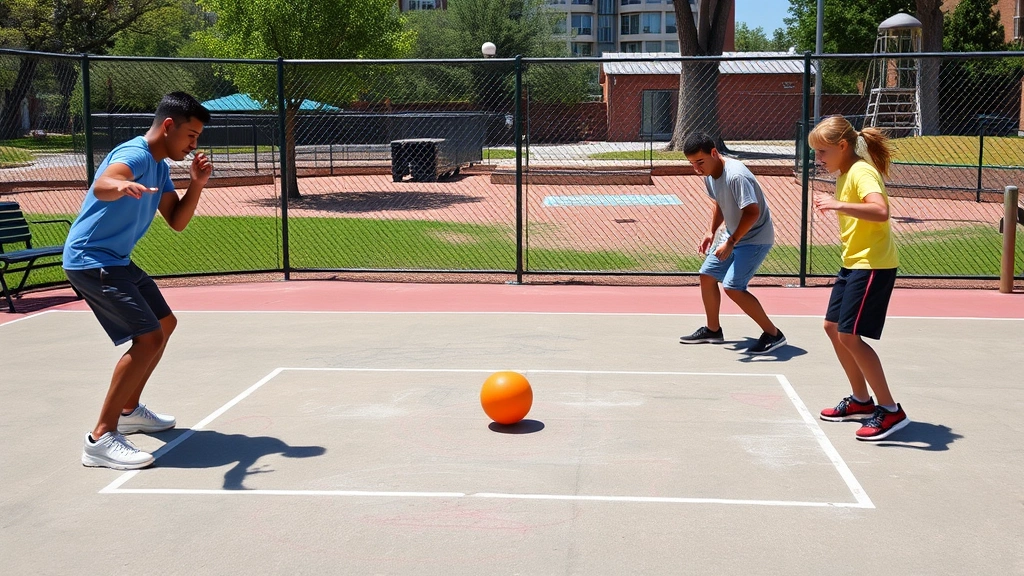
Top Four Square Tips: Expert Insights for Mastering This Classic Playground Game
Four square is a timeless playground game that has entertained millions of players across generations. Whether you’re rediscovering this classic or introducing it to a new audience, understanding the fundamental strategies can dramatically improve your gameplay and competitive edge. This beloved schoolyard game combines simple rules with deep strategic depth, making it accessible to beginners while offering plenty of room for advanced players to develop their skills.
The beauty of four square lies in its simplicity—all you need is a ball, a court divided into four squares, and players ready to compete. However, mastering the game requires more than just showing up. In this comprehensive guide, we’ll explore expert tips that will elevate your four square performance, whether you’re playing casually with friends or competing in organized tournaments. From positioning strategies to advanced serving techniques, these insights will help you dominate the court.

Master Your Serving Technique
The serve is arguably the most important aspect of four square gameplay. A strong, consistent serve sets the tone for every rally and puts immediate pressure on your opponents. Unlike many sports where serving is just a formality, in four square, your serve can be a weapon that wins points outright or forces weak returns.
The fundamental serving technique involves bouncing the ball in your own square before hitting it into an opponent’s square. The key to an effective serve is consistency—you want to be able to place the ball exactly where you intend it to go. Practice bouncing the ball at the same height every time, and develop a smooth, repeatable motion. Your arm should move in a controlled arc, not a wild swing. The angle of contact is crucial; a slight upward motion creates a flatter trajectory, while a downward angle produces a higher arc.
Advanced players often develop multiple serve variations. A kick serve that spins unpredictably is incredibly difficult for opponents to handle. To execute a kick serve, brush the side of the ball with your paddle or hand, imparting spin that makes the ball curve or bounce erratically. Another devastating serve is the deep serve—aiming for the back corner of your opponent’s square, forcing them to move backward and limiting their offensive options.
Consider the speed of your serve as well. While a fast serve might seem attractive, accuracy is more important. A slow, well-placed serve that catches your opponent off-guard is far more valuable than a powerful serve that goes out of bounds. Many beginners make the mistake of trying to serve too hard, sacrificing control for power. Focus on placement first, then gradually increase speed while maintaining accuracy.
Perfect Your Court Positioning
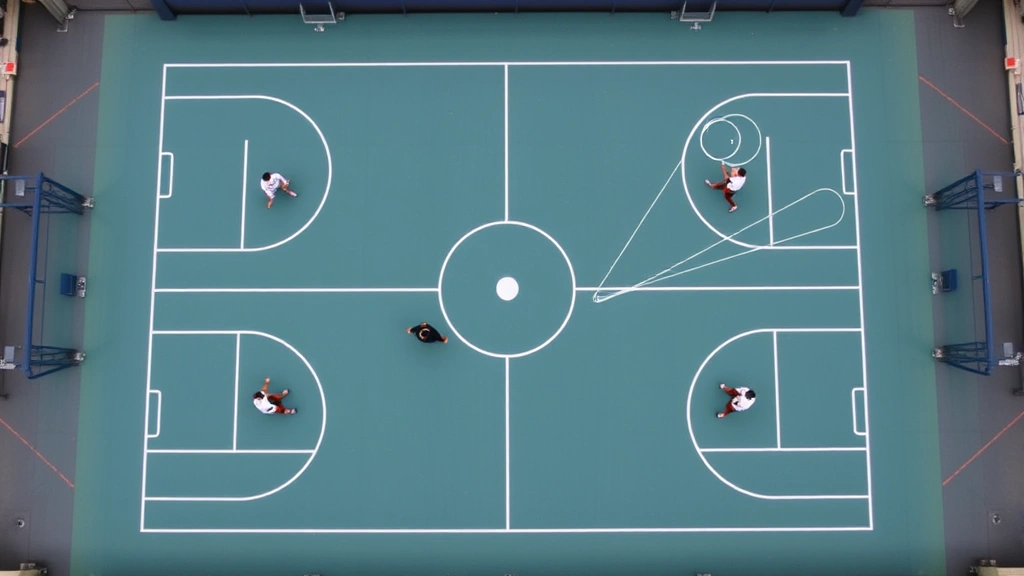
Understanding proper court positioning is what separates casual players from competitive ones. Your position on the court determines your ability to react quickly, cover ground efficiently, and execute offensive shots. The four squares have different strategic values, and your positioning strategy should change depending on which square you occupy.
If you’re in the king’s square (typically the back-right square), you have the most control and should be aggressive. Position yourself slightly forward in your square, ready to pounce on weak returns. This aggressive stance allows you to move forward quickly for short balls or backward for deep shots. When you’re in a lower-ranked square, your strategy should be more defensive. Stand deeper in your square, giving yourself more reaction time and court to cover.
The center positioning is critical for success. Rather than standing in the exact center of your square, position yourself slightly toward the direction where your opponent is likely to hit. This is called “anticipation positioning.” By reading your opponent’s body language and previous shot patterns, you can shift your weight and position before they even make contact with the ball. This gives you a significant advantage in reaction time.
Footwork is essential for maintaining proper positioning. Use small, quick steps to adjust your position constantly. Many players make the mistake of standing flat-footed, which limits their ability to move explosively in any direction. Instead, stay on the balls of your feet with your knees slightly bent, maintaining an athletic stance that allows you to move in any direction instantly.
Pay attention to court geometry. The angles of the court create natural weak spots and strong positions. A ball hit toward the corners is harder to return than one hit toward the center. Use this knowledge to position yourself defensively when you’re vulnerable, and exploit these angles when you’re on offense. Understanding court positioning is closely related to multiplayer game strategies that require spatial awareness and tactical thinking.
Develop Advanced Ball Control
Ball control separates elite four square players from the rest. This encompasses everything from how you contact the ball to how you manipulate its trajectory, spin, and speed. Developing exceptional ball control requires dedicated practice, but the results are absolutely worth the effort.
First, master the basic stroke mechanics. When hitting the ball, make contact in front of your body with your arm extended. This positioning gives you maximum control and power. The follow-through is equally important—your arm should continue its motion smoothly after contact, not stop abruptly. A proper follow-through ensures consistent contact and reduces the likelihood of mishits.
Learn to hit with both power and touch. While aggressive shots are important, the ability to hit soft, controlled shots is equally valuable. A well-executed drop shot that barely clears the net is incredibly difficult to return, especially when your opponent is expecting a power shot. Practice hitting shots at various speeds and trajectories until you can execute them reliably under pressure.
Spin is an advanced technique that can give you a significant competitive advantage. Topspin (hitting down and forward) creates a higher bounce and shorter flight path, making the ball harder to return. Backspin (hitting down and backward) creates a lower bounce and can cause the ball to slow down unexpectedly. Sidespin causes the ball to curve left or right, throwing off your opponent’s timing. Mastering these techniques requires practice, but once you develop them, you’ll have tools that most casual players can’t handle.
Ball control also includes understanding how different court surfaces affect play. A ball bounces differently on concrete, asphalt, or rubber. Adjust your technique based on the surface you’re playing on. For instance, on a slippery surface, you might need to hit with less power but more precision to maintain control.
Developing ball control is similar to the precision required in recording gameplay with perfect timing and accuracy—both require meticulous attention to detail and consistent practice to achieve excellence.
Read Your Opponents and Adapt
The final expert tip is perhaps the most important: developing the ability to read your opponents and adapt your strategy accordingly. Four square is as much a mental game as it is physical. The best players constantly analyze their opponents’ tendencies and adjust their game plan in real-time.
Pay attention to your opponent’s strengths and weaknesses. Does one player struggle with high balls? Does another have a weak backhand? Is someone prone to rushing to the net? Once you identify these patterns, exploit them relentlessly. If an opponent struggles with balls hit to their weaker side, consistently target that area. Force them to play in uncomfortable positions.
Watch your opponent’s body language and positioning. Their stance, weight distribution, and eye movement all provide clues about where they’re likely to move or what shot they’re about to execute. An experienced player can anticipate shots before they happen, giving them precious extra milliseconds to react.
Adapt your strategy based on game situations. If you’re winning, play conservatively and avoid risky shots that might give your opponent an opening. If you’re behind, take calculated risks and be more aggressive. Adjust your serving strategy based on what’s working—if your kick serve is winning points, use it more frequently. If your opponent is reading it, switch to a different serve type to keep them guessing.
Mental toughness is crucial for adaptation. Don’t get frustrated when an opponent makes a great shot. Instead, learn from it and adjust. The ability to stay calm under pressure and make strategic adjustments is what separates champions from ordinary players. This kind of adaptive thinking is fundamental to competitive gaming, much like the strategies discussed in our GameForge Daily Blog covering various gaming disciplines.
Communication with other players can also improve your overall game. Discussing tactics, sharing tips, and learning from more experienced players accelerates your development. The four square community is generally welcoming and supportive, so don’t hesitate to ask for advice or feedback on your gameplay.
Consider recording your matches to review later. Analyzing your own performance objectively can reveal patterns and mistakes you didn’t notice during play. This self-analysis is invaluable for continuous improvement. For tips on capturing your gameplay effectively, check out our guide on how to record gameplay on PC, which provides excellent techniques for documentation and analysis.
Understanding the competitive landscape of four square is also important. Research gaming communities and competitive platforms where four square tournaments are organized. Learning from top-ranked players and studying their techniques can accelerate your improvement dramatically.
Finally, remember that four square is ultimately about having fun. While these tips will improve your competitive performance, don’t lose sight of the enjoyment that makes the game special. Whether you’re playing casually with friends or competing seriously, the goal should be continuous improvement while maintaining a positive attitude. Looking for other games to complement your competitive gaming interests? Check out our curated list of best indie games for PC, which showcase hidden gems that reward strategic thinking and skill development.
FAQ
What are the basic rules of four square?
Four square is played with four players in four squares arranged in a 2×2 grid. Players bounce a ball between squares, and if you fail to return the ball properly, you’re eliminated. The king’s square (usually the back-right) is the highest rank, and players advance by winning rallies. The game continues until only one player remains.
How can I improve my four square game quickly?
Focus on consistent practice, particularly your serve and ball control. Play against better opponents who will challenge you and force you to improve. Watch experienced players and learn their techniques. Finally, practice mental discipline and strategic thinking to outmaneuver your opponents tactically.
What equipment do I need to play four square?
Minimally, you need a rubber ball (typically 7-8 inches in diameter) and a court divided into four squares, usually marked with chalk or tape. Some players prefer using paddles or rackets, though the game can be played with bare hands. Wearing athletic shoes with good court grip is recommended for optimal performance.
Are there official four square tournaments?
Yes, four square has organized competitive play at various levels, from school tournaments to regional and national competitions. Many communities host casual tournaments as well. Competitive four square follows standardized rules and often has ranking systems for players.
Can I play four square with fewer or more than four players?
While traditional four square requires exactly four players, variations exist for different player counts. With three players, you can play in three squares. With more than four players, you can create a line of players waiting to enter, with eliminated players going to the back of the line.
What’s the best way to practice four square alone?
Practice against a wall, bouncing the ball into one of your squares and then hitting it against the wall to simulate an opponent’s return. This helps develop ball control and consistency. You can also practice your serves repeatedly to develop muscle memory and accuracy.