
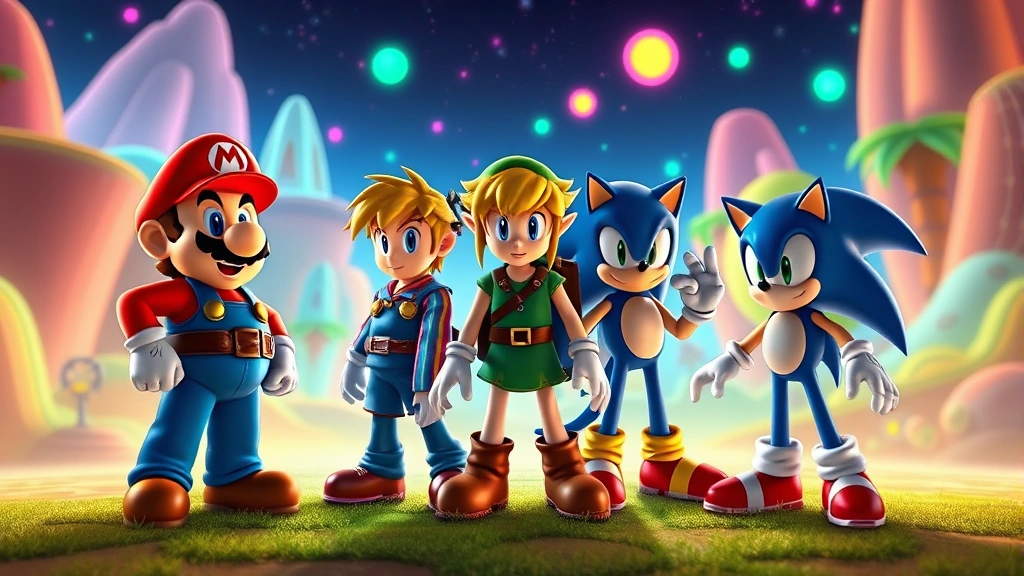
Iconic Game Characters: The Fan Favorites List That Defined Gaming History
Gaming has given us some of the most memorable characters in entertainment history. From plucky Italian plumbers to stoic space marines, these iconic game characters have transcended their digital origins to become cultural phenomena. They’ve graced magazine covers, inspired countless cosplays, and sparked passionate debates among fans worldwide. The characters we love represent the very best of game design—they’re instantly recognizable, deeply engaging, and often carry narratives that resonate with millions of players across generations.
What makes a game character truly iconic? It’s more than just appearing in a popular game. The greatest game characters possess distinctive personalities, memorable designs, and stories that stick with us long after we’ve put down the controller. They evolve across sequels, inspire fan communities, and sometimes become more famous than the games themselves. Whether you’re a hardcore gamer exploring the best indie games for PC or a casual player, you’ve definitely encountered at least one character on this list.
In this comprehensive guide, we’ll explore the most beloved and influential game characters that have shaped the gaming landscape. We’ll examine what makes them special, why fans adore them, and how they’ve impacted the industry. Whether you’re here to settle friendly debates or discover characters you might have missed, this ranking celebrates the digital heroes and anti-heroes that make gaming extraordinary.
Mario: The Plumber Who Started It All
When Nintendo introduced Mario in the arcade game Donkey Kong in 1981, nobody could have predicted that this mustachioed plumber would become the most recognizable video game character of all time. Originally called Jumpman, Mario was simply trying to rescue his girlfriend from a giant ape. Today, he’s a global ambassador for gaming itself, starring in over 200 games across multiple genres.
What makes Mario so enduringly popular is his universal appeal and incredible design. His bright red cap, overalls, and distinctive mustache make him instantly identifiable across all age groups and cultures. Unlike many complex modern characters, Mario’s simplicity is his strength. He doesn’t need an elaborate backstory or brooding personality—his charm lies in his everyman quality combined with his heroic spirit. When you jump into a Mario game, you’re not roleplaying a character; you’re embodying pure fun and adventure.
The Mario franchise showcases remarkable versatility. From his platforming roots in the Super Mario Bros. series to kart racing in Mario Kart, sports competitions, and even role-playing games, Mario has proven he can excel in any genre. Each game introduces new power-ups and mechanics that feel fresh while maintaining the core experience that fans cherish. His influence on game design is immeasurable—the original Super Mario Bros. literally saved the video game industry from collapse in the 1980s.
Mario’s cultural impact extends far beyond gaming. He’s appeared in films, television shows, merchandise, and theme parks. The recent Super Mario Bros. Movie introduced him to new audiences while delighting longtime fans. His iconic theme music is recognized worldwide, and his catchphrase “Let’s-a-go!” has become part of global gaming culture. When discussing iconic game characters, Mario must always rank at or near the top.
Link: The Silent Hero of Hyrule
While Mario represents the platforming revolution, Link embodies the adventure and exploration that define gaming. The protagonist of the Legend of Zelda series, Link has been rescuing Princess Zelda and saving Hyrule since 1986. What’s remarkable about Link is that despite being completely silent—communicating only through grunts, yells, and the occasional musical note—he’s become one of gaming’s most expressive and beloved characters.
Link’s design evolution mirrors the technological advancement of gaming itself. From his simple 8-bit form to the detailed, realistic renditions in recent Zelda games, Link has always felt fresh yet familiar. His iconic green tunic, blonde hair, and pointed hat are instantly recognizable, but what truly defines him is his resourcefulness and courage. Link faces impossible odds—ancient demons, time paradoxes, and apocalyptic threats—with nothing but his wits, his sword, and the items he collects along the way.
The genius of Link’s character design is that his silence allows players to project themselves onto him. You’re not watching Link’s story unfold; you’re living it. His puzzles require your intelligence, his combat requires your skill, and his adventures require your curiosity. This interactive relationship between player and character creates an intimate bond that few other game characters can match.
Link’s games, particularly the recent Breath of the Wild and Tears of the Kingdom, have revolutionized open-world game design. These titles emphasize player freedom and creative problem-solving, allowing multiple solutions to challenges. Link’s versatility—whether he’s wielding swords, solving puzzles, or simply exploring vast landscapes—makes him the perfect vessel for these innovative gameplay experiences.
Sonic the Hedgehog: Speed and Attitude
If Mario represents the joy of gaming, Sonic represents its attitude and cool factor. Introduced in 1991 as Sega’s answer to Mario, Sonic the Hedgehog brought something new to the platforming scene: incredible speed and a personality to match. With his bright blue color, red sneakers, and confident swagger, Sonic was gaming’s first true bad boy, and kids loved him for it.
Sonic’s defining characteristic is speed. The rush of zooming through loops, launching across valleys, and collecting rings at breakneck velocity created an entirely new type of platforming gameplay. Where Mario games rewarded careful, precise movement, Sonic games rewarded momentum and flow. This fundamental design difference meant that Sonic attracted a different type of player—those who wanted to feel fast, powerful, and in control.
Beyond his gameplay mechanics, Sonic possesses genuine personality. His confident attitude, his rivalry with Dr. Robotnik, and his collection of quirky friends made him feel like a character rather than just a sprite on screen. He’s sarcastic, brave, and always ready for adventure. The Sonic Adventure games even gave him voice acting that perfectly captured his cocky charm. This personality has made Sonic one of gaming’s most recognizable and beloved characters, even when the quality of his games has been inconsistent.
Sonic’s cultural impact rivals Mario’s in many ways. He’s starred in animated series, films, and has maintained a devoted fanbase for over three decades. The recent Sonic movie success has introduced him to new generations, proving that iconic game characters can successfully transition to other media while maintaining their essential appeal. Sonic’s influence on game design—particularly regarding level design and player momentum—continues to inspire developers today.

Master Chief: Humanity’s Greatest Soldier
Master Chief, the protagonist of the Halo franchise, represents a different type of gaming icon. He’s not cute or quirky; he’s a hardened military soldier encased in advanced armor. Yet despite his intimidating appearance, Master Chief has become one of gaming’s most compelling characters through the Halo series’ exceptional storytelling and world-building.
What makes Master Chief special is the mysterious nature of his character. For much of the original Halo trilogy, players never saw his face. They experienced the Halo universe through his eyes, hearing his thoughts and witnessing his actions, but his identity remained hidden. This created a powerful player-character connection where gamers could imagine themselves as this legendary soldier. When his face was finally revealed in Halo 4, it was a moment of genuine emotional significance for the fanbase.
Master Chief’s relationship with Cortana, his AI companion, provides emotional depth to the Halo narrative. Their partnership creates some of gaming’s most memorable moments, particularly in Halo 4 and 5. Master Chief isn’t just a soldier; he’s a character capable of genuine emotion and sacrifice, which elevates him beyond simple military power fantasy.
The Halo series revolutionized console first-person shooters, and Master Chief became the face of that revolution. For many players, particularly Xbox owners, Master Chief IS gaming. His iconic armor, his signature weapons, and his stoic determination have made him one of the most recognizable game characters in industry history. Whether you’re exploring the best co-op games on Steam or diving into exclusive Xbox titles, Master Chief’s legacy remains undeniable.
Lara Croft: The Original Gaming Icon
Lara Croft deserves special recognition as one of gaming’s first true superstars. When Tomb Raider launched in 1996, Lara Croft became the industry’s first major female protagonist, and she revolutionized gaming’s approach to character design and marketing. She wasn’t a princess needing rescue; she was an archaeologist, adventurer, and action hero in her own right.
Lara Croft’s appeal extends beyond her iconic appearance. She’s intelligent, capable, and independent—qualities that made her groundbreaking for 1996 and remain important today. Her games combine exploration, puzzle-solving, and action in ways that felt fresh and exciting. Players didn’t just control Lara; they became her, exploring ancient tombs and unraveling historical mysteries with a sense of genuine discovery.
The Tomb Raider franchise’s success proved that game characters could transcend gaming and become mainstream celebrities. Lara appeared in films, comics, and merchandise, becoming a cultural icon beyond gaming circles. The recent Tomb Raider reboot successfully reinvented her for modern audiences while maintaining her essential character traits, proving her enduring appeal.
Lara Croft’s influence on game design cannot be overstated. She demonstrated that female protagonists could carry major franchises and that players would embrace them enthusiastically. This paved the way for countless other female characters in gaming. Her legacy extends to modern games that prioritize exploration, puzzle-solving, and character-driven narratives.
Cloud Strife: Brooding Cloud Nine
Cloud Strife, the protagonist of Final Fantasy VII, represents the shift toward complex, emotionally nuanced game characters. Released in 1997, Final Fantasy VII introduced millions of players to Japanese RPGs, and Cloud became gaming’s quintessential brooding hero. His spiky blonde hair, oversized sword, and mysterious demeanor captivated players and sparked a phenomenon that continues today.
What makes Cloud special is his depth. He’s not simply a hero on a quest; he’s a deeply flawed character dealing with identity issues, trauma, and existential questions. Throughout Final Fantasy VII, players gradually uncover the truth about Cloud’s past and his complicated relationship with Sephiroth, the game’s antagonist. This narrative complexity elevated video game storytelling and proved that games could deliver emotionally resonant character arcs.
Cloud’s design is immediately iconic. His SOLDIER uniform, his massive Buster Sword, and his distinctive appearance make him instantly recognizable. Yet beyond aesthetics, Cloud’s personality—his dry humor, his reluctant heroism, and his capacity for growth—makes him genuinely likeable despite his initial aloofness. Players connect with Cloud because he’s dealing with real issues in a fantastical setting.
The recent Final Fantasy VII Remake has allowed a new generation to experience Cloud’s story with modern graphics and expanded narrative. The game explores Cloud’s character in greater depth, adding layers to his personality while maintaining the essence that made him iconic. Cloud’s continued relevance demonstrates how great character design transcends generational boundaries.
Pikachu: The Electric Phenomenon
Pikachu might be the most recognizable game character globally, rivaling even Mario in mainstream cultural awareness. This electric mouse Pokémon became the face of the Pokémon franchise, which itself became a multi-billion dollar phenomenon. Pikachu’s appeal crosses all demographic boundaries—children recognize Pikachu, adults who grew up with Pokémon adore Pikachu, and even people who’ve never played Pokémon games know this character.
What makes Pikachu special is its inherent cuteness combined with genuine power. Pikachu is adorable—its round shape, its big ears, and its iconic “Pika pika” cry make it irresistibly cute. Yet Pikachu is also a formidable fighter capable of generating and controlling electricity. This combination of cuteness and strength appeals to a wide audience and makes Pikachu the perfect mascot for the Pokémon franchise.
Pikachu’s journey from Pokédex entry to global icon is remarkable. In the Pokémon anime, Pikachu is Ash’s closest companion and emotional anchor. Their relationship demonstrates genuine friendship and loyalty, creating emotional investment that transcends typical video game narratives. Players don’t just catch and train Pikachu; they develop genuine affection for this character.
The success of Pokémon games, films, trading cards, and merchandise is inextricably linked to Pikachu’s iconic status. Detective Pikachu, the recent live-action film, proved that Pikachu could star in its own narrative and captivate audiences worldwide. Few game characters have achieved such universal recognition and affection as Pikachu.
Donkey Kong: From Villain to Hero
Donkey Kong’s journey is unique among game characters. He debuted as the antagonist in the 1981 arcade game of the same name, where he was simply a giant ape throwing barrels at Jumpman (later Mario). Yet through clever character development and game design, Donkey Kong evolved into a beloved protagonist with his own successful franchise.
The Donkey Kong Country series, which debuted in 1994, transformed DK from Mario’s nemesis into a heroic protagonist with genuine personality. The games portrayed Donkey Kong as a noble, strong-willed ape defending his territory and family from invaders. This character rehabilitation was so successful that Donkey Kong became just as iconic as Mario, despite being Mario’s original rival.
What makes Donkey Kong special is his straightforward heroism combined with his primal strength. He’s not complicated or mysterious; he’s simply a powerful ape protecting what he loves. This simplicity, combined with his incredible strength and charm, makes him endearing to players. The Donkey Kong Country games showcase his personality through animations and interactions with his family members, making him feel like a real character rather than just a game mechanic.
Donkey Kong’s games are celebrated for their exceptional level design and creative gameplay mechanics. The country series introduced mine cart levels and partnership mechanics that became genre-defining. When discussing legendary game characters and their impact on game design, Donkey Kong deserves recognition alongside Mario and Link.
Pac-Man: The Arcade Legend
Pac-Man might be the simplest game character ever created, yet he remains one of the most iconic and influential. A yellow circle with a mouth, Pac-Man was introduced in 1980 and became the first video game character to achieve mainstream cultural recognition. Before Mario, before Donkey Kong, Pac-Man was THE video game character that non-gamers recognized.
Pac-Man’s genius lies in absolute simplicity. The character design is so minimal that it works perfectly on any screen size or resolution. You instantly understand what Pac-Man is and what he’s doing. Yet despite this simplicity, Pac-Man possesses genuine personality. The way he moves, the sound effects accompanying his actions, and the simple narrative of a creature eating dots while avoiding ghosts creates an oddly compelling experience.
Pac-Man’s cultural impact cannot be overstated. The character transcended gaming to become a mainstream phenomenon. Pac-Man merchandise, television shows, and cultural references permeate popular culture decades after the game’s release. The character’s simple design has made it incredibly versatile, appearing in countless games, remixes, and tributes.
What’s remarkable about Pac-Man is that despite being created in 1980, the character remains relevant and beloved. New generations discover Pac-Man, and the character’s appeal never diminishes. This longevity demonstrates that great character design, combined with engaging gameplay, creates lasting cultural icons that transcend technological limitations.
Kratos: The Ghost of Sparta
Kratos represents modern gaming’s capacity to create complex, evolving characters. The protagonist of the God of War franchise, Kratos began as a simple revenge-driven warrior driven by rage and vengeance. Over multiple games and a complete narrative reboot, Kratos evolved into one of gaming’s most compelling and nuanced characters, exploring themes of redemption, fatherhood, and the cost of violence.
What makes Kratos special is his character arc. In the original God of War trilogy, Kratos was a force of nature—unstoppable, furious, and driven by singular purpose. His character development was implicit in his actions rather than explicit dialogue. Yet the recent God of War (2018) and God of War Ragnarök completely reinvented Kratos as a father figure struggling to control his rage while protecting his son Atreus. This evolution allowed players to experience Kratos as a complex, sympathetic character dealing with genuine emotional challenges.
Kratos’s design is instantly iconic. His pale skin, his Greek warrior aesthetic, and his signature Blades of Chaos make him immediately recognizable. Yet his character extends beyond appearance. His gruff voice, his reluctant wisdom, and his capacity for growth make him genuinely compelling. The relationship between Kratos and Atreus provides emotional anchoring that elevates the God of War narrative beyond simple action-adventure gameplay.
The God of War franchise demonstrates how game characters can evolve and deepen over time. Kratos’s journey from vengeful warrior to conflicted father resonates with players on emotional levels that many games never achieve. His story explores themes of legacy, redemption, and the cyclical nature of violence, making him one of gaming’s most philosophically interesting characters.

FAQ
What makes a game character iconic?
An iconic game character typically possesses distinctive visual design, memorable personality, and meaningful gameplay integration. The character should be instantly recognizable, possess genuine emotional depth, and demonstrate longevity across multiple games or media. Great game characters inspire fan communities, transcend their original games, and influence industry design philosophy. They often become cultural icons recognized even by non-gamers.
Why is Mario considered the greatest game character?
Mario earned this distinction through sheer longevity, versatility, and cultural impact. He debuted in 1981 and remains actively popular decades later. Mario has successfully appeared in numerous game genres—platformers, racing games, sports titles, and RPGs—while maintaining his essential charm. His design is universally appealing, and his influence on game design is immeasurable. Perhaps most importantly, Mario literally saved the video game industry from collapse in the 1980s, making him not just iconic but historically significant.
Can modern game characters become as iconic as classic ones?
Absolutely. While classic characters like Mario and Pac-Man benefit from nostalgia and historical significance, modern characters like Kratos and characters from popular franchises continue to achieve iconic status. The difference is that modern characters must prove their longevity and cultural impact over time. However, games like God of War, The Last of Us, and Elden Ring are creating characters that resonate with modern audiences and may achieve legendary status as these games age.
Why do some iconic characters have silent protagonists?
Silent protagonists like Link allow players to project themselves onto the character, creating a more personal connection. When a character doesn’t speak, players fill in their personality through their own imagination and the character’s actions. This approach can create more immersive experiences where players feel like they’re the protagonist rather than controlling a pre-defined character. However, modern games often balance this with selective dialogue and character development that adds depth without limiting player agency.
How do game characters influence game design?
Characters profoundly influence game design because gameplay mechanics often flow from character abilities and personality. Mario’s jumping ability defines platformer design. Sonic’s speed creates momentum-based level design. Lara Croft’s archaeology inspires exploration and puzzle-solving. Great character design ensures that gameplay mechanics feel integral to the character rather than arbitrary. When character and mechanics align perfectly, games become more cohesive and memorable. This is why the best game characters are inseparable from their gameplay experiences.
Are there iconic game characters beyond the ones listed?
Definitely! This list represents some of the most influential and beloved characters, but gaming has produced countless iconic figures. Characters like Zelda, Mega Man, Samus Aran, Solid Snake, Geralt of Rivia, and many others deserve recognition. The gaming industry continues producing new characters with iconic potential. For more gaming content and character discussions, check out our GameForge Daily Blog for regular updates on gaming culture and character analysis.
How have game characters evolved over gaming history?
Early game characters were simple due to technical limitations—think Pac-Man or early Mario designs. As technology advanced, characters became more detailed and complex. Modern game characters feature advanced facial animations, voice acting, and nuanced personality development. However, evolution isn’t just technical; it’s narrative and thematic as well. Modern games explore character psychology, moral complexity, and emotional depth that earlier games couldn’t achieve. Yet interestingly, some of the simplest, oldest character designs remain the most iconic, suggesting that great character design transcends technological era.

