
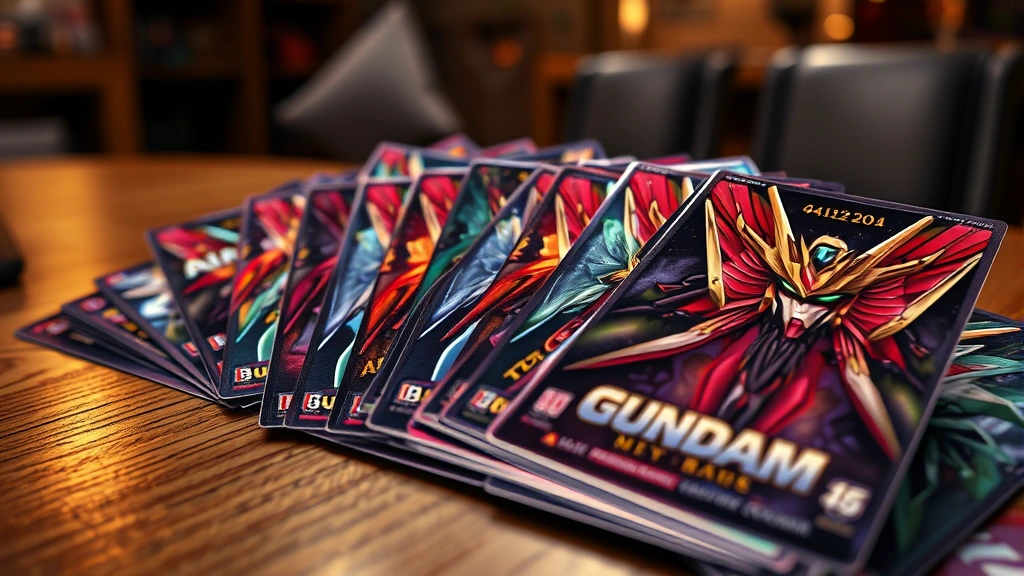
Top Gundam Card Strategies: Expert Tips for Competitive Play
The Gundam Trading Card Game has exploded onto the competitive scene, captivating players worldwide with its dynamic mechanics, iconic mobile suit designs, and strategic depth. Whether you’re a seasoned card game veteran or a newcomer eager to master the battlefield, understanding core strategies can dramatically elevate your gameplay. This comprehensive guide breaks down expert tactics, deck-building principles, and advanced techniques that separate casual players from tournament champions.
Success in the Gundam TCG isn’t just about collecting powerful cards—it’s about understanding synergies, resource management, and psychological positioning. From aggressive rushing strategies to control-heavy defensive builds, each archetype demands unique decision-making. We’ve compiled insights from competitive players and industry experts to help you dominate your local tournaments and online matches.

Understanding Core Mechanics
Before diving into advanced strategies, you must grasp the fundamental mechanics that govern the Gundam Trading Card Game. The game revolves around deploying mobile suits, managing your power gauge, and outmaneuvering opponents through superior positioning and resource allocation. Each turn presents critical decisions about which units to field, when to activate special abilities, and how to optimize your damage output.
The power system acts as your primary resource engine. Unlike traditional mana-based games, Gundam TCG uses a power gauge that accumulates turn by turn, allowing players to execute increasingly powerful plays as the match progresses. Understanding power curves and when to make your aggressive pushes separates competent players from true strategists. Early-game acceleration through specific cards can provide decisive advantages, but overextending leaves you vulnerable to devastating counterattacks.
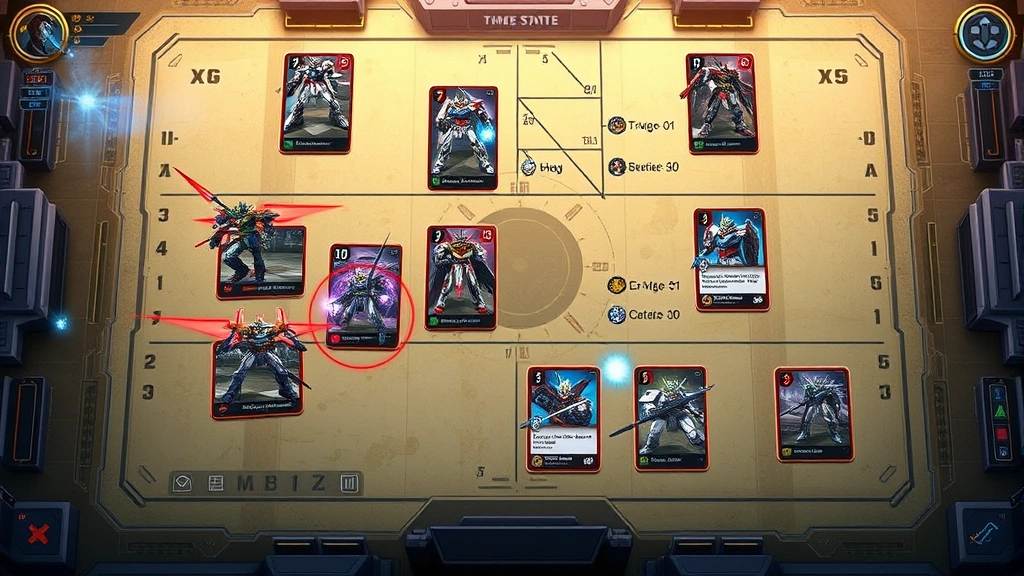
Mobile suit positioning matters significantly. Cards occupy specific zones on your field, and their placement affects which units can attack, defend, or activate certain effects. Strategic positioning allows you to protect vulnerable cards while maximizing offensive potential. This spatial element adds a chess-like quality that rewards careful planning.
The damage system tracks hits to your pilot—accumulate enough damage and you lose. However, damage isn’t the only win condition. Some decks focus on controlling the board state so thoroughly that opponents cannot mount meaningful offense. Others employ mill strategies, forcing opponents to deck out through card depletion. Understanding all win conditions keeps you prepared for diverse opponent strategies.
Deck Building Fundamentals
Constructing an effective Gundam TCG deck requires balancing consistency, power level, and strategic coherence. Most competitive decks contain 40-50 cards, and every inclusion must serve a purpose. Redundancy in key effects matters more than including singleton powerful cards—you want reliable access to your strategy’s core components.
Start by identifying your deck’s primary win condition. Are you rushing down opponents with aggressive early-game pressure? Building toward a massive mid-game power spike? Controlling the board until you establish an unbreakable position? Your win condition dictates card selections across all categories. A rush deck needs explosive early units and effects that generate tempo. A control deck prioritizes interaction cards and board wipes.
Card ratios demand careful consideration. Most competitive decks run 3-4 copies of essential cards, 2-3 copies of situational pieces, and 1-2 copies of tech choices. This distribution ensures you consistently draw your core strategy while maintaining flexibility for meta adjustments. When building your first competitive deck, err toward consistency—multiple copies of reliable cards beat singleton powerful cards.
Mana curves represent another critical element. Your deck should contain a healthy distribution of low-cost plays (enabling early-game presence), mid-cost threats (establishing board dominance), and high-cost finishers (closing out games decisively). An unbalanced curve leaves you with hands full of cards you cannot cast, or conversely, early turns with nothing to do.
Consider including interaction pieces—cards that disrupt opponent strategies. These might be unit removals, effect negations, or cards that steal opponent resources. The right amount of interaction (typically 8-12 cards in a 40-card deck) prevents opponents from executing their game plan while leaving room for your own threats.
Finally, test your deck extensively before tournaments. Goldfish games (playing against no opponent, testing your strategy in isolation) reveal consistency issues. Actual matches against varied strategies show whether your interactive elements sufficiently answer the meta. Be willing to cut cards that underperform, even if they seem powerful in theory.
Resource Management Mastery
The player who better manages limited resources typically wins. In Gundam TCG, your primary resources include power, hand size, and board space. Optimizing these resources separates amateur players from competitive threats.
Power management demands constant evaluation. Spending power on early threats might generate tempo but leaves you vulnerable when opponents deploy their threats. Conversely, hoarding power for one massive turn might allow opponents to stabilize. Most competitive play involves spending approximately 60-70% of your available power each turn, reserving buffer power for defensive needs or reactive plays.
Hand management parallels power considerations. Drawing additional cards provides options and flexibility, but some cards should stay in your deck when you’re executing your game plan. Learning when to hold cards versus when to cycle them (discarding to draw new options) separates competent players from masters. Generally, keep cards that advance your primary strategy and discard situational pieces when they’re not immediately relevant.
Board space limitations force prioritization. You cannot deploy unlimited units, so choosing which threats to field becomes strategically crucial. Prioritize units that generate the most value—either through high damage output, defensive capabilities, or synergistic effects. Sometimes leaving board space open provides flexibility for reactive plays.
Tempo versus value represents a fundamental tension. Spending resources immediately generates tempo (immediate advantage) but might sacrifice long-term value. Control decks typically favor value-generating plays, while aggressive decks prioritize tempo. Understanding your deck’s orientation guides resource allocation decisions.
Aggressive Rush Strategies
Rush decks aim to overwhelm opponents before they stabilize, dealing lethal damage through rapid unit deployment and efficient power usage. This archetype requires precise sequencing and understanding when to apply maximum pressure versus when to hold back slightly for survivability.
Successful rush strategies begin with consistent early-game deployment. Your first two turns should establish board presence that forces opponents into reactive positions. This typically involves playing small, efficient units that deal damage while consuming minimal resources. These units often have secondary effects—drawing cards, searching your deck, or generating additional resources—maximizing efficiency.
Sequencing matters enormously in aggressive decks. Playing your threats in the correct order maximizes damage output and limits opponent response options. Generally, deploy units that opponents most want to remove first, forcing them to spend interaction on less impactful targets. Alternatively, deploy units with protection effects or high toughness second, making removal less efficient.
Many rush decks incorporate evasion mechanics—units that dodge removal through shroud, protection, or temporary board removal. These mechanics allow your threats to resolve damage while circumventing traditional defensive answers. Understanding which units opponents must answer immediately versus which can slip through defenses guides deployment decisions.
The critical mistake aggressive players make involves overextending. Deploying every card in hand provides maximum pressure but leaves you defenseless against counterattacks. Maintain enough resources to weather opponent responses, especially if they’re running defensive decks with board wipes or mass removal effects.
Finishing efficiently separates adequate rush players from excellent ones. Once you’ve dealt 15-20 damage, opponents often make desperation plays. Recognize these opportunities to deliver lethal through evasion, direct damage effects, or final unit deployments. Sometimes the optimal play involves holding back damage to bait opponents into poor decisions rather than playing every threat immediately.
Control and Defensive Tactics
Control decks win through superior resource management, forcing opponents into positions where they cannot win through normal means. This archetype demands patience, excellent threat assessment, and deep understanding of matchups.
Effective control begins with early stabilization. Your first turns should involve playing defensive units and interaction pieces that answer opponent threats. Unlike aggressive decks, control typically sacrifices early damage to establish a board state opponents cannot overcome. This temporary disadvantage converts into advantage as your superior removal and defensive tools accumulate.
Board wipes represent control’s most powerful tool. Cards that remove all opponent units simultaneously reset the game state, erasing any advantage opponents accumulated. However, board wipes cost significant resources, so deploying them at optimal moments determines games. Use board wipes when opponents have deployed their most threatening units but before they’ve generated excessive card advantage from those units.
Interaction pieces (removal, negation, disruption) form control’s backbone. A well-constructed control deck runs 12-16 interaction cards, providing answers to nearly every threat opponents present. Diversifying your interaction—including creature removal, effect negation, and board wipes—ensures you handle varied threats. However, including too much interaction leaves insufficient threats to actually win games.
Finishers in control decks typically involve large, efficient threats that opponents cannot overcome once control has stabilized. These finishers often have protection effects or generate card advantage, making them difficult to remove. Deploy finishers only after you’ve stabilized the board state and eliminated opponent threats.
The primary control challenge involves closing games efficiently. Once you’ve achieved complete board dominance, finish games quickly rather than extending unnecessarily. Extended games increase variance and opponent chances to draw answers. Deploy your finishers and attack directly until you’ve dealt lethal damage.
Card Synergy and Combo Execution
The most powerful decks aren’t simply collections of individually strong cards—they’re carefully constructed synergy engines where each piece amplifies others. Understanding synergy separates good decks from exceptional ones.
Identify your deck’s synergy nodes—cards that generate significant value when combined with specific other cards. Perhaps you’re running units that benefit when you play multiple units per turn, or effects that trigger when specific unit types enter play. Building around these synergy nodes multiplies your deck’s power output.
Many Gundam archetypes revolve around faction synergies. Zeon units might generate bonuses when you control multiple Zeon units, while Federation units offer different synergies. Committing to faction focus provides consistent synergy payoffs, though it might limit flexibility. Hybrid approaches mixing factions offer adaptability at the cost of reduced synergy.
Combo chains represent advanced synergy execution. These involve playing multiple cards in sequence where each subsequent card amplifies previous ones. A simple combo might involve playing a unit that generates a resource, then immediately spending that resource on a powerful effect. Complex combos involve 3-4 card sequences generating exponential value.
Practicing combo execution separates competent players from specialists. Memorize your deck’s key combos and the sequencing required to execute them optimally. Understand which combos work in specific matchups and which require specific board states. This preparation allows rapid decision-making during actual matches.
Sometimes the optimal play involves setting up future combos rather than maximizing immediate value. Leaving board space for upcoming unit deployments, or holding specific cards to enable next-turn synergies, might sacrifice immediate efficiency for superior long-term positioning. Learning when to sacrifice immediate value for setup separates excellent players from novices.
Current Meta Analysis
Understanding the current competitive environment—the meta—allows informed deck construction and sideboard choices. The meta constantly evolves as new cards release and players discover innovative strategies.
Monitor competitive results from major tournaments. Check IGN’s gaming coverage and GameSpot’s competitive analysis for meta insights. These resources provide deck lists from winning players, revealing which strategies currently dominate. If specific archetypes consistently place highly, you need interactive pieces to counter them.
Identify the meta’s primary archetypes. Typically 3-5 strategies comprise the competitive landscape at any given time. Understanding these archetypes’ game plans, key cards, and win conditions allows you to construct your deck with appropriate answers. If the meta is dominated by aggressive decks, include more defensive pieces. If control dominates, prioritize efficient threats that pressure opponents quickly.
Consider your local meta separately from the broader competitive scene. Your local tournament might feature different archetypes than national championships. Building toward your local meta provides advantages, though extreme specialization leaves you vulnerable at larger events. Balance local meta knowledge with broader strategic principles.
Tech choices represent cards included specifically to counter popular meta strategies. Maybe you’re running an additional removal spell because the meta features multiple aggressive decks, or including a specific unit because it dominates a popular matchup. Tech choices sacrifice consistency slightly but provide crucial advantages in matchups you’ve identified as problematic.
Stay flexible and willing to adjust as the meta shifts. Immediately after new set releases, the meta destabilizes as players discover new strategies. Decks that dominate early might fall out of favor as players develop counters. Maintain multiple competitive deck lists you can pivot between as the meta evolves.
Tournament Preparation
Competitive success requires more than deck knowledge—proper preparation separates contenders from also-rans. Tournament play demands physical stamina, mental clarity, and emotional regulation.
Build and sleeve your deck at least one week before competition. Extensive testing during the week preceding tournaments reveals last-minute issues and allows adjustments. Play against varied opponents using different strategies—this exposes weaknesses your goldfish testing wouldn’t reveal. Make final adjustments based on testing results and current meta information.
Prepare your sideboard strategically. Most tournaments allow 15-card sideboards modified between matches. Your sideboard should contain answers to matchups where your main deck struggles. If you’re weak against control, include aggressive cards and effects that generate threats opponents cannot remove. If you struggle against aggressive decks, include defensive pieces and board wipes.
Practice tournament format gameplay. Understand round structure, time limits, and specific rules your tournament enforces. Many tournaments use 50-minute rounds—significantly faster than casual play. Practice completing games within time constraints. Develop efficient decision-making so you’re not making rushed plays during time pressure.
Maintain physical and mental health before tournaments. Get adequate sleep the night before competition—fatigue impairs decision-making more than most players realize. Eat balanced meals throughout the tournament day and stay hydrated. Mental clarity under stress separates good players from champions.
Develop emotional regulation techniques. Variance happens—you’ll draw poorly sometimes, opponents will rip lucky answers, and you’ll lose games you should have won. Maintaining composure after losses allows you to focus on upcoming matches. Tilt (emotional frustration degrading play quality) defeats more players than skill differences.
Arrive early for tournament registration. Familiarize yourself with the venue, identify restroom locations, and scout potential opponents. Early arrival reduces pre-tournament stress and allows mental preparation. Connect with other competitors—the Gundam TCG community is generally welcoming, and friendly competitors often share meta insights.
During matches, focus on fundamental play. Make deliberate decisions rather than rushing. Explain your plays clearly to opponents—good communication prevents disputes and maintains enjoyable experiences. Request judge assistance for rule clarifications rather than assuming interpretations. Most importantly, respect your opponents and play with integrity.
FAQ
What’s the optimal deck size for competitive Gundam TCG?
Most competitive decks run 40-45 cards. Smaller decks increase consistency (you draw your best cards more frequently), while larger decks accommodate more versatility. Forty cards represents the sweet spot for most archetypes—sufficient for consistency while including necessary interaction and tech choices. Only increase beyond 45 cards if your strategy specifically requires the additional cards.
How many copies of key cards should I include?
Essential cards (your core strategy’s foundation) typically run 3-4 copies. This ensures you consistently access these pieces early in games. Important but less critical cards run 2-3 copies, while tech choices and situational cards run 1-2 copies. Avoid including cards you’d be unhappy seeing multiple times in your opening hand—that’s a sign you should reduce the count or cut the card entirely.
When should I mulligan (reshuffle my opening hand)?
Mulligan when your opening hand doesn’t align with your strategy. If you’re playing an aggressive deck and draw only high-cost cards, mulligan for a faster hand. If you’re playing control and draw no interaction pieces, mulligan for answers. Generally, mulligan if your opening hand leaves you incapable of executing your game plan’s first two turns.
How do I know if my deck has enough removal?
Test extensively against varied opponents. If you’re consistently unable to answer opponent threats, include additional removal. If you’re cutting interaction cards because you draw too much, reduce removal slightly. Generally, 8-12 removal/interaction pieces in a 40-card deck provides adequate answers without overloading on interaction. Adjust based on your meta’s threat density.
What’s the difference between tempo and value?
Tempo represents immediate advantage—playing efficient threats that force opponents into reactive positions. Value represents long-term advantage—cards that generate multiple benefits over time. Aggressive decks prioritize tempo (playing efficient threats quickly), while control decks prioritize value (playing cards that generate ongoing benefits). Excellent players balance both, recognizing when immediate advantage matters more than long-term value and vice versa.
How do I adapt my deck between matches?
Use your sideboard to adjust for specific matchups. After losing match one, identify what defeated you and make targeted sideboard changes. If you lost to aggressive decks, add defensive pieces. If you lost to control, add threats that pressure quickly or effects that generate advantage through interaction. Make 3-5 targeted swaps rather than wholesale deck reconstruction—maintain your core strategy while adjusting for the specific matchup.
Should I focus on one archetype or learn multiple decks?
Early in your competitive journey, master one archetype completely. Deep understanding of a single strategy beats shallow knowledge of multiple decks. Once you’ve achieved proficiency, learning additional archetypes expands your options. However, maintain at least one deck you’ve practiced extensively—tournament pressure rewards familiarity more than raw power.
How do I stay updated on Gundam TCG strategy?
Follow competitive communities and content creators specializing in Gundam TCG. Check IGN and GameSpot for competitive coverage. Join local gaming communities and attend tournaments—talking with other competitive players provides invaluable insights. Watch deck techs and match coverage from top players. Read official set reviews from the game developers to understand new card mechanics and potential strategies.
What’s the most important skill for Gundam TCG success?
Decision-making under uncertainty represents the most crucial skill. Every turn presents multiple options, and you’ll rarely have perfect information about opponent hands or deck composition. Developing strong intuition about probabilities, threat assessment, and optimal sequencing separates excellent players from novices. This skill develops through extensive play against varied opponents—there’s no substitute for experience.
How do I handle bad matchups?
Every deck has unfavorable matchups. Rather than avoiding bad matchups, maximize your sideboard choices to improve them. Include cards that specifically address your worst matchups. Additionally, develop strong fundamentals so you win games you’re not supposed to win through superior play. Sometimes accepting a slightly negative matchup for a positive matchup against more popular strategies represents the optimal meta choice.