
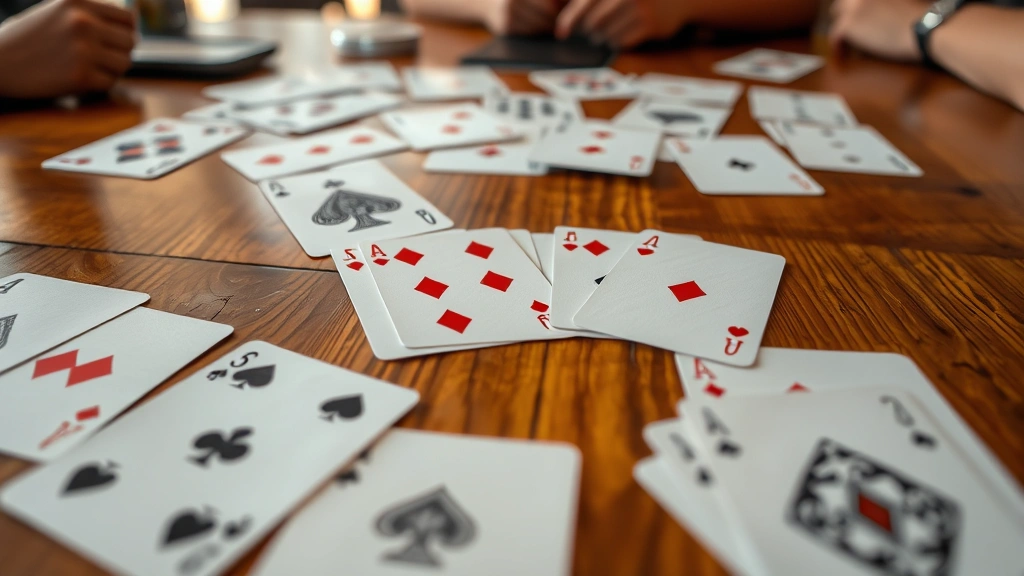
Learn Golf Card Game Rules: Expert Tips & Strategies
Golf card game is one of the most entertaining and accessible card games for players of all skill levels. Whether you’re hosting a casual game night or looking for a fun activity with family and friends, understanding how to play golf card game opens up a world of strategic fun. This classic game combines elements of luck and skill, making it perfect for anyone seeking a game that’s easy to learn but challenging to master.
The beauty of golf card game lies in its simplicity paired with surprising depth. Unlike traditional golf where you’re trying to score low on a course, the card version mimics this scoring system through a unique gameplay mechanic that keeps everyone engaged throughout the entire match. With just a standard deck of cards and a few minutes to learn the rules, you’ll be playing like an expert in no time.
What is Golf Card Game?
Golf card game is a shedding-type card game where players attempt to reduce their hand to the lowest possible score. The game typically involves 2-6 players and uses a standard 52-card deck. The objective mirrors actual golf: the lowest score wins. Each round represents a hole, and after nine or eighteen rounds, the player with the lowest cumulative score claims victory.
The game’s appeal stems from its perfect balance of chance and strategy. While card draws introduce unpredictability, skilled players can manipulate their hands and make strategic decisions that significantly impact their final score. It’s similar to how cooperative gaming experiences require both luck and teamwork, except golf card game is purely competitive.
Golf has become increasingly popular in casual gaming circles because it requires minimal setup and can be played anywhere. You don’t need a gaming PC like those discussed in our gaming PC build guide—just a deck of cards and a table. This accessibility makes it perfect for travel, social gatherings, or quiet evenings at home.
Game Setup and Preparation
Setting up golf card game correctly ensures smooth gameplay and prevents confusion. First, shuffle a standard 52-card deck thoroughly and deal six cards face-down to each player in a clockwise direction. These six cards should be arranged in two rows of three cards each directly in front of each player.
Before gameplay begins, each player has the opportunity to flip over any two of their six cards and view them without revealing them to other players. This initial choice is crucial because it gives you strategic information about your hand from the start. Most experienced players recommend flipping cards strategically based on your risk tolerance and the cards you remember from the deal.
Place the remaining deck in the center of the table as the stock pile. Position one card from the top of the deck face-up next to the stock pile—this becomes the discard pile. Now you’re ready to begin your first round. The player to the dealer’s left typically goes first, though house rules may vary.
Card Values and Point System
Understanding card values is absolutely essential for mastering how to play golf card game. The point system is straightforward but requires memorization:
- Numbered cards (2-10): Face value points (a 5 is worth 5 points, a 10 is worth 10 points)
- Face cards (Jack, Queen, King): Each worth 10 points
- Aces: Worth only 1 point—highly valuable for reducing your score
- Queens: Special rule—queens are worth 0 points, making them the most desirable cards
The strategic implication of these values cannot be overstated. Since queens are worth zero points, they’re incredibly valuable. Aces, being worth only 1 point, are the next most desirable. This scoring system directly influences which cards you want in your hand and which you want to discard.
Pairs of matching ranks (two 7s, two Kings, etc.) have a special function in golf card game: when you create a pair in your layout, those cards are immediately removed from play and count as zero points combined. This mechanic adds another layer of strategy, as creating pairs becomes a primary objective during gameplay.
Basic Gameplay Mechanics
Each turn follows a simple three-step process: draw a card, use or discard that card, and pass to the next player. On your turn, you must first draw either the top card from the stock pile (unseen) or the top card from the discard pile (visible to all players).
After drawing, you have several options: you can replace one of your face-down cards with the drawn card, flip a face-down card to reveal it, or discard the drawn card to the discard pile. If you discard to the discard pile, your turn ends and play passes to the next player. This decision-making process is where golf card game becomes genuinely strategic.
The round continues until someone “knocks”—declaring that their hand is complete and ready for scoring. Typically, a player knocks when they believe their total score is low enough to win the round, or when they’re confident other players have higher scores. Once someone knocks, each other player gets exactly one more turn before scoring occurs.
Scoring at the end of each round involves revealing all six cards and calculating the total points. Remember that pairs cancel each other out (worth zero combined), and special cards like queens and aces provide significant scoring advantages. The player with the lowest score for that round earns bragging rights, and cumulative scores are tracked across all nine or eighteen rounds.

Advanced Strategy Tips
Transitioning from casual player to expert requires understanding advanced strategy. First, track the discard pile meticulously. By remembering which cards other players have discarded, you gain valuable information about what cards remain in the stock pile. This information directly influences whether you should draw from the visible discard pile or risk the unknown stock pile.
Second, manage your face-down cards strategically. When you choose which two cards to flip initially, consider your risk tolerance. Conservative players might flip low-value cards they remember or cards in positions where they suspect low values. Aggressive players might leave multiple face-down cards and replace them with drawn cards, hoping for lucky replacements.
Third, understand the psychology of knocking. Knocking early signals confidence in your low score, but it also gives other players one final turn to improve their hands. Experienced players often wait to knock until they’re certain their score is genuinely competitive. Conversely, if you’re struggling with a high-scoring hand, knocking early might limit damage by preventing others from improving further.
Fourth, prioritize creating pairs over individual low cards. A pair of 9s (worth 0 points combined) beats a single Ace (worth 1 point). This fundamental strategy shift separates novice players from experienced ones. Always look for opportunities to match cards in your layout.
Fifth, pay attention to other players’ revealed cards. If you notice someone has three face-up cards worth 2 points or fewer, they’re likely to knock soon. Adjust your strategy accordingly by either improving your hand aggressively or preparing to knock yourself to limit their advantage.
These advanced tactics transform golf card game from a luck-based activity into a genuinely strategic contest. Just as learning how to make a video game requires understanding underlying systems, mastering golf card game requires grasping its strategic foundations.
Variations and House Rules
Golf card game has numerous popular variations that change gameplay significantly. The most common variation is adjusting the number of rounds from nine (representing nine holes) to eighteen (representing a full golf course). Some players prefer shorter games and play only six rounds.
Another variation involves changing the number of cards each player receives. Instead of six cards, some groups play with nine cards arranged in three rows of three. This variation increases game length and complexity, making it ideal for experienced players seeking deeper strategy.
The “Vegas rules” variation is particularly popular in competitive settings. In Vegas rules, you play nine rounds, and your score for each round is calculated as the absolute difference between your score and the average of all players’ scores. This variation rewards consistency and punishes both extremely high and extremely low scores.
Some groups implement house rules regarding queens and other special cards. For example, some variations allow queens to be played on any card to “cover” it with zero points. Other variations treat specific cards (like all red 7s) as special cards with unique properties.
When learning how to play golf card game, it’s worth asking your group about their preferred variations and house rules before starting. This prevents confusion and ensures everyone enjoys the game under the same ruleset. You might also explore variations similar to how indie games innovate on classic formulas—taking the basic game and adding creative twists.
The GameForge Daily Blog regularly features articles about classic games and their modern interpretations, offering inspiration for creating your own house rules.
FAQ
Can you play golf card game with more than six players?
Yes, you can play with up to eight players using a single standard deck, though the game becomes slower with more players. For larger groups, consider using multiple decks or splitting into separate games. Each additional player increases wait time between turns, which can reduce engagement.
What happens if the stock pile runs out of cards?
If the stock pile is exhausted, shuffle the discard pile (except the top card) and create a new stock pile. This ensures the game can continue smoothly without interruption. Most rounds won’t deplete the stock pile, but in longer games or with fewer players, this situation can arise.
Can you refuse to knock even if another player has knocked?
Absolutely. After someone knocks, each other player gets exactly one more turn, but you’re not required to knock yourself. You can continue playing strategically, though your turn will be your last before scoring occurs. This rule adds interesting tactical elements to endgame scenarios.
Is golf card game suitable for children?
Yes, golf card game is excellent for children aged eight and up. The rules are simple enough for kids to understand quickly, while the strategic elements keep the game interesting for adults. It’s a fantastic family game that teaches card management and strategic thinking.
What’s the best strategy for beginners?
Beginners should focus on creating pairs and replacing high-value cards with lower-value ones. Don’t overthink early decisions—simply aim to reduce your visible card values and look for pairing opportunities. As you gain experience, you’ll develop intuition about when to knock and how to track the discard pile effectively.
How long does a typical game last?
A nine-round game typically lasts 20-40 minutes depending on the number of players and how quickly people make decisions. With six players, expect closer to 40 minutes. Two-player games move much faster, usually completing in 15-20 minutes. Eighteen-round games approximately double the time.