
Master Mexican Train Rules: Expert Guide
Mexican Train is one of the most beloved domino games in the world, combining strategy, luck, and social engagement into an entertaining experience that appeals to both casual players and serious enthusiasts. Whether you’re a complete beginner or looking to refine your gameplay, understanding the Mexican train game rules is essential to becoming a skilled player. This comprehensive guide will walk you through every aspect of the game, from basic setup to advanced strategies that will elevate your performance at the table.
The beauty of Mexican Train lies in its accessibility—anyone can learn the fundamentals in minutes—yet it offers enough depth to keep experienced players engaged for years. The game combines elements of classic dominoes with unique mechanics that make it distinct and thrilling. By mastering the rules, you’ll unlock the ability to make strategic decisions that can turn the tide of competition and impress your fellow players with your expertise.
This guide serves as your complete resource for understanding every nuance of Mexican Train, including official rules, common variations, strategic tips, and answers to frequently asked questions. Let’s dive into the world of dominoes and discover why Mexican Train has captivated millions of players worldwide.
Game Overview and Objective
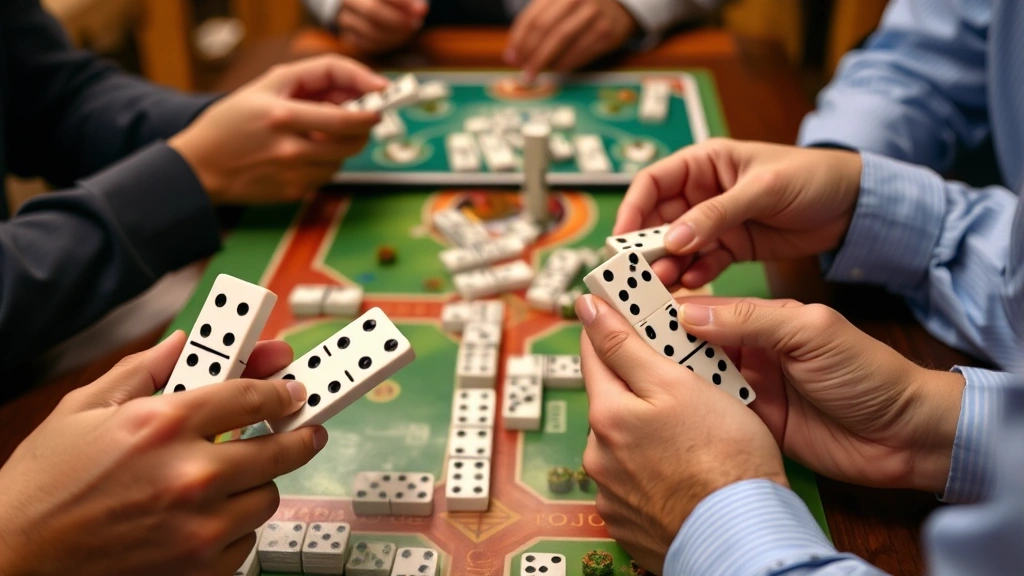
Mexican Train is a domino-based game that can be played with 2 to 8 players, though it’s most enjoyable with 3 to 6 participants. The primary objective is to be the first player to play all your dominoes while accumulating the fewest points throughout multiple rounds. Unlike some domino games that focus on blocking opponents, Mexican Train encourages a more open style of play where players can build on multiple trains simultaneously.
The game derives its name from a whimsical rule that allows players to build a personal “Mexican Train” when they cannot play on their own train or any other player’s train. This mechanic adds a layer of strategy and keeps the game dynamic and engaging throughout each round. A round concludes when one player successfully plays all their dominoes, and scoring is calculated based on the pips remaining in other players’ hands.
What makes Mexican Train special is that it combines elements of luck with genuine strategic decision-making. Players must decide which dominoes to play, which trains to extend, and when to start their own trains. This balance between chance and skill creates an engaging experience suitable for family game nights, casual gatherings, or competitive tournaments. The game teaches valuable lessons about probability, planning, and adaptability—skills that translate well to other puzzle games and strategic board games.
Equipment and Setup
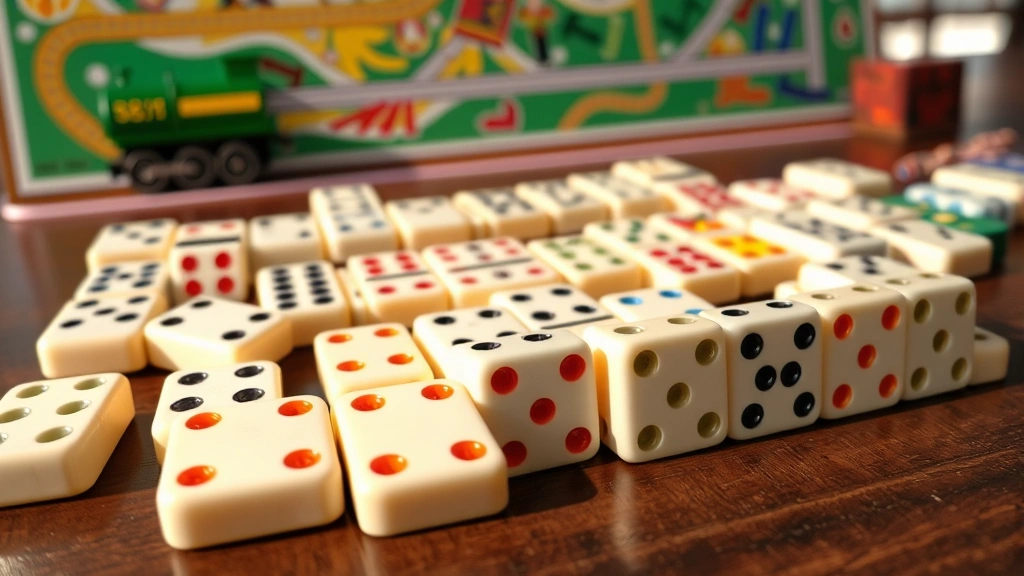
To play Mexican Train, you’ll need a double-twelve domino set, which contains 91 dominoes with pips ranging from zero to twelve. Each domino is rectangular with two ends, each displaying a number of pips (dots) from 0 to 12. A double-twelve set is standard for games with up to 6 players; larger groups may require a double-fifteen set.
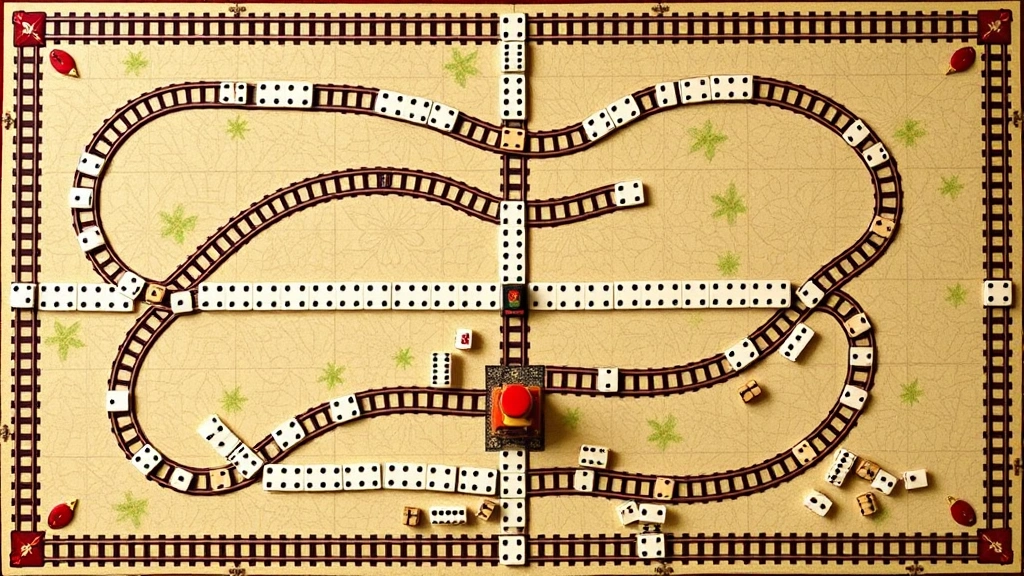
Beyond dominoes, you’ll need a Mexican Train board, which serves as the central playing surface. The board typically features a train track for each player, a Mexican train track in the center, and a station where players draw dominoes. The board is primarily functional, though many beautiful designs exist that enhance the aesthetic appeal of gameplay.
Here’s what you need for proper setup:
- Dominoes: A complete double-twelve domino set (91 dominoes)
- Game Board: A Mexican Train board with tracks for each player
- Train Markers: Small tokens (often included with boards) to mark active trains
- Pen and Paper: For tracking scores across multiple rounds
- Players: 2-8 participants (3-6 is optimal)
To begin, shuffle all dominoes face-down and have each player draw a tile to determine who plays first—the player with the highest double starts the game. Return these dominoes to the shuffled pile and redistribute. Each player draws a number of dominoes based on player count: with 2 players, each draws 16 dominoes; with 3-4 players, each draws 12 dominoes; with 5-6 players, each draws 10 dominoes.
Place the highest double (typically the double-twelve in the first round) in the center as the engine, and players arrange their dominoes on personal racks so other players cannot see them. This setup creates the foundation for an exciting game where information control becomes strategically important.
Understanding Dominoes
Before diving into gameplay, you must thoroughly understand domino structure and notation. Each domino consists of two ends, each displaying a number of pips from 0 to 12. A domino displaying 6 pips on one end and 4 on the other is called a “6-4” domino. Double dominoes have the same number on both ends—a “6-6” or “double-six.”
In Mexican Train, dominoes connect end-to-end, and new dominoes must match the pip count on the end they’re being played against. If a train ends with a 5, the next domino played must have a 5 on one end. The unmatched end becomes the new terminus of that train, determining what can be played next.
The double dominoes are particularly important because they serve as directional markers. When a double is played, it’s placed perpendicular to the train, and the next domino must match the opposite end of that double. This creates a “pivot point” that can change the direction of play strategically.
Understanding pip counting is essential for strategy. With 91 total dominoes in a double-twelve set, knowing which dominoes have been played helps you calculate probabilities and anticipate what your opponents might have. For instance, if you’ve seen most dominoes with fives, your opponents likely don’t have any remaining fives, making plays involving fives less valuable to them.
Gameplay Mechanics
The player who drew the highest double begins by playing that double to the center of the board. This double becomes the engine—the starting point for all trains. The first player’s personal train is automatically open, and subsequent players can play on it immediately.
On each turn, a player must attempt to play a domino in this order of priority:
- On their own train (if it’s open)
- On the Mexican Train (always available)
- On any opponent’s open train
- Start their own Mexican Train if unable to play elsewhere
- Draw from the remaining tiles if unable to play anywhere
If a player plays a domino, they announce it and place it on the appropriate train. If they cannot play any domino in their hand, they must draw one tile from the boneyard (remaining dominoes). If this drawn tile can be played immediately, they play it and their turn ends. If it cannot be played, they place a train marker on their personal train, making it open for other players to extend.
A player’s train is closed when they play a domino on it—other players cannot extend a closed train. It reopens only when that player places a marker on it after being unable to play. The Mexican Train remains perpetually open to all players throughout the round.
When a double is played, the next player must play on that double or draw a tile. If they cannot play on the double, they must keep drawing until they find a playable tile or exhaust the boneyard. This rule adds tension and creates exciting moments where multiple draws might be necessary.
The round ends when one player successfully plays all their dominoes. This player is the winner of that round, and all other players score points based on the pips remaining in their hands. The game continues for multiple rounds (typically as many rounds as there are players, or until someone reaches a predetermined score limit), and the player with the lowest cumulative score wins the entire game.
Scoring System
Scoring in Mexican Train is straightforward but crucial to understanding overall strategy. After one player plays all their dominoes, the remaining players count the total number of pips on all dominoes still in their hands. This total becomes their score for that round—higher scores are worse.
For example, if you have three dominoes remaining (a double-six worth 12 points, a 5-3 domino worth 8 points, and a 4-2 domino worth 6 points), your score for that round is 26 points. These individual round scores accumulate throughout the game.
The game typically continues for multiple rounds, with the number of rounds usually equaling the number of players. Some groups play until someone reaches 100 points, at which point the player with the lowest score wins. Other groups play a predetermined number of rounds and calculate the final winner based on cumulative scores.
Understanding scoring influences strategy significantly. If you’re ahead in points, you might play more conservatively to avoid high-pip dominoes remaining in your hand. If you’re behind, you might take calculated risks to catch up. Recognizing which dominoes have the highest pip values helps you decide which to play early and which to hold for flexibility.
Advanced Strategies
Mastering strategic gameplay mechanics separates casual players from serious competitors. Here are advanced strategies that elevate your Mexican Train performance:
Tile Tracking and Memory: Pay close attention to which dominoes have been played. As the game progresses, you’ll know which numbers are still in players’ hands. This information helps you predict what opponents might be forced to draw or what they might play next. If you notice that most sixes have been played, you know opponents likely don’t have many remaining sixes.
Double Management: Doubles are powerful because they create pivot points. Playing a double strategically can direct the game toward numbers you want or away from numbers your opponents need. Sometimes holding doubles for late-game plays provides flexibility when you need to keep your train closed.
Train Marker Timing: Placing a train marker opens your train to opponents but also signals that you couldn’t play. Experienced players use this strategically—sometimes placing a marker early forces opponents to extend your train instead of developing their own strategies. Other times, holding your marker gives you control and flexibility.
High-Pip Domino Management: Dominoes with high pip values (like double-twelves, 12-11s, etc.) are dangerous to hold late in a round. Playing these early prevents them from counting against you if another player wins. Conversely, if you’re confident you’ll win, holding high-pip dominoes and playing low-pip ones keeps your hand valuable.
Mexican Train Utilization: The Mexican Train is always open, making it a safety valve when you’re stuck. However, extending the Mexican Train signals weakness to observant opponents. Use it strategically rather than as a default option. Sometimes forcing yourself to play on your closed train or opponents’ trains, even if suboptimal, provides better strategic positioning.
Probability Calculation: With 91 dominoes in a double-twelve set, calculating the probability of specific tiles remaining helps inform decisions. If you’ve seen 60 dominoes played and only 31 remain in the boneyard, drawing becomes increasingly risky. Understanding these odds guides when to take risks and when to play conservatively.
Common Variations
While standard Mexican Train follows official rules, many groups play variations that modify gameplay. Understanding these variations helps you adapt to different playing groups and preferences.
Chicken Foot Variation: Some players incorporate “chicken foot” rules where doubles must be played perpendicular, and subsequent dominoes must branch off the double, creating a foot-like pattern. This variation adds complexity and visual interest.
All Fives Variant: In this variation, if a player plays a domino where the exposed ends sum to a multiple of five, they score that many points immediately. This creates a different scoring dynamic and rewards certain plays.
Limited Draw Rules: Some groups allow players to draw a maximum of two or three tiles per turn instead of unlimited draws. This variation speeds up gameplay and changes strategic considerations.
Bonus Round: After all standard rounds, some groups play a “bonus round” using only doubles, creating a unique challenge and final-round excitement.
Friendly Mode: Casual players often modify rules to be more forgiving, such as allowing players to take back plays or providing hints. While not tournament-approved, these variations make the game more accessible to new players.
When joining a new group, always clarify which game variations and house rules they follow. This prevents confusion and ensures everyone enjoys the experience. Check out gaming resources for additional information about domino-based games and strategic entertainment options.
FAQ
What happens if you can’t play a domino in Mexican Train?
If you cannot play any domino from your hand, you must draw one tile from the boneyard. If this drawn tile is playable, you play it immediately and your turn ends. If it’s not playable, you place a train marker on your personal train, making it open for other players to extend, and your turn ends. You don’t lose your turn; you simply mark your train open.
Can you play on a closed train in Mexican Train?
No, you cannot play on a closed train unless it’s your own train. Only the train owner can play on their closed train. The Mexican Train is always open to all players. Other players’ closed trains are off-limits until they place a marker, opening them for play.
How many dominoes do you draw in Mexican Train?
Initial hand sizes depend on player count: 2 players draw 16 dominoes each, 3-4 players draw 12 dominoes each, and 5-6 players draw 10 dominoes each. During gameplay, you draw one tile at a time if unable to play, continuing to draw until you find a playable tile or the boneyard is exhausted.
What’s the highest score possible in Mexican Train?
The highest possible score in a single round is 546 points, which would occur if one player played all their dominoes and all other players held every remaining domino. In practice, scores rarely exceed 150-200 points per round, depending on how quickly someone empties their hand.
Is Mexican Train difficult to learn?
Mexican Train is relatively easy to learn—most people understand basic rules within 10-15 minutes. However, mastering advanced strategy takes much longer. The game’s depth comes from understanding probability, tile tracking, and strategic decision-making, making it appealing to players seeking engaging entertainment experiences.
Can you play Mexican Train with fewer than 3 players?
Yes, Mexican Train accommodates 2-8 players, though 3-6 is optimal. With 2 players, the game becomes more strategic and competitive since information is easier to track. With larger groups, the game becomes more chaotic and luck-dependent, as fewer dominoes per player means less control over outcomes.
How long does a typical game of Mexican Train take?
A single round typically lasts 20-40 minutes depending on player count and experience level. A complete game with multiple rounds usually takes 60-120 minutes. Experienced players move faster, while groups with new players take longer as rules are clarified and strategies discussed.
What’s the difference between Mexican Train and Chicken Foot?
While both use double dominoes and similar mechanics, Chicken Foot requires all dominoes played on a double to branch perpendicular, creating a distinctive pattern. Mexican Train allows more flexibility in how dominoes are extended. Chicken Foot tends to be slightly more complex and creates more dramatic blocking situations.
Can dominoes be taken back in Mexican Train?
In official rules, once a domino is played and released, it cannot be taken back. However, many casual groups allow brief “takeback” windows for mistakes. Always clarify house rules before beginning play to avoid disputes.
What’s the best strategy for winning Mexican Train?
Winning consistently requires balancing multiple factors: tracking which dominoes have been played, managing high-pip dominoes strategically, timing your train markers effectively, and calculating probabilities. Focus on playing high-pip dominoes early, remembering what’s been played, and adapting your strategy based on remaining tiles and opponent behavior. Defensive play combined with opportunistic aggression creates the strongest approach for most situations.