
Mind Games Blockade: Expert Tips to Master It
Mind Games Blockade stands as one of the most intellectually demanding puzzle games to hit the indie scene in recent years. This cerebral challenge combines strategic thinking, pattern recognition, and psychological warfare mechanics that will push your cognitive abilities to their limits. Whether you’re a seasoned puzzle enthusiast or a newcomer looking to sharpen your mental acuity, understanding the core mechanics and mastering advanced techniques is essential for progression.
The game’s unique approach to puzzle-solving goes beyond traditional block-matching or tile-clearing mechanics. Instead, it incorporates psychological elements where your opponent actively works against you, creating a dynamic environment where every move carries weight and consequence. Players must anticipate enemy behavior, manage limited resources, and execute perfectly timed strategies to overcome increasingly difficult opponents.
This comprehensive guide will equip you with the knowledge and strategies needed to dominate Mind Games Blockade. From fundamental concepts to advanced tactics, we’ll explore every aspect of the game that separates casual players from true masters.

Understanding Core Mechanics
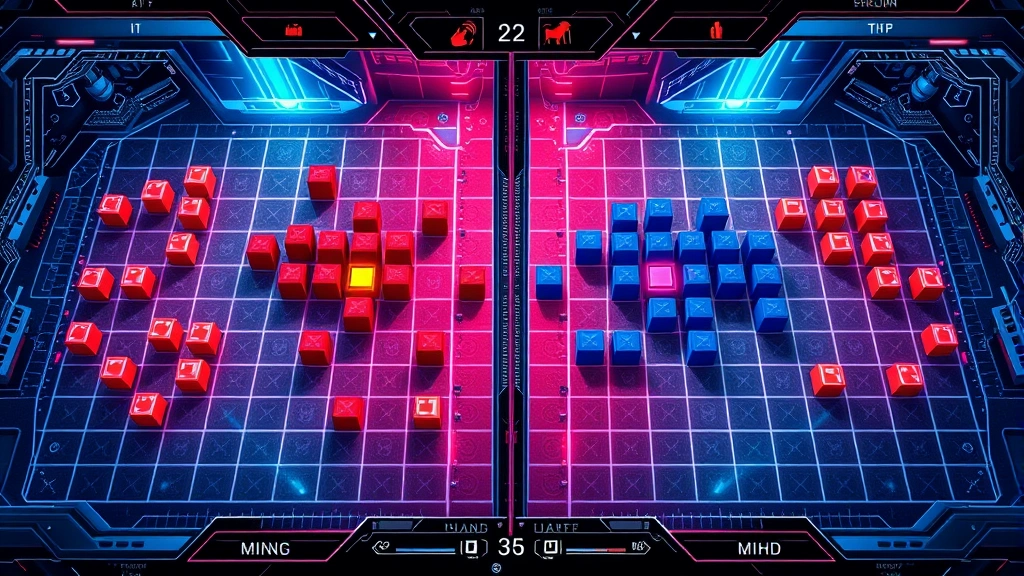
Before attempting to master Mind Games Blockade, you must thoroughly comprehend the foundational mechanics that govern gameplay. The core system revolves around a shared board where both you and your opponent place blocks simultaneously, creating a constant tension between offense and defense.
The primary objective involves controlling board territory while simultaneously restricting your opponent’s placement options. Each block you place serves dual purposes: expanding your influence while potentially limiting your rival’s future moves. This dual-nature mechanic is what separates Mind Games Blockade from conventional puzzle games found in the best indie games for PC.
Understanding block types is crucial. Different blocks possess varying properties—some grant defensive bonuses, others provide offensive advantages, and certain blocks unlock special abilities when arranged in specific patterns. Learning which blocks synergize with your playstyle forms the foundation of strategic mastery.
The psychological component enters through the mind reading mechanic. Your opponent makes decisions based on predicted patterns and previous encounters. Experienced players exploit this system by intentionally playing unpredictably during early rounds, establishing false patterns that opponents will attempt to counter in later matches. This meta-game aspect transforms Mind Games Blockade from pure puzzle-solving into a battle of wits.
Turn order and timing mechanics heavily influence outcome probability. Moves execute simultaneously, but certain blocks activate in specific sequences. Mastering the timing window between your action and opponent response creates opportunities for devastating combinations. The game rewards players who study these temporal mechanics obsessively.
Resource Management Strategies
Every successful Mind Games Blockade player understands that resources are finite and precious. Your available blocks, special abilities, and power-ups represent limited tools that must be deployed strategically throughout each match.
Block inventory management separates novices from experts. Rather than deploying every available block immediately, master players carefully ration their resources across multiple turns. This approach maintains flexibility and prevents opponents from predicting your strategy too early. Consider your opponent’s remaining moves before committing blocks to the board—sometimes holding blocks is more valuable than playing them.
Special abilities function as game-changers when deployed correctly. These powerful tools can clear large board sections, reverse opponent placements, or grant temporary advantages. The critical mistake most players make involves using abilities reactively rather than proactively. Plan your ability deployment several turns in advance, setting traps that activate when opponents fall into predictable patterns.
Power-up economy requires understanding when to collect versus when to ignore them. Some power-ups provide immediate benefits while others grant long-term advantages. Prioritize power-ups that complement your current board position and anticipated opponent responses. Ignoring tempting power-ups sometimes proves superior to collecting them, especially if collection requires sacrificing board control.
The best story games often emphasize narrative-driven progression, but Mind Games Blockade emphasizes mechanical progression through resource optimization. Every decision carries resource implications that ripple through subsequent turns.
- Block rationing: Save high-value blocks for critical moments rather than deploying them early
- Ability timing: Coordinate special abilities with predicted opponent moves for maximum impact
- Power-up prioritization: Collect abilities that synergize with your current strategy
- Reserve management: Maintain backup options for unexpected opponent tactics
- Economic planning: Budget resources across multiple turns to prevent depletion
Psychological Tactics and Mind Reading
Mind Games Blockade’s psychological warfare element elevates it beyond conventional puzzle mechanics. Understanding opponent psychology and exploiting predictable patterns forms the cornerstone of advanced strategy.
Pattern establishment and disruption creates psychological advantages. During early game phases, play predictably to establish false patterns. Your opponent will begin predicting your moves based on these established behaviors. Once they become confident in their predictions, deliberately deviate from the pattern, punishing their over-confidence with devastating counterattacks.
Bluffing mechanics involve committing to board positions that appear threatening but actually serve different purposes. Advanced players construct false threats that force opponents into defensive positions, opening opportunities for alternative strategies. This psychological misdirection transforms the game into a battle of deception.
Reading opponent tendencies requires careful observation of their decision-making patterns. Some players prioritize aggressive expansion while others focus on defensive consolidation. Identifying these preferences allows you to construct counters before they fully develop their strategy. Game Forged Daily Blog regularly features psychological gaming tactics applicable across multiple genres.
Momentum management involves understanding how confidence affects opponent decision-making. Players on winning streaks tend to play more aggressively, while struggling players become defensive and predictable. Exploit these psychological states by maintaining consistent pressure or strategic patience depending on the situation.
The concept of board temperature describes the intensity of competition in specific board regions. Some areas become psychological battlegrounds where both players invest heavily, while others remain neutral. Master players manipulate board temperature by forcing opponents to defend certain regions while abandoning others.
Advanced Blocking Techniques
Blocking transcends simple board placement in Mind Games Blockade. Sophisticated blocking techniques create cascading advantages that compound throughout matches.
Layered blocking involves positioning blocks in specific sequences that create defensive formations. These formations simultaneously block opponent expansion while opening pathways for your own pieces. Constructing effective layers requires understanding three-dimensional spatial relationships on what appears as a two-dimensional board.
Chain reactions form when blocks interact in unexpected ways, triggering secondary effects. Master players engineer situations where seemingly innocent placements trigger powerful chain reactions several turns later. This requires predicting not just opponent moves but understanding how their placements interact with your existing board state.
Positional sacrifice involves deliberately allowing opponents to capture board territory, knowing this will position them disadvantageously for future turns. This counterintuitive technique frustrates opponents who believe they’re winning while actually walking into carefully constructed traps.
Defensive clustering groups blocks in tight formations that absorb opponent attacks while maintaining structural integrity. These clusters serve as psychological barriers that make opponents hesitant to engage directly, often forcing them toward less optimal moves.
Offensive spacing distributes blocks strategically to maximize reach and influence. Rather than clustering offensively, master players spread blocks across the board, creating multiple simultaneous threats that opponents cannot adequately defend against.
Opponent Analysis and Counters
Every opponent in Mind Games Blockade exhibits unique playstyle characteristics. Analyzing these patterns and constructing appropriate counters determines match outcomes.
Aggressive opponents prioritize early board dominance, sacrificing defensive stability for offensive pressure. Counter aggressive players by accepting initial territorial losses while building defensive formations that absorb their onslaught. Once their aggressive momentum stalls, transition to overwhelming counterattacks.
Defensive opponents focus on consolidating territory and denying opponent expansion. These players require patience and methodical pressure. Avoid direct confrontation and instead slowly suffocate their expansion options through careful block placement.
Balanced opponents represent the most dangerous threat type, as they adapt fluidly to your strategy. Against balanced players, avoid establishing predictable patterns and maintain aggressive unpredictability. Force them into reactive positions rather than allowing them to execute predetermined strategies.
Adaptive opponents actively study your playstyle and adjust their approach accordingly. These elite-level players require constant innovation and strategic variation. Defeat adaptive opponents by occasionally playing suboptimally on purpose, establishing false patterns they’ll exploit only to be punished for their assumptions.
The best co-op games on Steam emphasize teamwork, but Mind Games Blockade emphasizes individual psychological mastery against intelligent opponents.
Progression Tips for Difficult Levels
Advancing through Mind Games Blockade’s difficulty curve requires systematic approaches rather than random experimentation. Difficult levels demand comprehensive strategy integration and flawless execution.
Early difficulty spike management occurs around level five through eight, where opponents transition from predictable patterns to adaptive behavior. During this critical phase, focus on perfecting fundamental blocking techniques rather than attempting advanced psychological tactics. Build confidence through mastery of core mechanics.
Mid-game plateau avoidance requires constant mechanical innovation. Once you’ve mastered basic strategies, deliberately practice unconventional approaches during lower-difficulty matches. This prevents opponents from predicting your strategies during higher-stakes confrontations.
Late-game opponent behavior evolves toward extreme adaptability and psychological sophistication. These opponents predict predictions, creating meta-level strategic depth. Counter late-game opponents by embracing controlled chaos—play moves that appear illogical but actually follow hidden patterns only you understand.
Challenge mode completion requires extended gameplay sessions where you face multiple opponents consecutively without resets. Manage fatigue through strategic pacing, taking mental breaks between matches to maintain psychological sharpness. Fatigue-induced mistakes compound rapidly in consecutive matches.
Competitive integration connects your single-player progression to online multiplayer. Practice against AI opponents until you consistently achieve victory rates above eighty percent before attempting ranked competitive matches. IGN’s gaming guides provide additional context for competitive preparation across multiple titles.
Skill development plateaus occur when mechanical mastery reaches diminishing returns. Break through plateaus by studying professional player streams and analyzing their decision-making processes. Understanding elite-level strategy often reveals subtle techniques that separate masters from advanced players.
The gaming PC build guide emphasizes hardware optimization, relevant for maintaining consistent performance during extended competitive sessions where frame rate stability impacts reaction timing.
FAQ
What’s the optimal starting strategy for new players?
New players should focus on establishing board control through defensive clustering while learning opponent patterns. Avoid aggressive early-game plays that risk exposing your strategy before understanding opponent tendencies. Build confidence through consistent defensive play before transitioning to balanced approaches.
How do I counter aggressive opening strategies?
Accept initial territorial losses while constructing defensive formations. Let aggressive opponents overextend themselves, then transition to counterattacks when their momentum stalls. Patience defeats aggression in Mind Games Blockade when paired with proper defensive positioning.
When should I use special abilities?
Deploy special abilities proactively rather than reactively. Plan ability usage several turns in advance, coordinating with anticipated opponent moves. Using abilities defensively represents wasted potential—reserve them for offensive combinations that create cascading advantages.
Is Mind Games Blockade purely luck-based?
No, Mind Games Blockade emphasizes skill and psychological mastery over randomness. While initial board setup contains minor random elements, player decision-making determines ninety-five percent of outcomes. Consistent winners rely on strategy rather than luck.
How long does progression to mastery typically require?
Reaching intermediate proficiency requires approximately forty to fifty hours of focused gameplay. Achieving advanced mastery demands one hundred to one hundred fifty hours of deliberate practice combined with theoretical study. Elite-level play requires sustained engagement across multiple months.
What resources help improve my gameplay?
GameSpot’s strategy guides offer comprehensive tactics for complex games. Additionally, studying professional player streams on platforms like Twitch reveals advanced techniques and psychological approaches. Community forums dedicated to Mind Games Blockade provide peer-to-peer learning opportunities where experienced players share strategies.
Should I specialize in specific opponent types?
Initially, develop balanced competency against all opponent types. Once you’ve achieved consistent victory rates, specialization becomes viable. However, maintain flexibility—specialized players struggle against opponents who recognize and counter their specific approaches. Balance specialization with adaptability for optimal results.
How does cloud gaming affect competitive performance?
Understanding what is cloud gaming becomes relevant for players considering cloud-based competitive participation. Latency variations in cloud environments can impact reaction-dependent gameplay. Local hardware generally provides superior consistency for competitive Mind Games Blockade participation.