NBA Jam Arcade Game: Classic Hits or Misses?
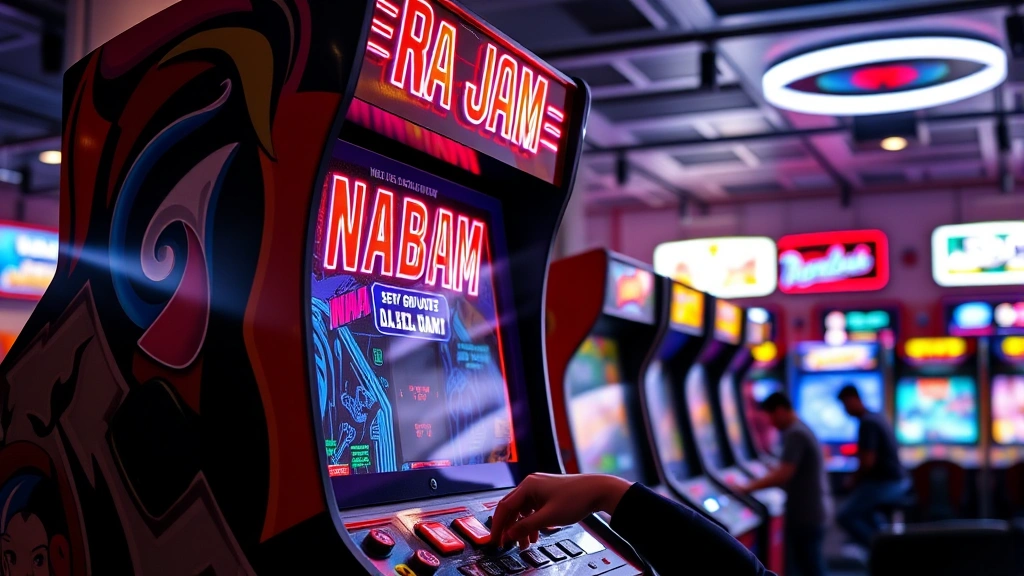
When you hear the iconic phrase “Boom Shakalaka!” echoing through an arcade, there’s no mistaking it—you’ve just witnessed NBA Jam in all its glory. This legendary arcade game burst onto the gaming scene in 1993 and fundamentally changed how people experienced basketball video games. With its over-the-top dunks, ridiculous three-pointers, and arcade-style chaos, NBA Jam became a cultural phenomenon that transcended traditional gaming audiences. Whether you’re a nostalgic player reminiscing about quarters spent in smoky arcades or a curious gamer wondering what all the hype was about, this deep dive explores whether NBA Jam truly deserves its status as a classic or if nostalgia has clouded our judgment.
The beauty of NBA Jam lies in its perfect balance between accessibility and pure, unadulterated fun. Unlike simulation-focused basketball games that demand hours of learning complex mechanics, NBA Jam threw realism out the window and embraced the theatrical nature of basketball. This arcade masterpiece captured the essence of what makes sports gaming special: the thrill of impossible moments and the joy of shared competition. From its arcade cabinet origins to its countless home ports, NBA Jam has maintained a devoted following that spans generations of gamers.
The Rise of NBA Jam: How a Game Became a Phenomenon
NBA Jam didn’t arrive in a vacuum. The early 1990s saw arcade cabinets dominating entertainment venues, and sports games were beginning to find their footing in this competitive landscape. Developed by Midway Games and released in 1993, NBA Jam represented a bold departure from the stiff, simulation-based basketball games that preceded it. Instead of focusing on realistic player statistics and complex defensive schemes, the game creators decided to embrace arcade sensibilities and pure entertainment value.
The original arcade cabinet featured digitized sprites of actual NBA players, a revolutionary technology at the time that made the game feel fresh and authentic despite its absurd gameplay. Players could immediately recognize their favorite athletes—Michael Jordan, Magic Johnson, Charles Barkley—and watch them perform impossible feats. This combination of familiar faces doing unfamiliar things created an irresistible appeal that transcended the typical arcade game audience. Suddenly, casual players and hardcore basketball fans alike were queuing up to drop coins into NBA Jam cabinets.
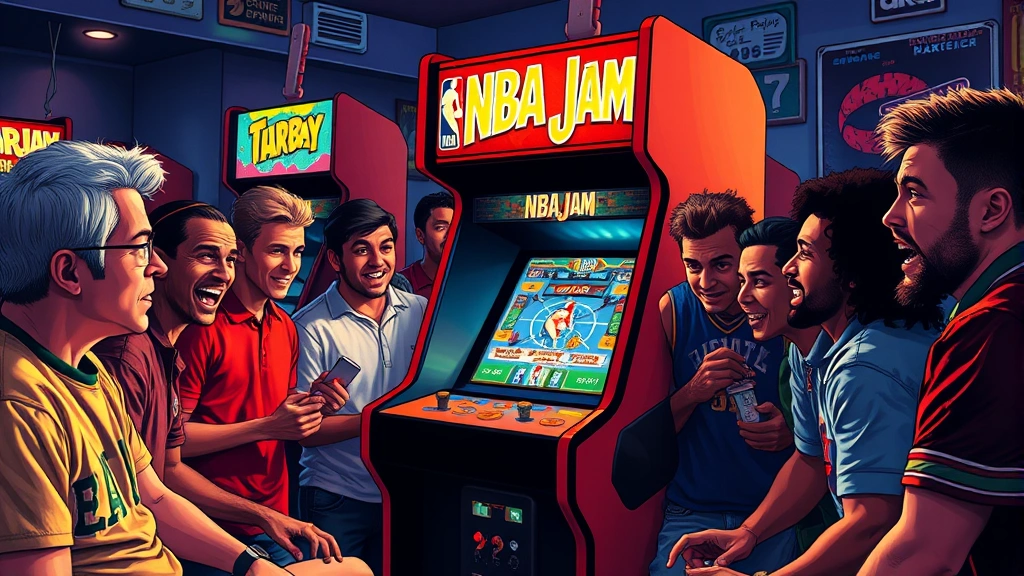
The game’s success was astronomical. Arcade operators couldn’t keep the cabinets in stock. Venues reported that NBA Jam cabinets generated more revenue than nearly any other game available. This wasn’t just a hit—it was a cultural phenomenon that proved arcade games could reach beyond niche gaming communities. The game’s infectious energy and easy-to-learn mechanics made it the perfect social experience, where watching someone else play was almost as entertaining as playing yourself. Check out our guide on the best party games to see how NBA Jam influenced the party gaming genre.
Gameplay Mechanics That Changed Everything
What made NBA Jam so special wasn’t just its presentation—it was the brilliantly designed gameplay mechanics that made everyone feel like a basketball superstar. The game stripped basketball down to its most exciting elements: offense, fast breaks, and dunking. Defense existed, but it was secondary to the pure joy of scoring in increasingly ridiculous ways.
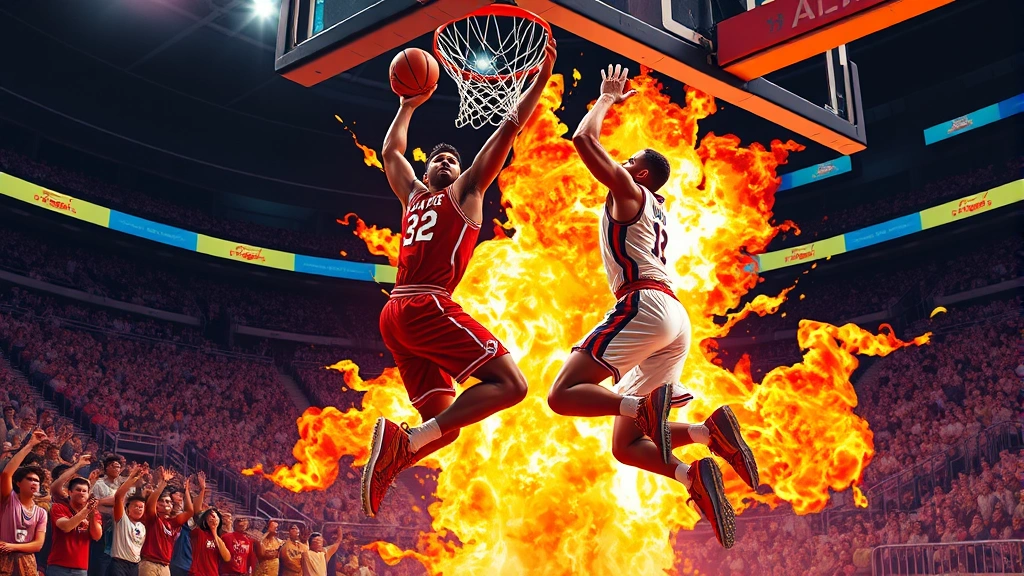
The signature feature of NBA Jam was the “on fire” mechanic. When a player made three consecutive baskets, their character would literally catch fire, indicated by flames surrounding them. Once on fire, that player couldn’t miss—three-pointers became automatic, defense became nearly impossible to mount, and the crowd would go absolutely wild. This mechanic created incredible momentum shifts and dramatic comebacks. Being down by twenty points didn’t feel hopeless because one hot streak could change everything. The on-fire system created natural story arcs within each game, with dramatic swings of fortune that kept players engaged until the final buzzer.
The two-on-two gameplay was another masterstroke. By reducing the court to just four players, NBA Jam eliminated the complexity of managing five-player rotations while maintaining the essential basketball experience. Fast breaks became the norm rather than the exception, and the constant back-and-forth created an almost rhythm-game-like cadence. The controls were intuitive—shoot, pass, and move—allowing new players to jump in immediately while still offering depth for those who mastered advanced techniques like alley-oops and turbo dunks.
Dunking in NBA Jam was transcendent. Players could dunk from anywhere on the court, performing acrobatic feats that would make actual NBA athletes weep. The animation quality and satisfying audio feedback made every dunk feel momentous. Some dunks would shatter the backboard, requiring it to be repaired before play could continue. Others would result in the defender being completely humiliated, falling to the ground or getting knocked over. These moments of pure spectacle kept players coming back for more.
Iconic Features and Memorable Moments
Beyond the core gameplay, NBA Jam packed in features that made each playthrough memorable. The player creation system allowed arcade operators to input custom players, which led to hilarious situations where arcade staff members or local celebrities found themselves as playable characters. This personalization aspect made NBA Jam feel special in each location, creating unique local legends.
The hidden characters were legendary. Players discovered that they could unlock secret NBA figures and even non-basketball celebrities. The mystery surrounding these unlockables created a thriving arcade culture where players shared secrets and tips. Every arcade had that one person who claimed to know how to unlock everyone, and the speculation was half the fun. This discovery-based progression system was addictive without relying on grinding or pay-to-win mechanics.
The commentator, played by sports entertainment legend Tim Kitzrow, became iconic in his own right. His enthusiastic call of “Boom Shakalaka!” and other catchphrases like “He’s on fire!” and “Kaboom!” became part of gaming vernacular. The commentary elevated the experience from a simple game to a full sports broadcast simulation, complete with crowd reactions and play-by-play analysis. Players would intentionally perform certain feats just to hear the commentator’s specific reactions.
Tournament modes and championship runs gave NBA Jam longevity. Players didn’t just play single games; they engaged in extended campaigns to become arcade champions. Leaderboards displayed high scores and tournament winners, creating a competitive ecosystem within each arcade location. Visiting a new arcade meant checking the local leaderboards and testing yourself against established players. This competitive aspect transformed NBA Jam from a casual experience into something with real stakes for dedicated players.
The Ports and Evolution Across Platforms
The true measure of NBA Jam’s success came through its numerous home ports. The game appeared on virtually every gaming platform imaginable: Super Nintendo, Genesis, PlayStation, Nintendo 64, Game Boy, and countless others. Each version attempted to capture the arcade magic while working within platform limitations.
The SNES and Genesis versions were particularly successful, bringing arcade-quality basketball to home consoles. While they sacrificed some visual fidelity and had slightly reduced rosters, these ports maintained the core gameplay that made NBA Jam special. Families could now enjoy the same experience that kept arcades packed, though without the communal atmosphere that made arcade gaming special.
The Nintendo 64 version represented a significant visual upgrade, featuring full 3D models instead of digitized sprites. This modernization made NBA Jam feel fresh for a new generation while maintaining the arcade spirit. The N64 version also expanded the roster and added new game modes, proving that NBA Jam could evolve without losing its identity. These ports demonstrated that the game’s appeal transcended any single platform or technological limitation.
Later versions, particularly on modern consoles, attempted to recapture the magic for new audiences. NBA Jam: On Fire Edition released in 2011 updated the experience for modern gaming while maintaining the arcade fundamentals. These newer versions proved that NBA Jam’s formula remained valid even as gaming technology advanced dramatically. The core appeal of accessible, fast-paced, explosive basketball transcended generational boundaries. If you’re interested in how different gaming platforms have handled sports titles, check out our article on gaming PC build recommendations for understanding modern gaming architecture.
Cultural Impact and Legacy
NBA Jam’s influence on gaming culture cannot be overstated. The game proved that arcade games could achieve mainstream success and that sports games didn’t need to prioritize realism to be engaging. This lesson influenced countless developers and helped establish the sports arcade genre as a legitimate category.
The game’s impact extended beyond gaming into popular culture. NBA Jam became referenced in movies, television shows, and music. Athletes themselves became fans, with many NBA players citing the game as a childhood favorite. The game created a bridge between hardcore gamers and casual players, something few titles have achieved so completely. When your game is played by everyone from arcade enthusiasts to basketball fans to casual party-goers, you’ve created something truly special.
The competitive scene that developed around NBA Jam proved that arcade games could support esports-like communities. While formal esports tournaments didn’t exist as they do today, local and regional competitions emerged, with skilled players traveling to compete for prizes and bragging rights. The skill ceiling in NBA Jam was surprisingly high, with techniques like perfect timing, player selection strategy, and momentum management separating casual players from genuine masters. Visit Game Informer for coverage of esports evolution to see how games like NBA Jam paved the way for modern competitive gaming.
NBA Jam’s legacy influenced the entire sports gaming industry. Modern sports games borrowed the accessibility and fun-first philosophy that NBA Jam pioneered, even as they added simulation depth. The game proved that you didn’t need perfect realism to create an engaging sports experience—you needed compelling mechanics, clear feedback, and pure entertainment value. This philosophy shaped how developers approached sports games for decades to come. For more on how gaming has evolved, explore our coverage of what is cloud gaming and how technology continues to change gaming experiences.
Comparing NBA Jam to Modern Basketball Games
Modern basketball games like NBA 2K and NBA Live represent the opposite end of the design spectrum from NBA Jam. These contemporary titles prioritize simulation, featuring thousands of animations, realistic player behavior, complex defensive systems, and deep progression mechanics. They’re designed to simulate an entire NBA season, complete with franchise management, player development, and intricate online competitive ecosystems.
NBA Jam, by contrast, distilled basketball to its purest arcade essence. Where modern games have you managing fatigue, injury recovery, and player chemistry, NBA Jam had you launching three-pointers from half-court and shattering backboards. Modern games demand patience and grinding; NBA Jam delivered instant gratification. Neither approach is objectively superior—they serve different purposes and appeal to different player types.
However, there’s an argument that modern basketball games have become overly complicated and monetized, with progression systems designed to encourage spending rather than pure gameplay enjoyment. NBA Jam’s straightforward design—jump in, play a game, move on—has an elegant simplicity that modern games have largely abandoned. The purity of NBA Jam’s fun-first approach resonates with many players who feel fatigued by contemporary games’ complexity.
What modern basketball games could learn from NBA Jam is the importance of immediate gratification and accessible fun. The best modern sports games balance simulation depth with arcade-style moments that create memorable highlights. NBA Jam proved that constraints can breed creativity—by limiting the game to four players and removing defensive complexity, the developers created something more engaging than more elaborate alternatives. The lesson remains relevant: sometimes less is more, and accessibility doesn’t require sacrificing fun.
For those interested in how gaming design has evolved across different genres, check out our guide to the best indie games for PC, where many independent developers embrace NBA Jam’s philosophy of accessible, creative gameplay over bloated complexity.
NBA Jam’s arcade format also meant that every game was self-contained. You didn’t need to invest fifty hours to experience the full game or spend money on virtual currency to access features. This democratization of gaming experiences feels increasingly valuable as modern games become more gatekeeping-oriented. Whether you played for five minutes or five hours, NBA Jam delivered complete, satisfying experiences.
FAQ
Is NBA Jam still playable today?
Yes! NBA Jam remains playable through multiple avenues. Original arcade cabinets still exist in some venues, though they’re increasingly rare. Home versions are available on older consoles through the used market, and NBA Jam: On Fire Edition can be purchased on modern platforms. Emulation also allows players to experience the original arcade version on modern hardware.
Which version of NBA Jam is considered the best?
The original arcade version is widely considered the definitive experience, capturing the game at its creative peak with perfect game balance and the most memorable presentation. However, the SNES and Genesis ports brought the arcade experience home successfully, while the Nintendo 64 version offered impressive visual upgrades. NBA Jam: On Fire Edition modernized the experience for contemporary players.
Why was NBA Jam so successful?
NBA Jam succeeded because it prioritized fun and accessibility over realism. The game featured intuitive controls, immediate gratification, memorable moments, and a social experience that appealed to casual and hardcore players alike. The combination of recognizable NBA players, ridiculous gameplay, and polished presentation created an irresistible package.
Can modern players enjoy NBA Jam?
Absolutely. While the graphics haven’t aged as gracefully as the gameplay, NBA Jam’s core mechanics remain engaging and fun. New players often find the straightforward design refreshing compared to modern games’ complexity. The game’s arcade roots mean it was designed for short play sessions, making it perfect for contemporary gaming habits.
What made the “on fire” mechanic so addictive?
The on-fire mechanic created dramatic momentum shifts that made every game feel like a potential comeback story. Getting on fire felt like achieving something special, while the defensive player faced mounting pressure. This mechanic created natural story arcs within games and rewarded skilled play with tangible benefits that felt earned rather than given.
How does NBA Jam compare to NBA 2K?
NBA Jam prioritizes accessible, fast-paced arcade fun, while NBA 2K emphasizes simulation depth and season-long progression. NBA Jam delivers instant gratification in short matches; NBA 2K rewards long-term engagement and grinding. Both have merit depending on what you want from a basketball game, but they represent fundamentally different design philosophies.
Are there modern games similar to NBA Jam?
Several modern titles embrace NBA Jam’s arcade philosophy, including NBA Playgrounds and NBA Arcade. However, nothing has quite captured the original’s magic. The closest spiritual successors exist in indie games and smaller releases that prioritize fun over monetization, though the sports genre remains dominated by simulation-focused titles.