

Purpose Games: Educational Benefits Unveiled
Gaming has transformed dramatically over the past two decades, evolving from simple entertainment into a powerful medium for learning and personal development. Purpose games, also known as serious games or educational games, represent a revolutionary intersection between engaging gameplay mechanics and meaningful educational outcomes. These aren’t your typical entertainment titles—they’re specifically designed with learning objectives in mind, combining the addictive nature of gaming with curriculum-aligned content that benefits students, professionals, and lifelong learners alike.
The rise of purpose games reflects a fundamental shift in how educators and developers view interactive media. Rather than treating games as distractions from learning, forward-thinking institutions now recognize them as catalysts for deeper engagement, improved retention, and enhanced critical thinking skills. Whether you’re interested in exploring indie games that blend education with entertainment or understanding the broader landscape of gaming’s educational potential, this comprehensive guide will illuminate why purpose games matter more than ever.
What Are Purpose Games?
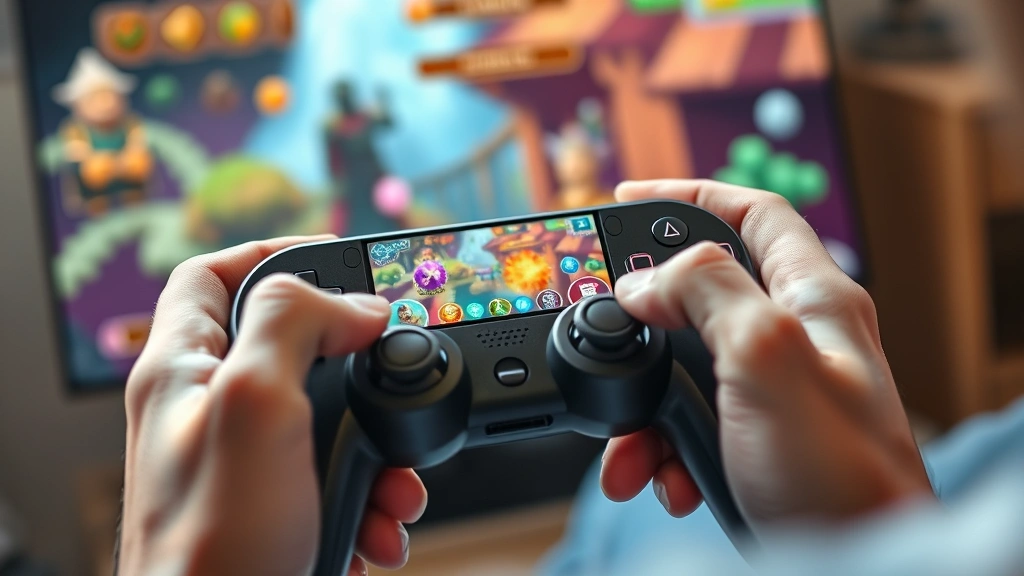
Purpose games represent a distinct category within the gaming industry, fundamentally different from mainstream entertainment titles. These games are meticulously crafted with specific learning objectives embedded into their core mechanics, narrative, and progression systems. Unlike traditional educational software that feels like studying, purpose games maintain the engagement factor that makes gaming so compelling while delivering substantial educational value.
The defining characteristic of purpose games is their dual nature: they must be genuinely enjoyable to play while simultaneously teaching valuable concepts. This balance is remarkably challenging to achieve, which explains why the most successful purpose games come from collaborations between experienced game developers and subject matter experts. Examples range from cooperative gaming experiences that teach teamwork to specialized titles targeting specific skills like mathematics, language learning, or historical understanding.
The taxonomy of purpose games is surprisingly diverse. Some focus on STEM subjects, teaching programming, physics, or chemistry through interactive problem-solving. Others concentrate on soft skills development, including leadership, communication, and emotional intelligence. Health-related purpose games help patients manage chronic conditions or recover from injuries through engaging gameplay. Environmental awareness games educate players about sustainability and ecological systems. The versatility of this category demonstrates gaming’s remarkable potential as an educational medium.
What distinguishes purpose games from gamification is their comprehensive approach. While gamification adds game elements to existing activities, purpose games are built from the ground up with learning as the primary objective. The game design itself becomes the delivery mechanism for education, rather than treating education as the core with gaming as decoration.
Cognitive Development and Learning Outcomes
Research consistently demonstrates that purpose games significantly enhance cognitive development across multiple dimensions. When learners engage with well-designed educational games, they activate multiple cognitive pathways simultaneously—visual processing, auditory learning, kinesthetic engagement, and logical reasoning all come into play. This multisensory approach to learning creates stronger neural pathways and improves information retention compared to traditional lecture-based instruction.
Problem-solving skills represent one of the most significant cognitive benefits of purpose games. Players encounter increasingly complex challenges that require analytical thinking, strategic planning, and creative solution-finding. Unlike worksheets or textbooks that present problems in isolation, games embed challenges within meaningful contexts, helping players understand why they’re solving problems and how solutions apply to real-world scenarios. This contextual learning dramatically improves transfer of knowledge to new situations.
Memory enhancement occurs naturally through gameplay repetition and engagement. When players are motivated by compelling game mechanics rather than external pressure, their brains encode information more effectively. The reward systems built into games—earning points, unlocking achievements, progressing through levels—trigger dopamine release, which strengthens memory formation. This neurological response makes purpose games particularly effective for subjects requiring memorization, such as language learning or historical facts.
Critical thinking development accelerates through purposeful game design that encourages players to question assumptions, evaluate evidence, and consider multiple perspectives. Games that present moral dilemmas, require strategic decision-making under uncertainty, or demand analysis of complex systems naturally cultivate sophisticated thinking patterns. Players learn to weigh consequences, consider alternative approaches, and adapt their strategies based on outcomes.
Attention span and focus improvement represent underrated benefits of purpose games. Contrary to concerns about gaming reducing attention spans, well-designed purpose games actually train sustained concentration. The progressive difficulty curve keeps players in the “flow state”—that sweet spot between challenge and capability—maintaining engagement and focus for extended periods. This improved attentional capacity transfers to other learning contexts.
Social and Emotional Learning Through Gaming
Beyond academic content delivery, purpose games excel at developing social and emotional competencies increasingly recognized as essential life skills. Multiplayer purpose games create collaborative learning environments where players must communicate effectively, negotiate, and work toward shared objectives. These interactions build genuine social skills in a relatively low-stakes environment where mistakes don’t carry real-world consequences.
Emotional intelligence development happens organically through games featuring complex characters, moral choices, and emotionally resonant narratives. Players navigate relationships, experience consequences of their decisions, and learn empathy through perspective-taking. Games that incorporate character development and story depth help players recognize and understand emotions—both their own and others’—in nuanced ways.
Resilience and growth mindset cultivation represents another crucial benefit. Purpose games are specifically designed to challenge players appropriately, ensuring they experience both success and failure. Unlike traditional education systems that often punish failure, games frame failure as a natural part of learning. Players respawn, try different approaches, and persist until they succeed. This repeated experience of overcoming challenges through effort fundamentally shifts how learners view challenges and setbacks.
Collaboration skills flourish in multiplayer purpose games designed with cooperative mechanics. Whether players must combine different abilities to solve puzzles, coordinate strategies in team-based challenges, or collectively manage resources, they develop genuine teamwork competencies. The accountability inherent in letting teammates down motivates players to communicate clearly and coordinate effectively.
Real-World Applications in Education
Educational institutions worldwide increasingly integrate purpose games into curricula at all levels, from primary schools through universities and professional training programs. The evidence supporting their effectiveness continues mounting, with numerous studies demonstrating superior learning outcomes compared to traditional instruction alone.
K-12 Education has embraced purpose games enthusiastically. Science education benefits tremendously from games that allow students to conduct virtual experiments, explore molecular structures, or understand ecosystem dynamics in interactive environments. Mathematics games make abstract concepts concrete and engaging. Language arts programs use narrative-driven games to develop reading comprehension, vocabulary, and writing skills. History comes alive through immersive games that place players within historical contexts, helping them understand not just what happened but why and how historical events connect to the present.
Higher education leverages purpose games for both introductory and advanced coursework. Medical schools use surgical simulation games to train students in procedures. Business schools employ strategy games teaching economics, management, and entrepreneurship. Engineering programs incorporate design challenges where students must apply theoretical knowledge to solve practical problems. These applications demonstrate that purpose games scale effectively from elementary concepts to sophisticated professional training.
Professional development and corporate training increasingly rely on purpose games for employee development. Companies use games to teach soft skills, compliance requirements, customer service excellence, and leadership competencies. The engagement factor means employees actually complete training rather than skipping through required modules. Retention rates for information delivered through purpose games typically exceed 75%, compared to 5-10% for traditional training videos.
Medical and therapeutic applications showcase purpose games’ potential beyond traditional education. Rehabilitation games help stroke patients regain motor control through engaging gameplay that motivates repetitive movements essential for recovery. Games designed for children with autism spectrum disorder help develop social skills and emotional recognition. Cognitive rehabilitation games assist patients with traumatic brain injuries in rebuilding attention and memory capabilities.
Career Skill Development
Purpose games increasingly serve as bridges between academic learning and workplace readiness. They develop practical skills that employers demand while maintaining the engagement that makes learning sustainable. This application represents one of the most economically significant benefits of purpose games, as employers and educational institutions invest heavily in workforce preparation.
Technical skill development through purpose games includes programming, data analysis, cybersecurity, and digital literacy. Coding games introduce programming concepts through puzzle-solving and creative challenges, making abstract syntax and logic tangible. Players see immediate visual feedback for their code, reinforcing learning through direct cause-and-effect relationships. These games democratize programming education, making it accessible to learners who might find traditional textbooks intimidating.
Leadership and management skills develop through strategy and simulation games that place players in decision-making positions. Players manage resources, navigate organizational politics, handle crises, and learn from consequences of their choices. The iterative nature of games—try, fail, learn, retry—creates ideal conditions for developing nuanced leadership judgment that textbooks cannot convey.
Communication and negotiation skills improve through games featuring dialogue systems, diplomacy mechanics, and team-based challenges requiring clear communication. Players practice articulating ideas, listening to others’ perspectives, and finding common ground—all within engaging narratives that make the practice feel meaningful rather than artificial.
Creative problem-solving flourishes in purpose games that encourage experimentation and reward innovative approaches. Rather than single correct solutions, these games often present multiple valid strategies, encouraging players to think creatively and test hypotheses. This mirrors real-world problem-solving where elegant solutions often emerge from creative thinking rather than following established procedures.
Accessibility and Inclusive Learning
Purpose games have revolutionary potential for inclusive education, removing barriers that prevent many learners from accessing quality educational content. Their flexibility and adaptability make them particularly valuable for students with diverse learning needs.
Accessibility features in purpose games can be tailored to individual learners’ needs far more easily than physical classrooms or traditional textbooks. Adjustable difficulty settings allow students working below or above grade level to find appropriate challenges. Text-to-speech and speech-to-text features support students with visual impairments or dyslexia. Colorblind modes ensure visual information remains clear. Customizable controls accommodate students with physical disabilities. These adaptations level the playing field, allowing all students to access learning regardless of their abilities.
Personalized learning paths represent another accessibility advantage. Purpose games can adapt in real-time to individual learner performance, adjusting difficulty, pacing, and content emphasis based on demonstrated understanding. This personalization ensures no student falls behind due to pacing issues or gets bored through excessive repetition of mastered content. Single-player purpose games particularly excel at providing individualized learning experiences.
Language learners benefit enormously from purpose games designed with multilingual support. Immersive language games teach vocabulary and grammar through context and usage rather than isolated drills. Hearing native pronunciation repeatedly through gameplay and being able to practice speaking without fear of judgment creates ideal conditions for language acquisition.
Neurodivergent learners often thrive with purpose games’ structured yet engaging format. Students with ADHD benefit from games’ immediate feedback and varied stimulation. Autistic students may prefer games’ predictable systems and clear rules. Students with dyslexia can use audiovisual information delivery to bypass reading difficulties while still accessing content.
The Future of Educational Gaming
The future of purpose games appears remarkably bright as emerging technologies and evolving educational philosophies converge to create unprecedented opportunities. Understanding these trends helps educators and learners prepare for how gaming will reshape learning over the coming decades.
Virtual and augmented reality technologies promise to make purpose games exponentially more immersive. Instead of viewing historical events on a screen, students might inhabit historical periods through VR, experiencing environments with spatial authenticity. Augmented reality could overlay educational content onto real-world environments, making learning applicable to actual contexts. Medical students could practice procedures on virtual patients that behave identically to real human physiology. Architecture students could design buildings and walk through them before construction begins.
Artificial intelligence integration will enable purpose games to adapt with unprecedented sophistication. AI tutors embedded within games could provide real-time feedback, identify knowledge gaps, and adjust content dynamically. Natural language processing could enable games to understand student reasoning and provide targeted guidance. Predictive analytics might identify students at risk of falling behind before problems become severe, triggering intervention.
Blockchain and decentralized systems may enable students to own and transfer learning credentials earned through purpose games. Rather than locked within proprietary platforms, educational achievements could be verified and recognized across institutions and employers. This portability could accelerate adoption of game-based learning by removing concerns about platform lock-in.
Continued research will deepen understanding of which game mechanics most effectively teach specific content and skills. As the field matures, best practices will crystallize, enabling developers to create increasingly effective educational experiences. Interdisciplinary collaboration between game designers, educators, cognitive scientists, and subject matter experts will produce games more carefully optimized for learning outcomes.
Check out our GameForge Daily Blog for ongoing coverage of educational gaming developments and emerging purpose game titles worth exploring.
FAQ
What’s the difference between purpose games and gamification?
Purpose games are built entirely around learning objectives, with educational content integrated into core gameplay mechanics. Gamification adds game elements—points, badges, leaderboards—to existing educational activities. Purpose games make gaming the learning method itself, while gamification enhances traditional learning with game-like features.
Are purpose games effective for all age groups?
Yes, purpose games can be designed for any age from preschoolers through senior citizens. Developers tailor content complexity, narrative sophistication, and game mechanics to match cognitive development stages and life experiences. A purpose game teaching colors works differently than one teaching advanced calculus, but both can be highly effective.
Can purpose games replace traditional education entirely?
Purpose games work best as complements to traditional education rather than complete replacements. They excel at engagement, practice, and skill development but may not fully replace the role of human teachers in providing mentorship, answering novel questions, and fostering human connection. Blended approaches combining games with traditional instruction typically produce the strongest outcomes.
How do I know if a purpose game is actually educational?
Look for clear learning objectives stated by developers, evidence of instructional design by educational experts, and ideally research or testimonials demonstrating learning outcomes. Be wary of games claiming educational value without backing evidence. Reputable educational game publishers typically provide teacher guides and documented learning standards alignment.
What are some popular examples of purpose games?
Examples include Kerbal Space Program (physics and engineering), Civilization (history and strategy), Portal (spatial reasoning and problem-solving), Duolingo (language learning), and CodeCombat (programming). Many subject-specific titles exist for medical training, military applications, and corporate learning. For more recommendations, explore indie games that blend education with entertainment.
Do purpose games work for students who struggle with traditional learning?
Purpose games often work particularly well for struggling learners because they remove stigma from mistakes, provide immediate feedback, allow unlimited practice without judgment, and maintain engagement through rewards systems. Students who disengage from traditional classrooms frequently show renewed motivation with well-designed purpose games.
How much screen time is appropriate for purpose games?
Like any screen-based activity, balance matters. Purpose games should complement rather than replace physical activity, face-to-face interaction, and outdoor time. Most educational experts recommend limiting daily screen time while recognizing that quality educational engagement differs from passive consumption. Teachers typically integrate purpose games as part of varied instructional approaches rather than relying on them exclusively.
Can parents use purpose games for homeschooling?
Absolutely. Purpose games provide engaging, self-paced learning that works well for homeschooling contexts. Parents can use them to supplement core instruction, provide practice opportunities, or explore subjects in depth. Many purpose games include progress tracking and reporting features helping parents monitor learning. For comprehensive homeschooling approaches, combine purpose games with other educational resources including properly configured gaming systems for optimal performance.