

Top Samurai Sudoku Games: Expert Recommendations
Samurai Sudoku has revolutionized the classic puzzle gaming experience by combining the traditional 9×9 grid with a challenging overlapping format that demands strategic thinking and precision. Unlike standard Sudoku, which features a single grid, Samurai Sudoku integrates five interconnected grids—four corners and one center—creating a complex web of numerical relationships that test even the most experienced puzzle enthusiasts. This unique variation has spawned an impressive collection of digital games that bring this captivating logic puzzle to screens worldwide.
Whether you’re a seasoned Sudoku veteran or a curious newcomer looking to expand your puzzle-solving repertoire, the digital landscape offers exceptional Samurai Sudoku games that combine engaging gameplay mechanics, beautiful user interfaces, and progressive difficulty levels. Our comprehensive guide explores the finest samurai sudoku games available today, examining their features, gameplay quality, and what makes them stand out in an increasingly crowded gaming market. We’ve curated expert recommendations based on player feedback, design innovation, and overall entertainment value to help you discover your next favorite puzzle experience.
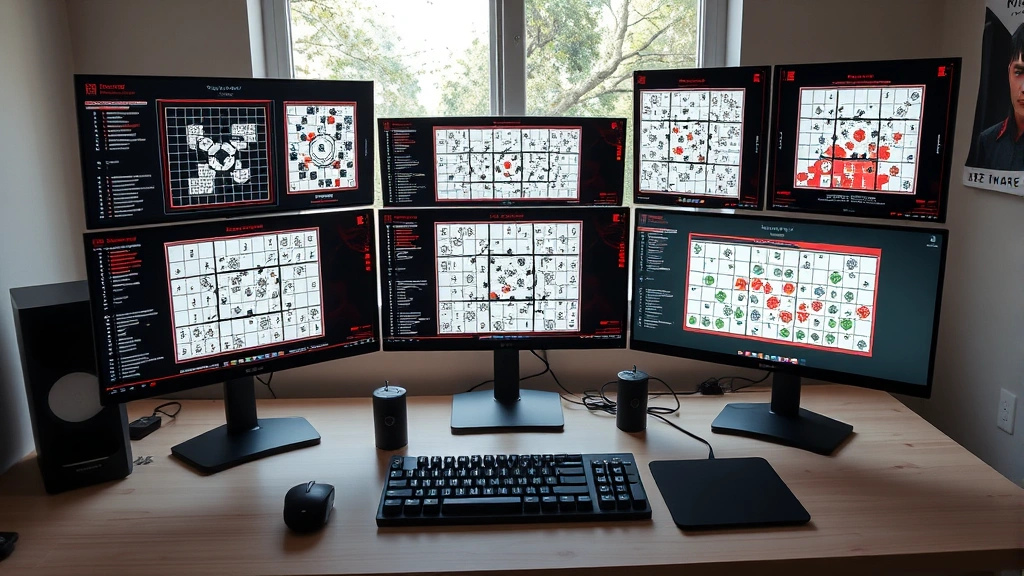
Understanding Samurai Sudoku Mechanics
Samurai Sudoku represents an evolution in puzzle design that builds upon the foundational principles of traditional Sudoku while introducing significantly increased complexity. The standard Samurai configuration features five overlapping 9×9 grids arranged in an X pattern, where the center grid shares rows and columns with each corner grid. This interconnected structure means that solving numbers in one grid directly impacts the possibilities in adjacent grids, requiring players to think several moves ahead and maintain awareness of multiple constraint systems simultaneously.
The mathematical elegance of Samurai Sudoku lies in its cascading logic chains. When you place a number in the center grid, it affects the solution space in four different corner grids. Conversely, numbers placed in corner grids influence both the center and adjacent corner grids. This multi-directional constraint system creates puzzles that are exponentially more challenging than standard Sudoku, yet remain solvable through logical deduction rather than guesswork. The best indie games for PC in the Sudoku category embrace these mechanics while adding modern conveniences like hint systems, undo functions, and progressive tutorials that help players understand the unique spatial relationships.
Digital implementations of Samurai Sudoku offer advantages that physical puzzles cannot match. Real-time highlighting shows which numbers conflict with your current selection, color-coding systems help track related cells across multiple grids, and hint systems can guide you through particularly challenging logical deductions. Many games feature adjustable difficulty levels ranging from beginner-friendly puzzles with numerous given numbers to expert-level challenges that require advanced solving techniques like X-wings, swordfish patterns, and naked pairs.

Best Mobile Samurai Sudoku Games
Mobile platforms have become the primary destination for casual puzzle gaming, and several exceptional Samurai Sudoku titles have emerged as category leaders. Sudoku.com stands out as one of the most comprehensive mobile Sudoku platforms, featuring an extensive collection of Samurai puzzles alongside traditional and other variant formats. The game offers daily challenges, achievement systems, and seamless cross-platform synchronization that allows players to start a puzzle on their phone and continue on their tablet without losing progress. The interface is intuitively designed with large, readable numbers and a satisfying tap-based input system that feels natural on touchscreens.
Another standout mobile experience comes from Peak – Brain Training, which incorporates Samurai Sudoku alongside other logic puzzles within a comprehensive brain-training ecosystem. Peak’s approach emphasizes progressive difficulty and personalized challenge recommendations based on your solving patterns. The game tracks your performance metrics, highlighting areas where you might need improvement, and provides targeted practice sessions designed to enhance specific logical reasoning skills. This educational angle appeals to players who view puzzle games as cognitive training tools rather than mere entertainment.
For players seeking a more minimalist aesthetic, Zen Sudoku delivers Samurai puzzles within a beautifully designed interface that prioritizes calm, focused gameplay. The game features soothing background music, customizable themes, and a distraction-free environment perfect for extended puzzle-solving sessions. Zen Sudoku’s tutorial system gradually introduces Samurai Sudoku concepts, ensuring that newcomers understand the unique mechanics before tackling complex puzzles. The game also includes a “relax mode” where hints are unlimited, allowing players to solve at their own pace without time pressure.
Mobile gamers should also explore Sudoku Master, which combines traditional Sudoku gameplay with Samurai variants and features a robust hint system powered by advanced algorithms. The game adapts to your skill level, gradually increasing difficulty as you master each tier. Achievement badges, leaderboards, and weekly tournaments create a competitive element that motivates continuous improvement. The interface supports both portrait and landscape orientations, making it accessible in various play scenarios.
Premium Desktop and Console Experiences
While mobile gaming dominates the puzzle space, desktop and console platforms offer more immersive Samurai Sudoku experiences with enhanced graphics and sophisticated feature sets. Sudoku 3D for Steam represents an innovative approach to puzzle presentation, rendering Samurai grids in three-dimensional space that can be rotated and manipulated. This spatial representation adds a novel layer to puzzle-solving, allowing players to view the interconnected grids from multiple angles. The game includes hundreds of Samurai puzzles across various difficulty levels, accompanied by a comprehensive hint system that explains the logical reasoning behind suggested moves.
The best co-op games on Steam landscape hasn’t extensively explored multiplayer Sudoku, but Sudoku Together breaks that mold by allowing cooperative puzzle-solving where players work simultaneously on the same grid. While not exclusively focused on Samurai variants, this game demonstrates how digital platforms can transform traditionally solitary puzzle experiences into collaborative entertainment. Players can share puzzles, compare solving times, and support each other through challenging logical sequences.
Console players have access to several excellent options, including Picross S Series titles that, while primarily featuring nonogram puzzles, include dedicated Samurai Sudoku content in select releases. Nintendo Switch versions of Sudoku Switch offer touchscreen compatibility that translates perfectly to handheld gaming, with gyro controls for navigating between grid sections. The console format allows for larger screen real estate, making complex Samurai grids easier to analyze at a glance.
For players seeking the ultimate desktop experience, SudokuPad on Steam provides an open-source, highly customizable platform where you can solve Samurai Sudoku puzzles with complete control over visual presentation. The game supports multiple solving techniques and includes detailed explanations of advanced strategies. The active community continuously contributes new puzzles, ensuring an essentially infinite supply of fresh challenges.
Features That Define Quality Puzzle Games
The distinction between mediocre and exceptional Samurai Sudoku games often comes down to specific features that enhance the solving experience. Intelligent hint systems rank among the most important differentiators. Superior hint implementations don’t simply reveal answers; they explain the logical deduction process, teaching you why a particular number must occupy a specific cell. This educational approach transforms casual puzzle-solving into a learning experience that genuinely improves your logical reasoning skills. The Game Forge Daily Blog frequently discusses how quality puzzle game design incorporates educational principles without sacrificing entertainment value.
Visual clarity proves essential when managing five interconnected grids simultaneously. The best games employ color-coding systems that highlight related cells, making spatial relationships immediately apparent. Adjustable font sizes accommodate different vision requirements, while high-contrast themes help players with color blindness distinguish between different grid sections. Some premium implementations offer customizable visual themes, allowing players to optimize the interface based on personal preferences and environmental lighting conditions.
Difficulty scaling represents another critical feature. Quality Samurai Sudoku games offer graduated progression from beginner-friendly puzzles with numerous given numbers to expert-level challenges requiring advanced solving techniques. Rather than simply increasing the number of empty cells, superior games vary the logical complexity, introducing puzzles that demand specific advanced strategies like X-wings, swordfish patterns, and pointing pairs. This thoughtful difficulty progression maintains engagement across skill levels.
Performance tracking and statistics contribute significantly to long-term engagement. Games that record your average solving times, completion rates, and most challenging puzzle types provide feedback that motivates continued play. Some implementations generate personalized recommendations based on your performance patterns, suggesting puzzle types or difficulty levels that align with your current skill development. Leaderboards and achievement systems, when implemented thoughtfully, create additional motivation without becoming intrusive or frustrating.
Tips for Mastering Samurai Sudoku
Mastering Samurai Sudoku requires understanding both the fundamental Sudoku solving techniques and the unique strategies necessitated by the overlapping grid structure. Begin by focusing on one grid at a time, using the constraint relationships between grids to eliminate possibilities. When you identify a number’s position in one grid, immediately check how this discovery affects the overlapping regions in adjacent grids. This cascading deduction approach often reveals solutions that wouldn’t be apparent when examining individual grids in isolation.
Advanced solvers employ the “intersection box” technique, which leverages the overlapping cells to create powerful constraint chains. The center grid intersects with each corner grid along specific rows and columns, creating mathematical relationships that significantly reduce the solution space. Expert players visualize these constraint relationships, using them to make educated deductions that novices might overlook. Regular practice with progressively difficult puzzles develops this spatial intuition, allowing you to recognize patterns and constraint opportunities almost instinctively.
Documentation and annotation systems in quality games support your solving process. When using pencil marks to track possible values in each cell, you create a visual map of your logical reasoning. The best digital implementations allow multiple marking systems, enabling you to distinguish between confirmed deductions and tentative possibilities. Some players maintain separate notes for each grid section, creating a systematic record of their solving process that reveals logical gaps or errors.
Patience and systematic approaches matter more than speed. While some players find satisfaction in rapid puzzle completion, mastering Samurai Sudoku involves understanding the logical foundations underlying each move. Rather than guessing when stuck, examine the constraint relationships more carefully. Often, stepping back and analyzing the broader pattern reveals solutions that weren’t immediately apparent through focused cell-by-cell analysis. Many experienced solvers recommend solving Samurai puzzles in dedicated sessions without distractions, allowing your mind to maintain awareness of the complex spatial relationships across multiple grids.
Community engagement accelerates learning significantly. Online forums and dedicated puzzle communities share solving techniques, discuss challenging puzzles, and provide encouragement during frustrating moments. Watching experienced solvers tackle difficult puzzles through live streams or recorded videos demonstrates techniques and approaches that aren’t always obvious from written descriptions. The IGN gaming community occasionally features puzzle game discussions where players share strategies and recommendations.
Consider exploring the GameSpot puzzle games section for reviews of newly released titles and expert analyses of game mechanics. Additionally, Reddit’s Sudoku communities provide active discussion forums where you can ask questions, share your progress, and learn from experienced enthusiasts. Many top players regularly post solving walkthroughs and technique explanations that accelerate your learning curve significantly.
FAQ
What is the difference between Samurai Sudoku and regular Sudoku?
Samurai Sudoku features five overlapping 9×9 grids arranged in an X pattern, compared to the single grid in traditional Sudoku. The overlapping regions create interconnected constraints that make Samurai puzzles significantly more challenging. Numbers placed in one grid affect the solution possibilities in adjacent grids, requiring players to maintain awareness of multiple constraint systems simultaneously.
Are there free Samurai Sudoku games available?
Yes, numerous free Samurai Sudoku games exist across mobile and desktop platforms. Sudoku.com, Zen Sudoku, and several others offer free versions with optional premium features. Many free games support themselves through advertisements, while others rely on in-app purchases for advanced features like unlimited hints or ad-free experiences.
How long does it take to solve a Samurai Sudoku puzzle?
Solving times vary dramatically based on difficulty level and player experience. Beginner puzzles might take 20-40 minutes, while intermediate challenges require 60-90 minutes. Expert-level Samurai Sudoku puzzles can consume 2-4 hours or more, particularly when employing systematic solving approaches that verify each logical step. Speed solving enthusiasts have completed difficult Samurai puzzles in under 15 minutes through years of practice and pattern recognition development.
Do I need advanced mathematical skills to solve Samurai Sudoku?
No mathematical skills beyond basic counting are required. Samurai Sudoku relies entirely on logical deduction and pattern recognition rather than mathematical computation. The puzzles involve only the numbers 1-9 and require understanding that each number appears exactly once in each row, column, and 3×3 box within each grid.
What solving techniques should beginners learn first?
Start with “naked singles” (cells with only one possible value) and “hidden singles” (numbers that can occupy only one position within a row, column, or box). These fundamental techniques solve many beginner and intermediate puzzles. Progress to “pointing pairs,” “box/line reduction,” and “naked pairs” as you develop pattern recognition skills. Advanced techniques like X-wings and swordfish patterns come naturally once you’ve mastered foundational approaches.
Can Samurai Sudoku improve cognitive abilities?
Yes, regular Samurai Sudoku practice strengthens logical reasoning, pattern recognition, spatial awareness, and sustained attention. Research on puzzle gaming indicates consistent practice correlates with improved problem-solving skills, enhanced working memory, and better concentration. The progressive difficulty in quality games ensures continued cognitive challenge as your skills develop, preventing plateauing and maintaining engagement.
Which platforms offer the best Samurai Sudoku experiences?
Mobile platforms provide the most accessible and diverse Samurai Sudoku options, with Sudoku.com, Peak, and Zen Sudoku leading the category. Desktop Steam implementations like Sudoku 3D offer more sophisticated features and enhanced graphics. Nintendo Switch versions provide excellent touchscreen compatibility and large-screen convenience for extended play sessions. Your best choice depends on your preferred gaming environment and desired feature set.
Whether you’re exploring the gaming PC build requirements for desktop puzzle experiences or seeking mobile convenience, the Samurai Sudoku gaming landscape offers exceptional options for every preference and skill level. The puzzle gaming genre continues evolving with innovative implementations and increasingly sophisticated difficulty systems that challenge players across all experience ranges. Start your Samurai Sudoku journey today and discover why millions of players worldwide find these intricate, interconnected puzzles endlessly captivating and intellectually rewarding.