


Top Math Games for Kids: Teacher Recommended ST Math Games That Actually Work
Finding the right educational games for kids can feel overwhelming, but ST Math games have revolutionized how children learn mathematics. These interactive, game-based learning platforms combine engaging gameplay with solid pedagogical principles, making math practice feel less like a chore and more like genuine fun. Teachers across the country have embraced ST Math as a cornerstone of their math instruction, and for good reason—the results speak for themselves.
Whether you’re a parent searching for supplementary learning tools or an educator looking to enhance your classroom instruction, understanding the landscape of ST Math games and similar educational mathematics platforms is essential. These games don’t just keep kids entertained; they build fundamental math skills, boost confidence, and foster a genuine love of learning that extends far beyond the screen.
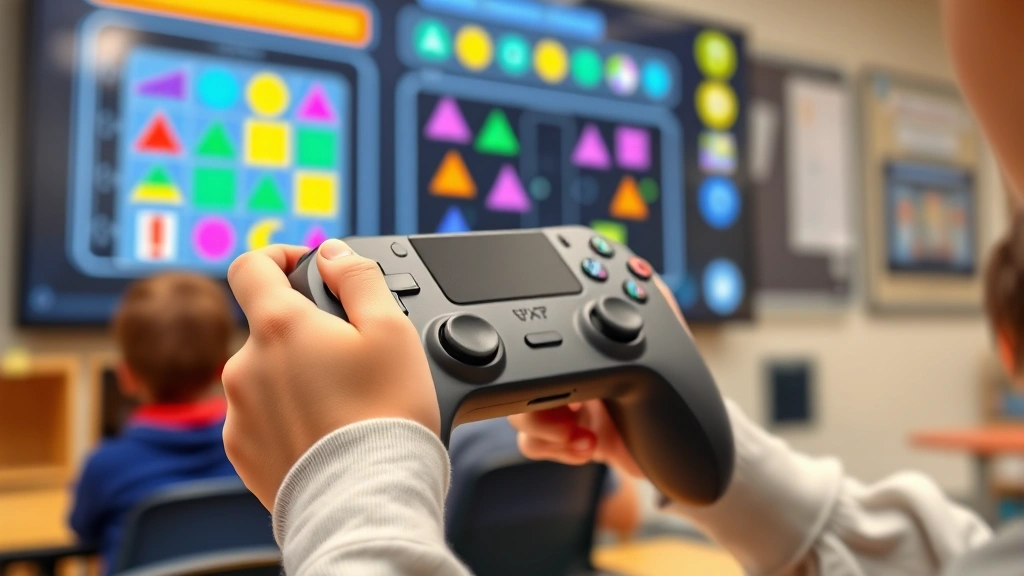
What Makes ST Math Games Special
ST Math (Spatial-Temporal Math) represents a paradigm shift in how we approach mathematical education. Unlike traditional worksheet-based learning, ST Math games use spatial reasoning and visual problem-solving to help students understand mathematical concepts at a deeper level. The platform employs a unique mascot named Jiji, a penguin character who guides students through increasingly complex mathematical challenges.
The brilliance of ST Math lies in its game-based learning model. Students encounter puzzles that require mathematical thinking to solve, but the mathematics is embedded naturally within the gameplay. There’s no explicit instruction or formula memorization—instead, students learn through exploration, trial and error, and pattern recognition. This approach aligns perfectly with modern educational psychology, which emphasizes constructivist learning principles.
Teachers consistently report that ST Math games increase student engagement and mathematical confidence. Unlike many educational games that feel like thinly-veiled math worksheets, ST Math genuinely captures children’s interest. The progressive difficulty curve keeps students challenged without becoming frustrated, and the immediate feedback helps reinforce correct mathematical thinking. When you’re exploring the best indie games for PC, you’ll notice similar design principles—engagement through gameplay rather than forced learning.

Top Teacher-Recommended Math Games
Beyond ST Math itself, several other platforms have earned the respect and recommendation of educators nationwide. Understanding this broader ecosystem helps parents and teachers select tools that complement their learning objectives.
ST Math Itself: The Gold Standard
ST Math remains the flagship recommendation from teachers. Available for K-8 students, the platform covers number sense, fractions, geometry, algebraic thinking, and measurement. The game-based progression system ensures students master foundational concepts before advancing to more complex material. Teachers appreciate the detailed analytics dashboard, which provides insights into student progress, learning patterns, and areas requiring additional support.
The platform’s visual-spatial approach proves particularly effective for students who struggle with traditional math instruction. By emphasizing conceptual understanding over procedural fluency, ST Math builds mathematical thinking rather than rote skills. Schools implementing ST Math report significant improvements in standardized test scores and student attitudes toward mathematics.
Prodigy Math
Prodigy combines RPG-style gameplay with comprehensive math curriculum coverage. Students create characters, explore fantasy worlds, and engage in turn-based math battles. The adaptive difficulty system adjusts to individual student performance, ensuring appropriate challenge levels. Teachers appreciate Prodigy’s alignment with Common Core standards and its ability to target specific skill gaps through customized assignments.
Khan Academy Kids
Khan Academy’s free platform offers engaging math activities alongside literacy and social-emotional learning. The character-driven gameplay and colorful interface appeal to younger learners, while the content depth satisfies educational standards. Teachers value Khan Academy’s comprehensive library and the ability to track student progress without subscription costs.
IXL Math
IXL provides a comprehensive math curriculum spanning pre-K through calculus. The platform offers thousands of practice questions with adaptive difficulty, immediate feedback, and detailed analytics. While IXL includes game-like elements, it emphasizes skill mastery through practice rather than narrative-driven gameplay. Teachers use IXL for targeted skill development and assessment.
Mathway and Similar Tools
For older students, problem-solving platforms like Mathway provide step-by-step solutions and explanations. These tools work best as supplementary resources rather than primary learning platforms, helping students understand how to approach complex problems.
How to Choose the Right Math Game
Selecting appropriate math games requires understanding your specific needs, learning objectives, and student demographics. Not every tool works for every situation, and the best choice depends on several factors.
Age and Grade Level Alignment
Ensure the game targets the appropriate grade level and covers relevant curriculum standards. ST Math games, for instance, are specifically designed for K-8, with content progression aligned to developmental stages. Games that feel too babyish bore advanced learners, while games that are too complex frustrate struggling students. Check curriculum alignment documents and scope-and-sequence guides before committing to any platform.
Learning Objectives
Clarify what mathematical skills and concepts you want to develop. Are you targeting foundational number sense, fraction understanding, geometric thinking, or algebraic concepts? Different games excel at different objectives. ST Math excels at conceptual understanding, while IXL emphasizes skill mastery through practice. Game Forge Daily Blog discusses various gaming approaches that might inform your selection process.
Engagement and Motivation
Consider your students’ interests and gaming preferences. Some students respond enthusiastically to narrative-driven games with character progression, while others prefer puzzle-solving challenges. Observe how students interact with different platforms during trial periods. Genuine engagement leads to sustained practice and better learning outcomes.
Teacher Support and Analytics
Evaluate the platform’s reporting capabilities and teacher support resources. Can you easily identify which students need additional support? Does the platform provide insights into misconceptions and learning patterns? Strong analytics help teachers differentiate instruction effectively. Look for platforms offering professional development resources and responsive customer support.
Cost and Accessibility
Consider budget constraints and accessibility requirements. Some platforms like Khan Academy are free, while others require subscriptions. Ensure the platform works on devices your school or students can access. Consider whether the platform supports students with different abilities and learning needs.
Implementation Strategies for Success
Introducing math games into your classroom or home learning environment requires thoughtful planning and clear expectations. Simply assigning games without strategic implementation often fails to produce desired results.
Establish Clear Expectations
Help students understand that game-based math is still serious learning, not just entertainment. Explain how the games develop mathematical thinking and how their progress connects to learning goals. Set expectations for engagement level, time on task, and approaching challenges productively rather than randomly clicking.
Balance Game-Based and Traditional Learning
Math games work best as part of a comprehensive instructional approach. Combine them with direct instruction, hands-on manipulatives, collaborative problem-solving, and traditional practice. Games should reinforce and deepen understanding developed through other instructional methods. For inspiration on balancing different gaming approaches, explore how best co-op games on Steam balance competitive and collaborative elements.
Monitor Progress Carefully
Use built-in analytics to track student progress and identify students struggling with particular concepts. Intervene promptly with targeted instruction or additional support. Don’t assume that because a student completed game levels they’ve truly mastered the concepts. Use formative assessments to verify understanding.
Differentiate Implementation
Use games to meet students where they are developmentally. Advanced learners might work on more challenging levels or explore extension activities, while struggling learners receive additional support and scaffolding. The adaptive nature of many platforms helps with this, but teacher oversight remains essential.
Create a Positive Gaming Culture
Celebrate effort, persistence, and mathematical thinking rather than just correct answers. Help students view mistakes as learning opportunities rather than failures. Foster a classroom culture where asking for help and trying challenging problems is valued. This mindset shift makes games more effective learning tools.
Measuring Progress and Results
Determining whether math games are actually improving student learning requires systematic progress monitoring and assessment.
Standardized Metrics and Analytics
Most platforms provide built-in analytics showing completion rates, accuracy percentages, time-on-task data, and conceptual understanding measures. Review these regularly to identify trends and individual student needs. Look for improvements in accuracy over time and increasing ability to tackle more challenging problems.
Formative Assessment Integration
Don’t rely solely on game metrics. Use formative assessments like exit tickets, quick sketches, verbal explanations, and problem-solving discussions to verify students understand concepts beyond the game context. Can students apply the skills to novel problems? Can they explain their mathematical thinking? These questions matter more than game completion rates.
Standardized Test Performance
Schools implementing ST Math and similar platforms report improvements on standardized assessments. Track your students’ performance on state assessments and compare to baseline data. Improvements in standardized test performance, combined with increased engagement and confidence, indicate successful implementation.
Student Confidence and Attitude
Assess changes in student attitudes toward mathematics through surveys, observations, and conversations. Do students express more confidence in their mathematical abilities? Do they approach challenging problems more persistently? Are they more willing to attempt difficult material? These affective measures matter tremendously for long-term mathematical success.
Teacher Observations
Pay attention to changes you notice in classroom discussions and problem-solving approaches. Do students demonstrate stronger spatial reasoning? Are they making more mathematical connections? Do they explain their thinking more clearly? Teacher observations provide valuable qualitative data about learning depth.
According to Education Week, schools implementing game-based math platforms report an average 12-15% improvement in standardized math test scores when combined with strong instructional practices. The key is ensuring games complement rather than replace quality instruction.
FAQ
Are ST Math games free?
ST Math requires a school or district subscription. Individual families cannot purchase direct access, though some schools provide free access to students. Check with your school about availability.
What age should kids start using math games?
Most math games target kindergarten and above. Younger children benefit from physical manipulatives and concrete experiences before digital games. As children develop stronger abstract thinking, games become increasingly effective.
How much screen time is appropriate for math games?
The American Academy of Pediatrics recommends limiting screen time based on age. For educational purposes, 20-30 minutes of focused game-based learning several times weekly is generally appropriate for elementary students. Balance screen-based and non-screen learning.
Can math games replace traditional math instruction?
No. Math games work best as part of comprehensive instruction that includes direct teaching, hands-on activities, collaborative problem-solving, and practice. Games should enhance, not replace, quality instruction.
How do I know if a math game is actually educational?
Look for games that require genuine mathematical thinking, provide meaningful feedback, align with curriculum standards, adapt to student performance, and show evidence of improving student learning. Avoid games that are primarily entertainment with minimal mathematical content.
What about students who don’t like games?
Some students genuinely prefer traditional learning approaches. Honor these preferences while still providing exposure to game-based learning. Different students respond to different instructional methods, and effective teaching uses multiple approaches.
How do I get my school to implement ST Math or similar platforms?
Gather evidence about effectiveness, connect with other teachers interested in implementation, present research findings to administrators, and propose pilot programs. Many schools are receptive to evidence-based approaches that improve student outcomes. Check resources from Common Sense Media for guidance.
Are there free alternatives to paid math game platforms?
Yes. Khan Academy Kids, Mathway (limited free version), and various open-source platforms provide free or freemium options. While paid platforms often offer more comprehensive features, free options provide solid foundational support. Explore gaming resources for insights into platform development that might help you evaluate quality.
How do math games help struggling students?
Games provide low-pressure environments for practice, immediate feedback that helps correct misconceptions, adaptive difficulty that prevents frustration, and engaging contexts that maintain motivation. For students who’ve experienced math anxiety, games can rebuild confidence and foster growth mindsets.
Can advanced learners benefit from math games?
Absolutely. Advanced learners benefit from more challenging levels, extension activities, and opportunities to explore deeper mathematical concepts. Games can prevent boredom by providing appropriate challenge and fostering mathematical curiosity. Explore narrative-driven gaming approaches that might inspire advanced learning experiences.