
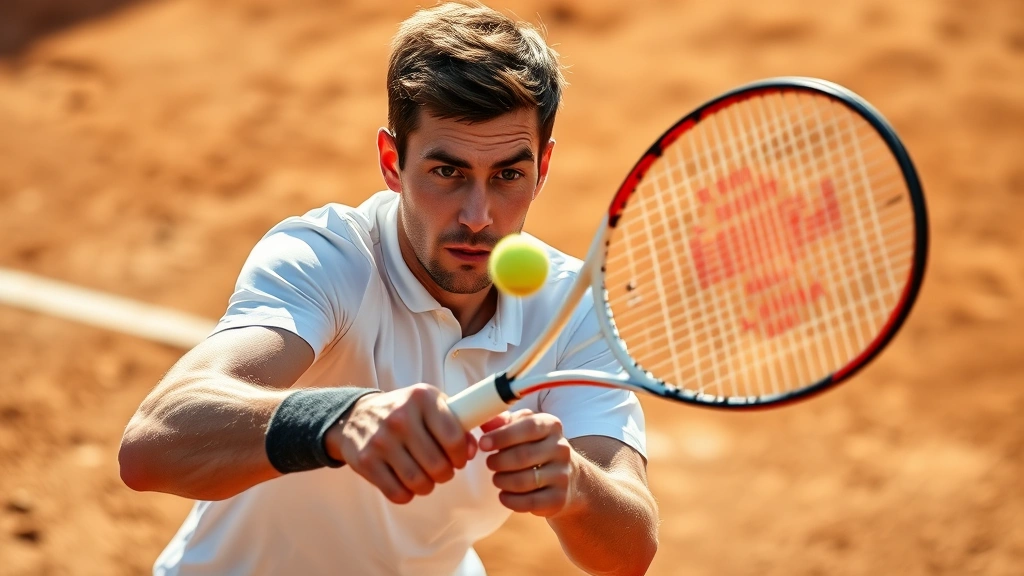
Master Tennis Techniques: Expert Insights on The Inner Game of Tennis
Tennis is far more than just hitting a ball across a net. The sport demands a unique blend of physical prowess, technical precision, and mental fortitude that separates champions from casual players. Whether you’re a competitive gamer exploring indie tennis simulations or a real-world athlete seeking to elevate your game, understanding the psychological and technical dimensions of tennis is absolutely critical. The inner game of tennis—a concept popularized by W. Timothy Gallwey—represents the mental and emotional aspects that directly impact your performance on the court.
In this comprehensive guide, we’ll explore the essential techniques, mental strategies, and expert insights that will transform your tennis game. From mastering fundamental strokes to developing unshakeable focus under pressure, you’ll discover actionable advice that applies whether you’re training for tournaments or enjoying recreational play. Let’s dive deep into what separates elite players from the rest and how you can implement these principles immediately.
Understanding The Inner Game Philosophy
The inner game of tennis fundamentally challenges how we approach athletic performance. Rather than obsessing over technique minutiae, Gallwey’s philosophy emphasizes the relationship between your conscious mind and your body’s natural abilities. This concept revolutionized sports psychology and continues to influence coaches and athletes across all disciplines.
The core principle involves quieting your inner critic—that voice constantly judging your performance and creating anxiety. When you’re in a state of flow, your body executes shots naturally without conscious intervention. This is where elite players operate. They’ve trained their technique so thoroughly that their unconscious mind handles execution while their conscious mind remains calm and strategic.
For competitive players, this means transitioning from Self 1 (the judgmental, anxious voice) to Self 2 (the capable, intuitive performer). Achieving this mental state requires specific practices and awareness development. When you watch professional tennis matches, you’ll notice top-ranked players display remarkable composure even during crucial points. This isn’t luck—it’s the result of mastering their inner game.
One practical application involves nonjudgmental observation. Instead of thinking “I’m hitting a terrible backhand,” you simply observe: “My backhand contact point was slightly late today.” This subtle shift removes emotional charge and allows your body to naturally correct the issue. Many players who’ve embraced this approach report immediate improvements in consistency and confidence.
Mastering Fundamental Tennis Strokes
While the inner game emphasizes mental aspects, technical mastery remains absolutely essential. The foundation of exceptional tennis consists of four primary strokes: the forehand, backhand, serve, and volley. Each stroke requires specific biomechanical principles to generate power, spin, and accuracy.
The Forehand Drive represents the offensive weapon in modern tennis. The closed stance provides stability while the kinetic chain—initiating movement from your legs through your core to your arm—generates tremendous racket head speed. Professional players like Novak Djokovic and Naomi Osaka demonstrate how proper weight transfer creates devastating forehand power. Key technical elements include proper grip (semi-western or western), early preparation, and a complete follow-through that guides the ball’s trajectory.
The Backhand Stroke challenges many recreational players, but two-handed backhands have become standard at professional levels. The two-handed backhand provides stability, power, and better court positioning. Your non-dominant hand guides the racket while your dominant arm provides the driving force. Practice drills focusing on footwork coordination will dramatically improve your backhand consistency. For single-handed backhands, maintaining a continental grip and achieving proper extension remains crucial for slice variation and offensive opportunities.
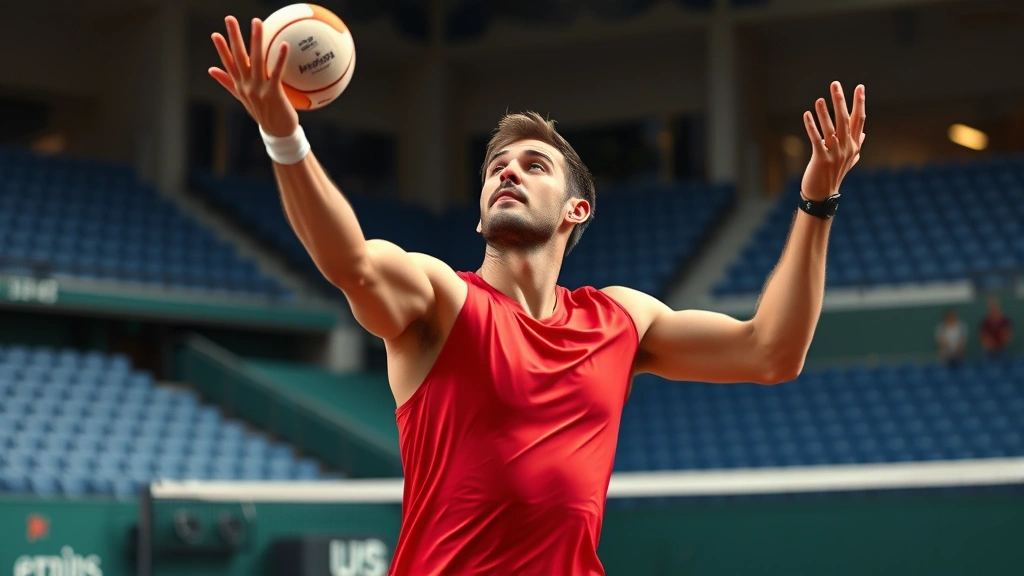
The Serve deserves special attention as it’s the only shot you completely control. A reliable first serve creates immediate pressure while a strong second serve prevents opponents from attacking aggressively. The serve involves a complex coordinated sequence: stance establishment, ball toss accuracy, explosive leg drive, shoulder rotation, and pronation through contact. Many players neglect serve practice, yet it’s arguably the most important stroke to develop. Improving your serve by just 5-10% can significantly impact your match results.
Volley Technique becomes increasingly important as you advance competitively. Unlike baseline strokes, volleys require minimal backswing and emphasize quick reaction time. The continental grip works best for volleying, allowing smooth transitions between forehand and backhand. Proper positioning at the net—approximately 2-3 feet from the net—enables you to control points and finish rallies decisively.
If you’re exploring multiplayer gaming experiences, you’ll find several tennis simulations that incorporate these stroke mechanics with surprising accuracy, allowing you to practice strategic thinking during off-court hours.
Mental Resilience and Focus Techniques
Tennis is fundamentally a mental sport. Statistics show that elite players win approximately 80% of their matches through superior mental strength rather than technical ability alone. Developing unshakeable focus and emotional resilience directly impacts your competitive results.
Pre-Point Routines establish consistency and calm your nervous system before crucial shots. Elite players employ specific rituals: bouncing the ball a set number of times, taking deep breaths, and visualizing successful execution. These routines aren’t superstition—they’re scientifically-backed techniques that enhance focus and reduce anxiety. Implementing a personalized pre-point routine takes approximately two weeks to solidify but pays enormous dividends in match performance.
Visualization Techniques activate the same neural pathways as actual physical practice. Sports psychologists have demonstrated that mentally rehearsing successful shots improves real-world performance significantly. Spend 10-15 minutes daily visualizing yourself executing perfect serves, backhands, and match scenarios. This mental practice complements physical training and builds confidence before competitive matches.
Breath Control directly influences your nervous system and stress response. When anxiety rises, your breathing becomes shallow and rapid. Consciously implementing slow, deep breathing—particularly between points—calms your parasympathetic nervous system and restores focus. Many professional players use 4-4-4 breathing: inhale for four counts, hold for four counts, exhale for four counts. This simple technique dramatically reduces performance anxiety.
Emotional Acceptance represents a critical mental skill. Rather than fighting negative emotions during matches, acknowledge them without judgment. Thoughts like “I’m nervous” are natural—resisting them actually intensifies anxiety. Top players accept nervousness as excitement and channel that energy productively. This mindset shift alone can transform your competitive experience.
For players interested in optimizing their gaming setup, consider how mental resilience principles apply to competitive gaming as well—focus, emotional control, and strategic thinking transcend specific activities.
Advanced Strategic Gameplay
Technical excellence and mental strength must combine with intelligent strategic thinking. Understanding court positioning, shot selection, and opponent analysis separates competitive players from recreational enthusiasts.
Court Positioning Strategy fundamentally impacts your effectiveness. The split step—a small hop timed as your opponent strikes the ball—positions you optimally to react quickly. Baseline players should position themselves 2-3 feet behind the baseline, allowing court coverage while maintaining offensive options. Net players benefit from positioning slightly inside the service box, enabling aggressive volley angles.
Shot Selection Principles require reading your opponent’s positioning and movement patterns. Crosscourt shots generally provide safer options with longer distance and lower net clearance requirements. Down-the-line shots offer offensive opportunities but demand greater accuracy. Recognizing when to employ each shot type based on court positioning determines match outcomes significantly.
Opponent Analysis involves identifying patterns and exploiting weaknesses. Does your opponent struggle with high bouncing balls? Target that weakness consistently. Does their backhand lack power? Attack that side aggressively. Professional players spend considerable time studying opponents’ tendencies through video analysis and practice matches. You can implement similar strategies by recording your practice sessions and identifying patterns.
Serve-and-Volley Strategy remains highly effective, particularly against defensive opponents. Following your serve to the net forces your opponent to hit passing shots or lobs under pressure. Modern players like Matteo Berrettini demonstrate how integrating serve-and-volley into your game creates unpredictability and shortens points favorably.
Training Programs for Competitive Excellence
Structured training programs accelerate improvement significantly compared to casual practice. Elite players typically follow periodized training schedules incorporating different training phases throughout the year.
Periodized Training Cycles typically include three phases: preparation phase (building fitness and technique), competition phase (maintaining fitness while competing), and recovery phase (active recovery and injury prevention). This structure prevents burnout and optimizes performance timing for major tournaments.
Drill-Based Practice enhances specific skills more effectively than hitting random balls. Effective drills include:
- Target Practice: Hit specific targets on the court to improve accuracy and shot placement consistency
- Pressure Drills: Simulate match scenarios where missed shots have consequences, building mental toughness
- Movement Drills: Develop footwork patterns and court positioning through specialized exercises
- Stroke Production: Focus intensively on individual stroke mechanics with quality repetition
- Match Play Simulation: Practice realistic match scenarios to prepare mentally for competitive situations
Physical Conditioning separates competitive from recreational players. Tennis demands explosive power, lateral agility, and cardiovascular endurance. Effective conditioning programs incorporate:
- Strength training emphasizing legs, core, and shoulders
- Agility work improving lateral movement and court coverage
- Cardiovascular training building aerobic and anaerobic capacity
- Flexibility work preventing injuries and maintaining mobility
- Recovery protocols ensuring adequate rest and adaptation
According to IGN’s sports coverage, professional athletes across disciplines emphasize recovery as seriously as training itself. Your body adapts during rest periods, making recovery integral to improvement.
If you’re interested in tracking your fitness progress, many players find technology solutions helpful for analyzing performance metrics and training data systematically.
Common Mistakes and How to Overcome Them
Mistake #1: Neglecting Serve Development
Many recreational players underinvest in serve practice, yet the serve creates immediate pressure and controls rally pace. Dedicate 20-30% of your practice time to serve development across all court positions and pressure situations.
Mistake #2: Overcomplicating Technique
Excessive technical analysis actually impairs performance by activating your conscious mind during execution. Focus on fundamental principles rather than micro-adjustments. Trust your training and let your body execute naturally.
Mistake #3: Inadequate Mental Preparation
Many players focus exclusively on physical training while neglecting mental conditioning. Integrate visualization, breathing exercises, and mental rehearsal into your regular training regimen. These practices are as important as physical drills.
Mistake #4: Poor Match Preparation
Arriving at matches without proper warm-up routines or pre-match rituals compromises performance. Develop a standardized warm-up sequence and mental preparation protocol you implement consistently before every match.
Mistake #5: Ignoring Opponent Tendencies
Playing generic tennis without adapting to specific opponents wastes opportunities. Study your opponent’s patterns and exploit weaknesses systematically rather than playing your “perfect game” regardless of circumstances.

For additional resources on competitive excellence, check out GameSpot’s extensive sports gaming coverage and the GameForge Daily Blog for comprehensive gaming and sports analysis.
FAQ
What is the inner game of tennis exactly?
The inner game of tennis refers to the mental and psychological aspects of performance, emphasizing the relationship between your conscious mind and natural abilities. It focuses on quieting self-judgment and achieving a flow state where your body executes shots naturally without overthinking.
How long does it take to master tennis techniques?
Basic competency typically requires 6-12 months of consistent practice. Intermediate proficiency takes 2-3 years, while elite-level mastery demands 5-10+ years of dedicated training. Individual progress varies based on natural ability, training quality, and practice frequency.
Can visualization really improve tennis performance?
Yes, absolutely. Neuroscientific research demonstrates that mental rehearsal activates identical neural pathways as physical practice. Studies show visualization combined with physical practice produces superior results compared to physical practice alone. Dedicate 10-15 minutes daily to visualization for measurable improvements.
What’s the most important stroke in tennis?
The serve is arguably most important since you control it completely without opponent influence. However, all four fundamental strokes—serve, forehand, backhand, and volley—are essential for competitive success. Neglecting any single stroke creates exploitable weaknesses.
How do professional players stay calm during crucial matches?
Professional players employ multiple techniques: pre-point routines establishing consistency, controlled breathing managing nervous system activation, visualization building confidence, and emotional acceptance reducing performance anxiety. These practices develop through consistent training and mental conditioning.
Should I focus on power or accuracy in my training?
Both are essential but accuracy should generally take priority initially. Powerful shots with poor accuracy create unforced errors. Develop consistent accuracy first, then progressively increase power while maintaining control. Elite players achieve both simultaneously through proper technique.
How can I improve my mental toughness in tennis?
Mental toughness develops through pressure-simulation drills, visualization practice, pre-match routines, and competitive match experience. Deliberately practicing under pressure conditions builds resilience more effectively than casual practice. Keep competition records and analyze how you respond to pressure situations.