
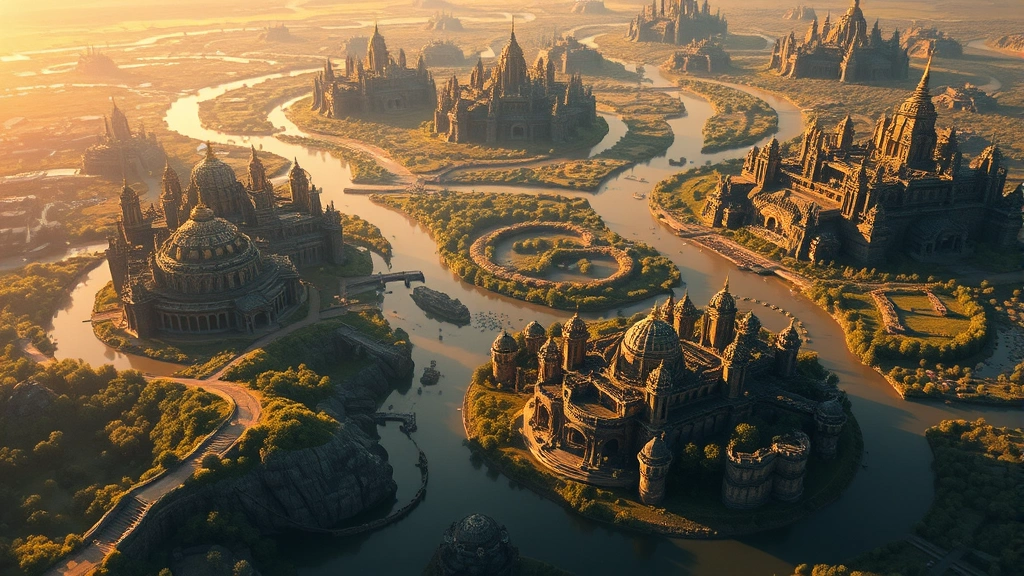
Exploring Video Game Worlds: Expert Insights Into Immersive Digital Universes
The modern video game landscape has evolved dramatically over the past two decades, transforming from simple 2D platformers into breathtakingly complex three-dimensional universes that rival Hollywood productions in scope and ambition. Today’s developers craft intricate video game worlds that invite players to lose themselves for hundreds of hours, discovering hidden secrets, forging meaningful connections with characters, and experiencing narratives that challenge our understanding of interactive storytelling. Whether you’re exploring the post-apocalyptic wastelands of Fallout, the high-fantasy realms of The Witcher 3, or the interconnected cosmos of No Man’s Sky, modern gaming offers unprecedented opportunities for world exploration and discovery.
These expansive digital environments represent more than just technical achievements—they’re carefully constructed ecosystems designed to evoke emotion, inspire curiosity, and create lasting memories. From environmental storytelling that unfolds through subtle details to dynamic systems that respond to player actions, contemporary video game worlds have become sophisticated art forms worthy of serious analysis and appreciation. This comprehensive guide explores the essential elements that make these worlds compelling, examines the design philosophies behind the most acclaimed titles, and provides expert insights into what separates truly immersive experiences from forgettable ventures.

The Evolution of Video Game World Design
The history of video game worlds is a fascinating journey that reflects technological advancement and creative ambition in equal measure. In the early 1980s, games like Ultima and Wizardry introduced players to expansive fantasy realms, yet these worlds existed primarily in our imaginations, represented by simple wireframe graphics and text descriptions. As processing power increased throughout the 1990s, developers began crafting increasingly detailed environments—The Legend of Zelda: Ocarina of Time revolutionized world design by creating a cohesive Hyrule that felt genuinely explorable, with multiple regions interconnected through natural geography and clever dungeon placement.
The transition to modern hardware fundamentally changed what developers could achieve. Games like Grand Theft Auto III (2001) and The Elder Scrolls III: Morrowind (2002) demonstrated that massive open worlds could be rendered in real-time, allowing players unprecedented freedom in exploration. However, these early open-world experiences often felt sparse, with repetitive textures and limited interactive elements. Contemporary titles have solved these problems through improved engine technology, more sophisticated level design, and deeper integration of narrative and gameplay mechanics. When you’re exploring a video game world today, you’re experiencing the culmination of decades of iterative design refinement.
The philosophical approach to world design has also evolved significantly. Early sandbox games prioritized size and freedom above all else, sometimes at the expense of meaningful content density. Modern developers have learned that quality trumps quantity—a meticulously crafted region filled with interesting encounters, hidden stories, and environmental details proves far more memorable than endless procedurally-generated terrain. This shift reflects a broader maturation in the industry, where designers recognize that player engagement depends on consistent discovery and meaningful interaction with the environment.

Environmental Storytelling and Narrative Integration
One of the most sophisticated developments in contemporary video game worlds is environmental storytelling—the practice of conveying narrative through level design, visual details, and contextual clues rather than explicit exposition. Games like Dark Souls revolutionized this approach, creating a rich lore that unfolds through item descriptions, NPC dialogue fragments, and the arrangement of architectural elements. Players piece together stories organically, creating a sense of archaeological discovery that traditional cutscenes cannot replicate.
The best modern examples demonstrate remarkable restraint and trust in player intelligence. In The Witness, the entire world serves as a puzzle and narrative device simultaneously—your understanding of the environment’s purpose deepens as you solve challenges and discover hidden areas. Similarly, games like Outer Wilds create worlds where exploration itself becomes the primary storytelling mechanism. Every location contains clues about the game’s central mysteries, encouraging players to develop theories and hypotheses about what happened in this doomed solar system. This approach transforms video game worlds into spaces for active interpretation rather than passive consumption.
Environmental design also communicates thematic content implicitly. Consider how Bioshock uses art deco architecture, advertising slogans, and scattered recordings to construct a critique of unchecked capitalism and scientific ethics. The world itself becomes an argument, with every visual element reinforcing the narrative about Rapture’s rise and fall. When you’re navigating such carefully constructed spaces, you’re not simply moving through a video game world—you’re engaging with a complete artistic vision where environment and story are inseparable.
This integration extends to how environments respond to narrative events. In The Witcher 3, regions transform based on your choices and story progression, with environmental details reflecting the consequences of your decisions. A village you helped might flourish with new construction and grateful NPCs, while one you ignored could fall into decay. This dynamic responsiveness ensures that each player’s video game world feels personally shaped by their actions.
Technical Innovations Driving Immersion
Modern immersive video game worlds depend on technical foundations that would have seemed impossible just a decade ago. Real-time ray tracing, for instance, has revolutionized how light behaves in virtual spaces, creating reflections and shadows with photorealistic accuracy. This seemingly technical detail profoundly impacts immersion—when light behaves naturally, our brains accept the environment more readily, suspending disbelief more completely.
Advanced rendering techniques also enable higher density of environmental detail. Games like Unreal Engine 5 demonstrations showcase worlds with billions of polygons, allowing artists to craft environments with unprecedented fidelity. Every surface can contain microscopic detail, every material can exhibit realistic properties, and the cumulative effect is environments that feel genuinely lived-in rather than constructed. When you’re exploring a video game world with this level of detail, the distinction between representation and reality blurs.
Audio design represents another crucial technical frontier. Spatial audio systems now create three-dimensional soundscapes where environmental audio sources position themselves naturally in space around the player. A distant storm, the rustling of leaves, NPC conversations carrying from nearby buildings—all of these auditory elements combine to create a multisensory environment that enhances immersion dramatically. The best video game worlds engage all senses, not just vision.
Performance optimization has also improved dramatically, enabling developers to maintain visual fidelity while ensuring smooth gameplay. Technologies like DLSS (Deep Learning Super Sampling) and variable rate shading allow modern games to deliver stunning visuals without requiring prohibitively expensive hardware. This democratization of visual quality means more players can experience immersive video game worlds without investing in expensive gaming PC builds. Alternatively, cloud gaming solutions provide another pathway for accessing graphically demanding titles.
Physics simulation has also reached new levels of sophistication. Modern engines can simulate cloth behavior, destructible environments, fluid dynamics, and particle systems with remarkable accuracy. These systems don’t just look impressive—they create gameplay opportunities and environmental interactions that reinforce world immersion. When you can physically interact with almost every object in a video game world, it feels more real and responsive to your presence.
Player Agency and World Responsiveness
The most immersive video game worlds are fundamentally responsive to player actions, creating the illusion that your choices genuinely matter. This goes beyond simple branching narratives—it requires systems that track player behavior and adapt world state accordingly. Games like Baldur’s Gate 3 excel at this, featuring systems where NPC relationships evolve based on dialogue choices, quest completion, and even seemingly minor interactions. The world remembers what you’ve done and responds authentically.
Open-world games have struggled historically with this challenge, often featuring worlds that feel static despite player agency in main quests. Contemporary titles address this through improved NPC scheduling systems, dynamic event spawning, and consequence tracking. When you complete a quest, the world should visibly change—NPCs should relocate, new dialogue should become available, environmental details should shift. The absence of these changes breaks immersion by suggesting the world exists primarily for player benefit rather than operating according to its own logic.
Player agency also extends to exploration itself. The best video game worlds reward curiosity and experimentation, hiding meaningful discoveries in unexpected locations. This requires careful balance—too much hidden content becomes frustrating, while too little eliminates the joy of discovery. Successful titles like Elden Ring and The Legend of Zelda: Breath of the Wild have mastered this balance, creating worlds where exploration consistently yields interesting encounters without feeling artificially gated or padded with meaningless content.
Nonlinear progression systems further enhance agency within video game worlds. Rather than forcing players through predetermined sequences, modern games increasingly offer multiple pathways to accomplish goals. You might reach a location through direct combat, stealth, puzzle-solving, or environmental manipulation—the world accommodates different playstyles and approaches. This flexibility makes the world feel larger and more authentic, as if multiple valid strategies exist rather than one developer-intended solution.
Indie Developers Revolutionizing World Building
While AAA studios dominate headlines, independent developers have made remarkable contributions to video game worlds design, often achieving greater artistic cohesion through focused vision and smaller scope. The best indie games for PC demonstrate that immersive worlds don’t require massive budgets—they require clarity of vision and commitment to thematic consistency.
Games like Hollow Knight create intricate, interconnected worlds that rival AAA titles in design sophistication. The Kingdom of Hallownest feels genuinely organic, with each region featuring distinct visual identity, environmental hazards, and creature populations. Exploration reveals environmental storytelling without explicit exposition, and the world’s geography makes logical sense—you can mentally map connections between regions and understand the overall layout. This coherence is harder to achieve than it appears, requiring careful planning and restraint in design choices.
Indie developers also excel at niche world design that larger studios might consider too risky. Games like Disco Elysium create urban fantasy worlds with distinctive aesthetic and tone, while titles like Kentucky Route Zero craft magical realist environments that defy easy categorization. These video game worlds often feel more artistically ambitious than their AAA counterparts precisely because they operate outside mainstream commercial constraints.
The accessibility of modern game engines has democratized world-building tools, allowing solo developers to create environments that would have required large teams a decade ago. This technological democratization has enriched the medium with diverse perspectives and experimental approaches to video game worlds design. Whether you’re seeking traditional fantasy realms or completely novel environmental experiences, indie titles offer remarkable variety and artistic ambition.
Multiplayer Worlds and Community Dynamics
Multiplayer video game worlds introduce additional complexity, as they must accommodate simultaneous players while maintaining coherent, persistent environments. MMORPGs pioneered this challenge, creating persistent worlds that continue evolving regardless of individual player actions. Games like Final Fantasy XIV have evolved their world across multiple expansions, with main story events reshaping continents, introducing new regions, and fundamentally altering the game’s geography and lore.
The social dimension of multiplayer video game worlds creates emergent storytelling opportunities impossible in single-player experiences. Players collaborate to discover secrets, create shared narratives through roleplay, and establish community traditions within the game world. The world becomes a shared space where millions of players coexist, creating a sense of scale and community that single-player games cannot replicate.
However, multiplayer worlds face unique design challenges. Balancing accessibility for new players with progression for veterans requires careful systems design. Maintaining server stability while supporting massive concurrent populations demands sophisticated backend technology. Preventing exploits while allowing creative emergent gameplay requires constant vigilance and iteration. The best multiplayer video game worlds manage these challenges gracefully, creating environments where players feel welcome regardless of progression level while providing meaningful challenges for experienced players.
Cooperative games offer another approach to multiplayer world design, emphasizing collaboration over competition. The best co-op games on Steam demonstrate how shared exploration and problem-solving can create profound bonding experiences. When you’re navigating a video game world alongside friends, the experience becomes fundamentally social—you’re creating shared memories and inside jokes that extend beyond the game itself.
The Future of Interactive Environments
The trajectory of video game worlds suggests increasingly sophisticated environmental simulation and player agency. Emerging technologies like procedural generation, machine learning, and advanced AI promise to create worlds that feel genuinely alive and unpredictable. Rather than developers hand-crafting every detail, future video game worlds might feature AI systems that autonomously populate environments, generate content, and respond to player behavior in ways developers never explicitly programmed.
Virtual reality represents another frontier for immersive world exploration. Current VR titles offer tantalizing glimpses of what’s possible when you’re physically embodied within a video game world, with head tracking and hand presence creating presence and embodiment impossible in traditional gaming. As VR technology matures and becomes more accessible, expect increasingly ambitious world designs leveraging the medium’s unique immersive potential.
Metaverse concepts, despite recent hype and skepticism, suggest persistent shared worlds where play, commerce, and social interaction interweave seamlessly. Whether these visions materialize as described remains uncertain, but the underlying concept—persistent digital spaces where multiple players coexist and interact—represents a natural evolution of current video game worlds design.
Narrative technology also continues evolving, with branching narrative systems becoming more sophisticated and less obvious. Rather than traditional dialogue trees, future video game worlds might feature AI-driven dialogue systems capable of natural conversation, eliminating the mechanical feeling of selecting from predetermined options. This would create more naturalistic world interaction, where NPCs feel like genuine inhabitants rather than dialogue dispensers.
For players seeking to engage with cutting-edge world design, Game Forged Daily Blog provides ongoing analysis and reviews of the latest releases. Additionally, Unlock Games offers resources for discovering exceptional titles across all genres and budgets. Whether you’re interested in sprawling open worlds, intimate narrative experiences, or experimental indie projects, these resources help identify video game worlds worth exploring.
FAQ
What makes a video game world truly immersive?
Immersive video game worlds combine several elements: consistent visual design, responsive systems that react to player actions, environmental storytelling that unfolds organically, and meaningful consequences for player choices. Technical excellence matters, but artistic vision and design coherence ultimately determine whether a world feels lived-in versus constructed.
How do developers create such large video game worlds?
Modern development involves specialized tools like level editors, procedural generation systems, and modular asset libraries that enable efficient content creation. Large teams of artists, designers, and programmers collaborate for years, with producers ensuring coherent vision across hundreds of hours of gameplay. Middleware solutions and outsourced asset creation also accelerate development timelines.
Can indie developers create immersive video game worlds?
Absolutely. Successful indie titles prove that immersion depends more on clear artistic vision and thoughtful design than budget size. Many indie video game worlds achieve greater thematic coherence than AAA titles precisely because smaller teams maintain consistent creative direction throughout development.
How important is graphics quality to world immersion?
Graphics quality matters less than many assume. While beautiful visuals enhance immersion, artistic direction, environmental design, and consistent aesthetic matter more. Games with deliberately stylized graphics can feel more immersive than technically superior games with inconsistent visual language. Immersion emerges from holistic design coherence rather than raw graphical fidelity.
What role does player choice play in video game worlds?
Player choice fundamentally shapes immersion by creating ownership over the experience. When your decisions visibly affect the world, NPCs remember your actions, and consequences ripple through the environment, the world feels responsive and real. Conversely, worlds where choices feel inconsequential break immersion by suggesting your presence doesn’t genuinely matter.
Are multiplayer video game worlds different from single-player worlds?
Yes, fundamentally. Multiplayer worlds must balance individual agency with shared persistence, accommodate varying skill levels, and manage emergent social dynamics. Single-player worlds can be more tightly authored and narratively controlled. Both approaches offer unique immersion opportunities—multiplayer worlds provide scale and community, while single-player worlds enable more focused artistic vision.