
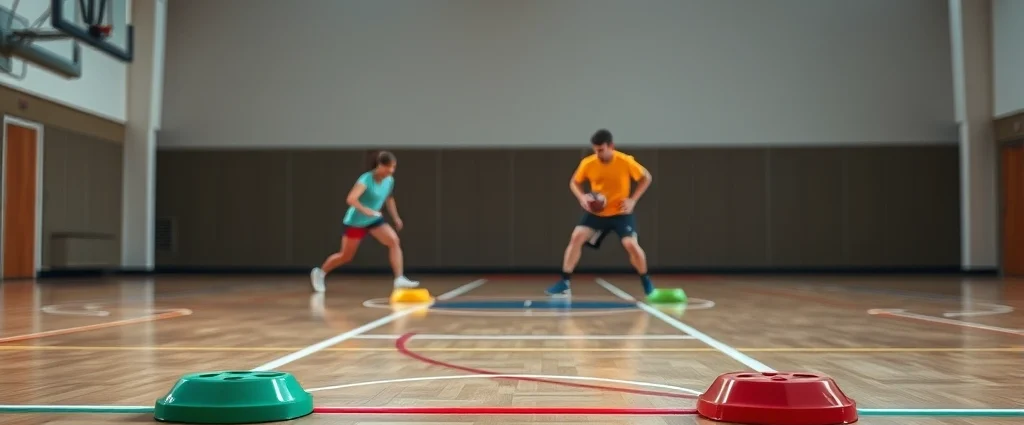

4 Corners Game Tips: Expert Advice for Mastering This Classic
The 4 Corners game has captivated players for generations, blending physical activity, strategy, and quick decision-making into one thrilling experience. Whether you’re playing in a gymnasium, classroom, or outdoor space, understanding the nuances of this game can dramatically improve your performance and enjoyment. This comprehensive guide breaks down everything you need to know to dominate the competition and become a 4 Corners expert.
If you’re new to gaming or looking to expand your competitive skills, mastering games like 4 Corners teaches valuable lessons about spatial awareness, risk assessment, and tactical thinking. These same principles apply across various gaming genres, from board games to video games. Let’s dive into the strategies, tips, and expert advice that will transform you into a 4 Corners champion.

Understanding the Basics of 4 Corners
Before diving into advanced strategies, you need to understand the fundamental rules and mechanics of the 4 Corners game. The game typically involves one player (the “caller” or “it”) standing in the center of a space with their eyes closed or covered, while other players distribute themselves among four designated corners or areas. The caller counts down or announces a number, and during this time, players must move from their current corner to another corner without being caught.
The objective is straightforward: avoid being identified when the caller opens their eyes and points to a corner. If the caller correctly identifies a player in a particular corner, that player is eliminated or becomes the new caller, depending on the variation you’re playing. Understanding these basic mechanics is crucial for developing effective strategies. The game combines elements of luck, speed, and psychological gameplay that make it endlessly entertaining.
Different variations exist across regions and age groups. Some versions require players to move silently, while others allow running or jumping. Familiarizing yourself with the specific rules of your game version is essential before implementing advanced tactics. Check out our best board games of all time for more classic gaming options that share similar strategic elements.
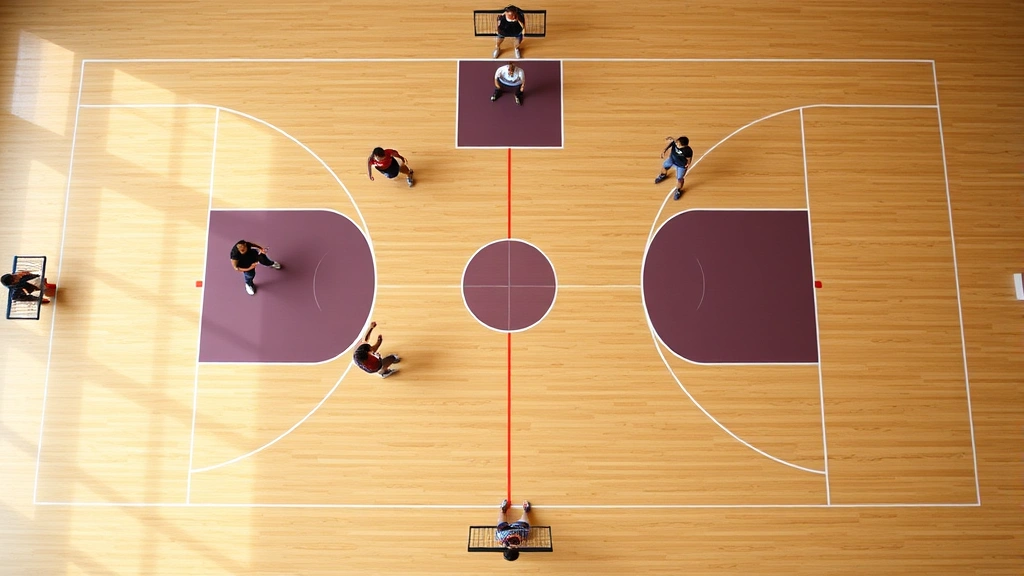
Essential Strategy Tips for Winning
Position Selection and Movement Patterns
One of the most critical aspects of 4 Corners strategy involves understanding corner dynamics and player distribution. Experienced players recognize that certain corners become psychological traps. Players tend to cluster in corners that feel “safer,” creating vulnerabilities. The key is identifying these patterns and exploiting them.
Always observe where other players naturally gravitate. If you notice three players consistently choosing the same two corners, the opposite corners become your advantage zone. By choosing the less-populated corner, you reduce your chances of being caught while increasing the likelihood that the caller will focus on crowded areas.
Timing and Movement Execution
The moment the caller begins their count is when timing becomes absolutely critical. Expert players develop a sense for the optimal moment to move—not too early, which telegraphs their position, and not too late, which creates hesitation and visible movement. Practice moving smoothly and deliberately to your chosen corner, minimizing unnecessary noise or visible motion.
Speed matters, but controlled speed is better than reckless rushing. Running frantically draws attention and makes you an easy target. Instead, move with purpose and confidence. This psychological element cannot be overstated; callers often target players who appear uncertain or panicked.
Reading the Caller’s Psychology
Successful 4 Corners players understand that the game is as much psychological as it is physical. Study the caller’s patterns. Do they favor certain corners? Are they influenced by where the previous eliminated player stood? Do they point randomly or follow some discernible logic?
After several rounds, you’ll notice tendencies. Some callers develop a bias toward specific corners—perhaps they consistently point to the corner to their left, or they alternate in a predictable pattern. Once you identify these habits, you can strategically avoid those corners. This meta-game awareness separates casual players from true experts.
Incorporating game analysis into your approach mirrors the strategic thinking required in best co-op games on Steam, where understanding opponent behavior is equally valuable.
Advanced Techniques and Positioning
Corner Geometry and Spatial Awareness
Expert players utilize spatial awareness to their advantage. If you’re in a rectangular space, understand that corners at different distances from the center create different strategic opportunities. Closer corners allow for quicker repositioning, while distant corners might be psychologically safer because players assume the caller won’t reach them in time.
Study the actual layout of your playing space. In a gymnasium, for example, diagonal corners create interesting dynamics. Players often underestimate the importance of understanding the exact distance between corners and the center point. By measuring these distances mentally, you can calculate risk-versus-reward scenarios for each movement decision.
Decoy Movements and Misdirection
Advanced players sometimes employ subtle decoy tactics. This doesn’t mean cheating—rather, it involves creating the impression of movement while maintaining your position, or vice versa. A slight shuffle of feet might make the caller believe you’ve moved when you haven’t. Conversely, remaining perfectly still in an unexpected corner can work because callers often assume everyone moves.
However, balance this technique carefully. Most versions of 4 Corners require genuine movement to different corners. Using misdirection responsibly means staying within the spirit of the game while maximizing your strategic advantage.
Group Dynamics and Alliance Strategies
In larger games with multiple players, understanding group dynamics becomes crucial. Observe if certain players consistently move together or if they tend to scatter. Some players might naturally follow others, creating predictable movement patterns. By recognizing these alliances, you can either follow their movements to safety or deliberately move opposite to them to claim safer territory.
Building informal alliances with other players—without explicit communication—involves mirroring their movements or choosing complementary corners. This distributes the group more evenly and reduces the likelihood that any single corner becomes a trap.
Mental Resilience and Pressure Management
As you advance in 4 Corners, you’ll face increased pressure, especially when you’re one of the last remaining players. Mental toughness becomes essential. Expert players remain calm under pressure, making deliberate decisions rather than panicking and making obvious moves. Develop a pre-movement ritual or breathing technique to maintain composure when the stakes are highest.
For more insights on competitive gaming psychology, explore our Game Forge Daily Blog for articles on mental strategies in competitive play.
Common Mistakes to Avoid
Predictable Movement Patterns
The most common mistake players make is developing predictable movement patterns. If you always move clockwise, or if you consistently choose the same corner when nervous, experienced callers will exploit this. Vary your movements unpredictably. Sometimes move counterclockwise, sometimes skip corners, sometimes move to adjacent corners, and sometimes move to the opposite corner. This unpredictability is your greatest asset.
Overcommitting to Corners
Never become too attached to a particular corner strategy. If you notice that a corner is becoming a trap—where callers frequently point or where many players cluster—abandon it immediately. Flexibility and adaptability are hallmarks of expert players. The moment a strategy stops working, transition to a new approach.
Ignoring Environmental Factors
Environmental elements significantly impact gameplay. Poor lighting might make movement detection harder, benefiting stealthy players. Noise levels affect whether your movement is audible. Temperature and comfort influence your decision-making clarity. Expert players account for these environmental variables when formulating strategies.
Failing to Observe and Learn
Many players repeat the same mistakes across multiple rounds without analyzing what went wrong. Successful players treat each game as a learning opportunity. After elimination, watch remaining players carefully. Note who gets caught and why. Identify patterns in the caller’s behavior. This continuous learning process is what separates champions from casual participants.
Neglecting Physical Fitness
While 4 Corners isn’t an ultra-intense sport, basic physical fitness matters. Players who can move quickly and maintain balance have advantages over those who are sluggish or uncoordinated. Regular physical activity, particularly exercises that improve agility and reaction time, will enhance your 4 Corners performance. This applies whether you’re building a gaming PC for esports or training for physical games—preparation matters.
Underestimating Psychological Pressure
Many players underestimate how psychological pressure affects decision-making. When you’re down to the final few players, the pressure intensifies dramatically. Without proper mental preparation, you might make irrational choices. Practice maintaining composure through visualization techniques and pressure simulations during training sessions.
Training Regimens for 4 Corners Excellence
Becoming truly exceptional at 4 Corners requires deliberate practice. Establish a training regimen that addresses multiple aspects of the game. Start with basic movement drills, focusing on smooth, controlled transitions between corners. Progress to decision-making drills where you practice identifying corner patterns and responding appropriately.
Incorporate reaction time training into your routine. Simple exercises like catching a falling ruler or playing quick-response video games can sharpen your reflexes. Mental training is equally important—spend time visualizing successful games, practicing calm breathing, and developing psychological resilience.
Play regularly against different opponents to experience various playing styles. Each opponent teaches you something new about adapting your strategy. Join local gaming communities or school groups where 4 Corners is played frequently. The more experience you accumulate, the more intuitive your strategic decisions become.
Consider recording your games to analyze your performance. Understanding how you move, where you tend to position yourself, and what mistakes you repeat is invaluable. Video analysis reveals patterns you might not notice during live play. This technique is similar to how esports professionals analyze their gameplay—check out our guide on how to record gameplay on PC for technical insights that can apply to recording 4 Corners matches.
Variations and Advanced Rule Sets
Different regions and communities have developed unique variations of 4 Corners, each requiring slightly different strategies. Some versions include power-ups or special roles—like a “safe corner” that changes each round, or a “double move” card that allows one extra movement. Understanding these variations helps you adapt your expertise across different game formats.
Speed variations also exist. Some games require players to move during the count, while others allow movement only after the count ends. Silent versions eliminate audio cues, making visual stealth crucial. Outdoor versions on larger spaces change the dynamics entirely. Expert players develop versatility by mastering multiple rule sets and understanding how each variation affects optimal strategy.
Competitive 4 Corners tournaments sometimes employ tournament-specific rules designed to increase skill differentiation. Familiarizing yourself with these advanced rule sets gives you a competitive edge. Research tournament standards in your region and practice accordingly.
FAQ
What’s the best corner to choose in 4 Corners?
There’s no universally “best” corner—success depends on reading the caller’s patterns and observing where other players distribute themselves. The best corner is whichever one the caller is least likely to choose combined with wherever fewer players have moved. Vary your corner selections to remain unpredictable.
How can I improve my movement speed in 4 Corners?
Practice controlled movements repeatedly. Focus on explosive but coordinated steps rather than frantic running. Incorporate agility drills into your training routine, such as ladder drills, cone drills, and reaction time exercises. Speed is only valuable if it’s controlled and purposeful.
Is there a mathematical strategy to 4 Corners?
While luck plays a role, probability and game theory do apply. Understanding distribution patterns, calculating risk-to-reward ratios for each corner choice, and recognizing caller bias all involve mathematical thinking. However, the game’s psychological elements often outweigh pure mathematical calculation.
How do I stay calm under pressure in the final rounds?
Develop a pre-movement ritual like deep breathing or positive self-talk. Practice visualization techniques where you imagine successful final-round performances. Regular exposure to high-pressure situations through competitive play gradually builds psychological resilience. Remember that pressure is temporary—focus on executing your strategy regardless of circumstances.
Can I play 4 Corners with just two people?
Traditional 4 Corners requires at least three players (one caller and at least two others to move between corners). With only two people, the game becomes too predictable. Most communities recommend at least five to six players for optimal gameplay and strategy depth.
What’s the difference between 4 Corners and other elimination games?
4 Corners uniquely combines spatial strategy, psychological gameplay, and physical movement. Unlike games such as tag or hide-and-seek, 4 Corners constrains movement to specific locations, adding a puzzle-like element. This makes it more about prediction and reading opponents than pure athleticism.
How long does a typical 4 Corners game last?
Game duration depends on player count and rules. With five to ten players, expect 10-15 minutes per game. Larger groups might take 20-30 minutes. Tournament formats often use multiple rounds with time limits to ensure fairness and consistent pacing.