

Top History Games of 2024: Expert Selection
2024 has been an exceptional year for history games, offering players immersive experiences that blend educational value with compelling gameplay. Whether you’re a strategy enthusiast, narrative-driven fan, or someone who loves exploring historical periods, this year’s releases have delivered unforgettable adventures across centuries and continents. From meticulously researched settings to imaginative alternate history scenarios, these titles prove that historical gaming has never been more engaging or diverse.
The gaming industry has shown remarkable commitment to historical authenticity while maintaining entertainment value. Developers have invested in extensive research, consulting with historians and archaeologists to create worlds that feel lived-in and authentic. Whether depicting ancient civilizations, medieval kingdoms, or modern historical events, the best history games of 2024 offer players opportunities to learn while they play, making education an inherent part of the gaming experience rather than a secondary concern.
What Makes a Great History Game
Understanding what constitutes an excellent history game requires examining several critical factors. Authenticity serves as the foundation—players appreciate when developers demonstrate genuine research and respect for historical periods. However, pure historical accuracy must balance with engaging gameplay mechanics. The most successful titles from 2024 achieve this delicate equilibrium, presenting historically grounded narratives while maintaining the interactivity that makes gaming unique.
Narrative depth separates memorable history games from forgettable ones. Players want to understand not just what happened, but why it mattered and how it affected people’s lives. The exceptional history games released this year feature compelling character arcs, moral complexity, and storytelling that resonates emotionally. Developers have increasingly recognized that history isn’t about dates and battles alone—it’s about human experiences, cultural exchanges, and the consequences of decisions made centuries ago.
Gameplay mechanics should reinforce historical themes rather than contradict them. Whether through resource management in civilization builders, dialogue choices in narrative adventures, or tactical combat in war games, mechanics should feel integral to the historical setting. The best titles from 2024 demonstrate how innovative game design can illuminate historical concepts, making abstract historical ideas tangible and understandable through interactive play.
Visual presentation and sound design deserve particular attention in historical games. Authentic architecture, period-appropriate clothing, and accurate musical compositions create immersive environments. When you hear the clash of medieval weaponry or see historically accurate city layouts, the suspension of disbelief strengthens, and the educational value increases significantly. This year’s releases showcase remarkable attention to these details.

Strategy and Empire Building Titles
Strategy games have always been natural vehicles for historical exploration, allowing players to reshape history through their decisions. 2024 brought several standout entries in this genre that combine deep strategic gameplay with historical authenticity. These titles challenge players to manage resources, navigate diplomacy, and command armies while remaining grounded in historical realities.
Empire building games from this year demonstrate how player agency can create emergent historical narratives. Rather than following predetermined paths, players make choices that alter the course of civilizations. Whether negotiating treaties, managing trade routes, or conducting military campaigns, strategy games offer unique opportunities to explore how individual decisions ripple through history. The complexity of these systems reflects the genuine intricacy of historical governance and warfare.
Multiplayer strategy experiences have evolved significantly, enabling players to compete or cooperate in recreating historical scenarios. Competitive modes pit players against each other in faithfully recreated historical conflicts, while cooperative modes allow friends to build civilizations together. These social dimensions add replay value and create shared experiences that extend far beyond single-player campaigns.
Resource management mechanics in 2024’s strategy titles authentically reflect historical economic constraints. Players must balance military expenditure against civilian welfare, agricultural production against industrial development, and expansion against stability. These systems teach valuable lessons about how historical civilizations navigated similar trade-offs, making strategy games surprisingly educational despite their entertainment focus.
Narrative-Driven Historical Adventures
Story-focused history games have flourished in 2024, delivering experiences that prioritize character development and emotional engagement. These titles often feature branching narratives where player choices significantly impact outcomes, creating personalized historical experiences. Rather than watching history unfold, players actively participate in shaping narrative outcomes through dialogue choices and moral decisions.
Character-driven narratives in this year’s releases explore historical periods through intimate personal stories. Instead of focusing exclusively on famous historical figures, many games center on ordinary people experiencing extraordinary times. This approach humanizes history, making distant centuries feel relevant and relatable. Players develop genuine emotional connections to characters, caring deeply about their fates and the consequences of their decisions.
Dialogue systems have become increasingly sophisticated, featuring nuanced conversations that reflect historical communication styles and cultural contexts. Voice acting quality has improved dramatically, with talented performers bringing authenticity to historical characters. When combined with well-written scripts that avoid modern anachronisms, these elements create deeply immersive narrative experiences that rival acclaimed films and television series.
Moral ambiguity in historical narratives reflects the complexity of actual history. Rather than presenting clear good-versus-evil dichotomies, 2024’s narrative-driven history games explore ethical gray areas. Players encounter situations where all choices have consequences, reflecting how historical figures faced genuinely difficult decisions without obvious correct answers. This nuance deepens engagement and encourages players to think critically about history.
Ancient Civilizations and Archaeological Wonders
Games exploring ancient civilizations have captivated audiences in 2024, offering windows into lost worlds and forgotten cultures. From Mesopotamia to ancient Egypt, from the Indus Valley to pre-Columbian Americas, these titles celebrate human achievement across diverse ancient societies. Developers have invested heavily in archaeological research, consulting experts to ensure cultural accuracy and respectful representation.
Ancient Egypt continues to fascinate gamers, and this year’s releases offer fresh perspectives on this iconic civilization. Rather than retreading well-worn paths of pharaohs and pyramids, innovative titles explore daily life, religious practices, and the genuine complexity of Egyptian society. Players might manage temples, navigate bureaucratic hierarchies, or participate in trade expeditions, experiencing ancient Egypt through varied lenses.
Mesopotamian settings have gained prominence, with games exploring the earliest civilizations and the invention of writing. These titles often emphasize the role of cities, trade networks, and cultural exchange in shaping human development. The educational value is substantial—players learn about cuneiform, ziggurats, and the Code of Hammurabi while engaging in compelling gameplay.
Classical antiquity remains popular, with games exploring Greek city-states, the Roman Republic and Empire, and the Hellenistic world. 2024 releases demonstrate how classical settings can support diverse gameplay styles, from philosophical dialogue games exploring Stoic philosophy to tactical combat games recreating famous battles. The rich cultural heritage of classical antiquity provides endless inspiration for creative game design.
Archaeological gameplay mechanics have become increasingly sophisticated, allowing players to excavate sites, interpret artifacts, and reconstruct historical understanding. These systems authentically reflect how archaeologists actually work, making the process of historical discovery itself engaging and educational. Players develop appreciation for the meticulous work required to understand ancient civilizations.
Medieval and Renaissance Experiences
Medieval and Renaissance settings remain perennially popular, and 2024 delivered exceptional titles exploring these transformative historical periods. These eras provide rich material for historical games—complex feudal hierarchies, the clash between secular and religious authority, technological innovations, and cultural flourishing create naturally engaging scenarios.
Medieval games from this year move beyond fantasy tropes to explore genuine historical complexities. Players encounter realistic consequences of medieval economics, where famine and disease pose constant threats alongside military conflict. Political intrigue reflects actual medieval governance, with power struggles between nobility, clergy, and common folk creating dynamic social environments. These games respect the intelligence of players, avoiding oversimplified medieval stereotypes.
Renaissance titles celebrate the cultural rebirth that transformed European society. Games exploring this period emphasize artistic achievement, scientific discovery, and intellectual advancement. Players might commission artworks, patronize scholars, or navigate the complex politics of city-states competing for cultural dominance. These mechanics highlight how Renaissance achievements emerged from specific historical conditions and patron relationships.
Crusades and religious conflict receive nuanced treatment in 2024’s medieval history games. Rather than presenting simplistic religious narratives, these titles explore the genuine complexity of faith, politics, and cultural contact. Players encounter multiple perspectives on religious conflict, understanding how sincere believers on different sides genuinely believed they served righteous causes. This approach encourages critical thinking about how religion intersects with politics and power.
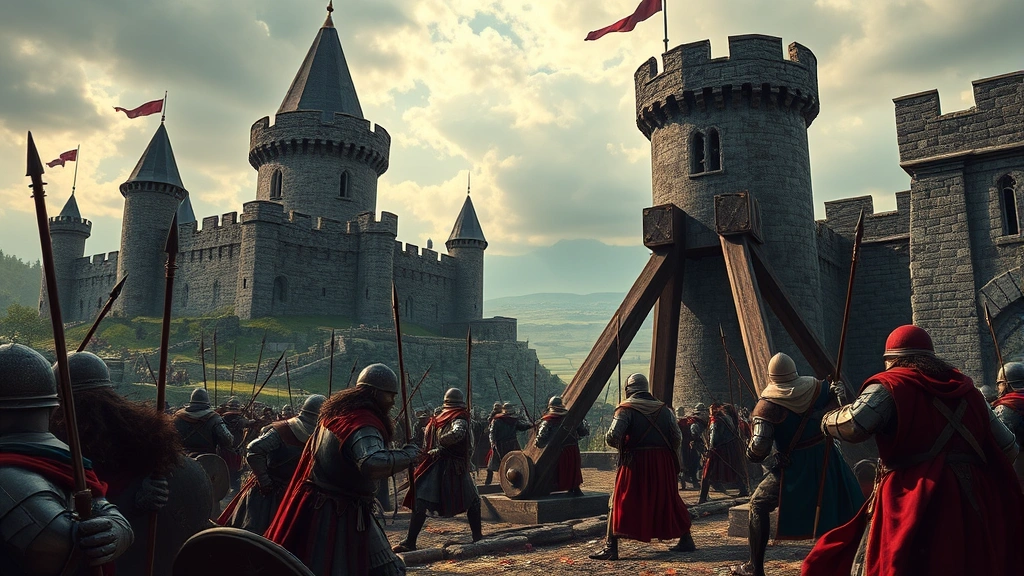
Castle building and siege mechanics in medieval games authentically reflect historical architecture and military strategy. Players learn about defensive positions, supply lines, and the genuine challenges of medieval warfare. When siege mechanics reward historically accurate tactics, players effectively learn military history through gameplay, making education organic rather than forced.
Modern History and Contemporary Settings
Modern history gaming has expanded significantly, with 2024 releases exploring twentieth-century conflicts, social movements, and technological revolutions. These games navigate sensitive historical topics with maturity, exploring difficult subjects like war, genocide, and social injustice with appropriate gravity and respect.
World War II remains a popular setting, but 2024’s releases offer fresh perspectives beyond familiar narratives. Games exploring the home front, resistance movements, or lesser-known theaters of war provide educational value while avoiding glorification of conflict. Several titles authentically portray the human cost of war through character-driven narratives that prioritize individual experiences over abstract military statistics.
Cold War settings have gained traction, with games exploring the ideological conflict, technological competition, and proxy wars that defined the era. These titles often feature espionage mechanics, highlighting how intelligence agencies shaped global events. Players navigate geopolitical tensions, understanding how the Cold War influenced everything from sports competitions to space exploration.
Social movement games have emerged as a distinct subgenre, exploring civil rights struggles, labor movements, and political revolutions. These titles often use mechanics that reflect the challenges activists faced—resource scarcity, public opinion management, and confrontations with entrenched power structures. By making players experience the genuine difficulty of social change, these games deepen understanding of activist struggles.
Recent history games exploring late twentieth and early twenty-first century events demonstrate how gaming can address contemporary historical topics. These titles must navigate sensitivity carefully, respecting those who lived through depicted events while exploring their historical significance. The best examples balance respect with honest engagement with difficult subjects.
Indies Leading Historical Innovation
Independent developers have become crucial innovators in historical gaming, often taking creative risks that larger studios avoid. The best indie games frequently explore historical themes with unique perspectives and experimental mechanics. Indie developers’ passion for historical subjects often exceeds their budgets, resulting in creatively ambitious projects that punch above their weight.
Indie history games often tackle niche historical periods and subjects that mainstream games overlook. Developers passionate about specific eras or events create games celebrating obscure historical moments, giving players access to knowledge they couldn’t easily find elsewhere. This democratization of historical representation ensures diverse voices and perspectives in gaming narratives.
Experimental gameplay mechanics in indie history games sometimes prove more innovative than triple-A releases. Developers unconstrained by commercial pressures explore unconventional approaches to historical storytelling. Some games use innovative user interfaces to convey historical concepts, while others employ abstract mechanics that reflect historical ideas metaphorically rather than literally.
Accessibility features in indie historical games often exceed mainstream standards. Developers committed to inclusivity ensure that players with various abilities can engage with historical content. Customizable difficulty levels, subtitle options, and colorblind modes demonstrate that historical games can be both authentic and accessible.
Community engagement distinguishes many indie history games. Developers actively solicit feedback from history enthusiasts and subject matter experts, continuously improving accuracy and depth. This collaborative approach creates games that feel crafted by passionate communities rather than distant corporate entities, fostering genuine connections between developers and players.
Many indie developers leverage multiplayer mechanics to enhance historical experiences, allowing players to cooperatively explore history or competitively engage in historical scenarios. These social dimensions extend game lifespans and create shared experiences that deepen investment in historical settings.
FAQ
What defines a history game?
History games encompass titles that explore historical periods, events, or settings as primary gameplay elements. These range from strategy games recreating historical conflicts to narrative adventures exploring historical characters and cultures. The defining characteristic is that historical context significantly influences gameplay mechanics and storytelling, rather than serving as mere aesthetic window dressing.
Are history games educational?
Absolutely. Quality history games provide genuine educational value while entertaining players. Through interactive engagement with historical scenarios, players develop understanding that traditional education sometimes fails to convey. However, games should supplement rather than replace formal historical education—they excel at creating engagement and interest rather than providing comprehensive historical knowledge.
Which 2024 history game offers the best authenticity?
Several 2024 releases demonstrate exceptional historical authenticity. The best choice depends on your interests—strategy enthusiasts should explore empire-building titles with rigorous historical research, while narrative fans might prefer character-driven adventures. Consulting IGN and GameSpot reviews helps identify which games align with your authenticity standards.
Do I need historical knowledge to enjoy history games?
No. The best history games accommodate both newcomers and history enthusiasts. Games designed for accessibility include tutorials explaining historical context, while optional deeper systems reward players who invest in understanding history. You can enjoy history games purely for entertainment while organically learning historical concepts through gameplay.
How do history games compare to historical fiction?
History games offer interactive experiences that historical fiction cannot—players actively shape narratives rather than passively consuming them. This agency creates distinct engagement. However, historical fiction excels at intimate character exploration and prose-based storytelling. Ideally, players enjoy both formats, as they complement each other in building historical understanding.
Can history games contain fictional elements?
Yes. Many acclaimed history games blend historical authenticity with fictional elements. Alternate history games explore “what if” scenarios, while others feature fictional characters navigating real historical events. The key distinction is transparency—games should clearly communicate which elements are historical versus fictional, allowing players to understand what’s grounded in reality.
What platforms offer the best history games?
History games appear across all platforms—PC, consoles, and mobile devices. PC offers the widest variety, particularly for strategy and indie titles. Consoles excel at narrative-driven experiences with cinematic presentation. Mobile gaming increasingly features quality historical games suited for casual play. Your preferred platform depends on your gameplay preferences and available time.
Are there history games for casual players?
Absolutely. While some history games feature complex mechanics and lengthy campaigns, many accommodate casual players. Games with adjustable difficulty, optional complexity, and shorter play sessions allow casual engagement. Additionally, board games and digital adaptations offer accessible historical gaming experiences perfect for casual players.
How do I discover more history games beyond 2024 releases?
Explore the GameForge Daily Blog for comprehensive coverage of historical gaming. Gaming databases like Metacritic allow filtering by genre and theme. Subreddits dedicated to history games and gaming communities provide recommendations and discussions. Developer websites often detail historical inspiration and research behind their games.
Should I play history games in chronological order?
Not necessarily. While some story-driven games feature sequels requiring previous knowledge, most history games stand independently. Play whatever historical period interests you most. However, if exploring a specific historical era across multiple games, chronological play sometimes enhances understanding by building foundational knowledge.