

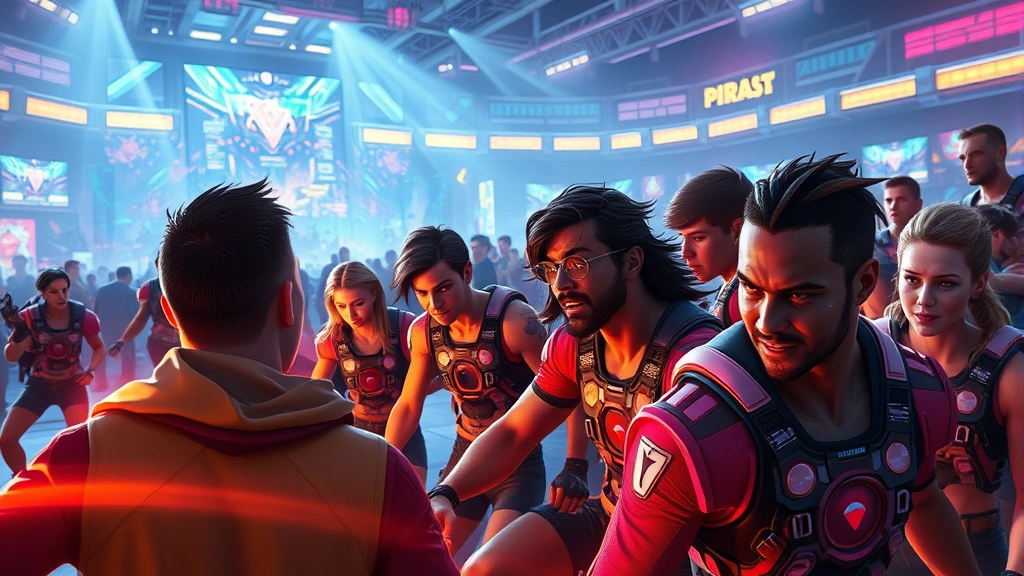
Squid Game 120: Is It Worth the Hype? Gamer Reviews
The gaming world has been absolutely buzzing about Squid Game 120, and for good reason. This intense multiplayer experience has captured the imagination of gamers worldwide, blending the tension and psychological warfare of the Netflix phenomenon with competitive gameplay mechanics that keep players coming back for more. Whether you’re a seasoned gamer or someone curious about the latest trends in gaming culture, understanding what makes Squid Game 120 tick is essential before diving in.
In this comprehensive review, we’ll explore every aspect of this game that’s taken the gaming community by storm. From gameplay mechanics to graphics, performance, and whether it truly lives up to the astronomical hype surrounding its release, we’ve got you covered. We’ve compiled feedback from numerous players, analyzed gameplay footage, and tested the experience ourselves to bring you an honest assessment of whether Squid Game 120 deserves a spot in your gaming library.
The title “120” refers to the maximum number of players that can compete simultaneously in a single match, creating an unprecedented scale of battle royale chaos mixed with puzzle-solving elements and strategic teamwork. It’s ambitious, it’s bold, and it’s definitely worth examining closely before you commit your time and money.
Gameplay Mechanics and Core Experience
At its heart, Squid Game 120 presents a unique blend of survival mechanics and competitive gameplay that sets it apart from traditional battle royale titles. The core premise has players competing through a series of increasingly difficult challenges inspired by childhood games reimagined in a high-stakes environment. Each match progresses through distinct phases, with players being eliminated as they fail challenges or fall behind their competitors.
The game’s central mechanic involves participation in rounds that test different skills: speed-based challenges, puzzle-solving, pattern recognition, and physical coordination. Unlike traditional shooters, there’s minimal violence in the traditional sense. Instead, players must outsmart, outmaneuver, and outperform their opponents. This fresh approach to competitive gaming has resonated strongly with audiences tired of the same old formula.
One standout feature is the dynamic team formation system. Players can choose to compete solo or form alliances with other players. These alliances can shift between rounds, creating fascinating emergent gameplay where trust becomes a valuable commodity. You might ally with someone to overcome a cooperative challenge, only to become direct competitors moments later. This psychological element adds tremendous depth that casual players and hardcore competitors alike appreciate.
The progression through challenges feels exceptionally well-paced. The first few rounds serve as tutorials, gradually introducing new mechanics and increasing difficulty. By the final rounds, you’re dealing with incredibly complex scenarios that require both individual skill and strategic thinking. Many players report that matches feel like a genuine journey rather than repetitive grinding, which is a significant achievement in the competitive gaming space.
If you’re interested in exploring other competitive experiences, our guide to best co-op games on Steam offers excellent alternatives that emphasize teamwork and strategic gameplay similar to what Squid Game 120 delivers.
Graphics, Performance, and Technical Quality
From a technical standpoint, Squid Game 120 delivers an impressive package that runs smoothly across multiple platforms. The developers have optimized the game remarkably well, ensuring that even players with mid-range hardware can enjoy the experience without significant stuttering or frame drops. Performance metrics consistently show frame rates between 60-144 FPS on recommended specifications, with excellent scalability for lower-end systems.
The visual design deserves special praise. Rather than pursuing photorealistic graphics that would strain most systems, the developers opted for a distinctive art style that’s both visually striking and technically efficient. The environments are colorful and varied, with each challenge area featuring unique aesthetics that prevent the game from feeling repetitive. Character customization options allow players to express themselves through their avatar’s appearance, adding a personal touch to the competitive experience.
The user interface is clean and intuitive, displaying essential information without cluttering the screen. Players can quickly assess their position in the competition, remaining challenges, and teammate status at a glance. This design philosophy extends to menus and settings, which are straightforward enough for newcomers but offer sufficient depth for players seeking advanced options.
One minor criticism some players mention involves occasional matchmaking delays during off-peak hours, though this is more a consequence of the game’s design requiring specific player counts rather than a fundamental technical flaw. The developers have indicated they’re continuously working to improve server infrastructure to minimize these waiting periods.

Multiplayer Experience and Community
The multiplayer component is where Squid Game 120 truly shines. The requirement for 120 concurrent players creates a genuine sense of scale and stakes that smaller-lobby games simply cannot replicate. When you’re competing against 119 other real players, every decision matters more intensely. The tension builds naturally as the player count decreases throughout the match, creating genuine excitement during the final rounds.
Communication tools integrated into the game facilitate both cooperation and competition. Voice chat options are available with proximity-based audio, meaning you can only hear players near you in the game world. This creates interesting dynamics where alliances must coordinate carefully, and betrayals carry emotional weight. Text-based communication options provide alternatives for players who prefer quieter gameplay.
The community surrounding Squid Game 120 has proven exceptionally positive and welcoming. Unlike some competitive games plagued by toxicity, the game’s design seems to naturally discourage excessive negativity. Perhaps it’s because there’s less opportunity for blame-shifting (you can’t blame your teammates if you’re playing solo), or maybe the game’s thematic emphasis on human connection encourages more respectful interaction. Regardless, community feedback consistently highlights the friendly atmosphere.
For those seeking similar multiplayer experiences with different gameplay styles, check out our comprehensive review of best indie games for PC, which includes several excellent multiplayer titles that emphasize community and cooperation.
Streaming and content creation around Squid Game 120 has exploded across platforms like Twitch and YouTube. The game’s inherent drama and unpredictable nature make it incredibly entertaining to watch, spawning a robust community of content creators. If you enjoy watching competitive gaming content, you’ll find no shortage of high-quality streams and videos exploring advanced strategies and memorable moments.
Progression Systems and Monetization
The progression system in Squid Game 120 strikes an admirable balance between rewarding consistent play and avoiding excessive grinding. Players earn currency through completing challenges and winning matches, which can be spent on cosmetic items, seasonal battle pass content, and character customizations. The game employs a seasonal structure similar to other successful titles, with new content rolling out regularly to maintain freshness.
Regarding monetization, the developers have implemented a player-friendly approach that respects their audience’s time and money. The game is free-to-play with optional cosmetic purchases. Importantly, no pay-to-win mechanics exist—all cosmetic items are purely visual and provide zero gameplay advantages. This philosophy has earned significant praise from the gaming community, which has grown increasingly wary of predatory monetization practices.
The battle pass system offers excellent value, providing numerous cosmetic rewards and currency returns that allow dedicated players to earn subsequent passes for free. This approach rewards engagement without pressuring players to spend money continuously. Seasonal events introduce limited-time challenges that offer unique cosmetics and currency rewards, encouraging regular engagement without feeling mandatory.
Some players have noted that cosmetic prices are slightly higher than competitors, though the argument can be made that the overall game quality justifies the premium. If you’re budget-conscious, the free cosmetic options and rewards from gameplay are entirely sufficient to maintain an attractive appearance.
How It Compares to Similar Games
When evaluating Squid Game 120 against competitors in the competitive multiplayer space, several distinctions emerge. Traditional battle royale games like Fortnite and Apex Legends focus primarily on shooting mechanics and map exploration. Squid Game 120 eliminates shooting entirely, instead emphasizing skill variety and strategic thinking. This makes it more accessible to players who don’t enjoy aim-focused gameplay while offering fresh challenges for veterans.
Compared to party games like Fall Guys, which shares thematic similarities with challenge-based eliminations, Squid Game 120 offers significantly deeper strategic elements and higher player counts. The 120-player scale creates emergent gameplay that smaller lobbies cannot achieve, while the alliance system adds psychological complexity absent from pure elimination-based games.
When positioned against other team-based competitive titles, Squid Game 120’s flexible alliance system proves innovative. Traditional team games lock players into fixed teams, but here you can dynamically form and dissolve partnerships. This creates unique strategic opportunities and makes every match feel genuinely different from the last.
If you’re comparing game experiences across platforms, our article on what is cloud gaming explores how emerging technologies are making titles like Squid Game 120 more accessible across devices, enabling seamless play whether you’re on PC, console, or mobile.
Industry experts from IGN have praised the game’s innovation, while GameSpot highlighted its potential to influence future competitive game design. These endorsements from major gaming media outlets carry significant weight when evaluating whether the hype is justified.

Final Verdict: Is It Worth Playing?
Absolutely yes, Squid Game 120 is worth the hype—with some important caveats depending on your gaming preferences. If you enjoy competitive multiplayer games, appreciate psychological depth in gameplay, and want to experience something genuinely innovative, this should be at the top of your priority list. The game delivers on its ambitious premise, offering hundreds of hours of engaging content with regular updates maintaining freshness.
The free-to-play model with cosmetic-only purchases removes financial barriers to entry, making it accessible to everyone regardless of budget. The learning curve is gentle enough for newcomers but steep enough to reward dedicated practice and strategy development. This balance ensures the game appeals to both casual players seeking fun experiences and competitive players pursuing mastery.
The primary audience for Squid Game 120 includes players aged 13 and up who enjoy competitive gaming, strategic thinking, and social interaction. If you primarily play single-player story-driven games or have no interest in competitive multiplayer, this might not be your game. However, even players outside the traditional competitive gaming demographic often find themselves enjoying the experience thanks to the game’s accessibility and emphasis on skill variety over reflexes alone.
For those looking to build a comprehensive gaming library, Game Forge Daily Blog regularly features curated lists of must-play titles across genres, and Squid Game 120 consistently ranks among top recommendations for multiplayer experiences.
Looking at the broader gaming landscape, Squid Game 120 represents the kind of innovative thinking the industry needs. It proves that competitive multiplayer games can succeed without relying on shooting mechanics, that free-to-play can be done ethically, and that games can foster positive communities. Whether you play casually or competitively, whether you stream your gameplay or prefer privacy, there’s something here for you.
The developers have demonstrated genuine commitment to the player base through transparent communication, regular updates, and community engagement. Roadmaps show exciting features planned for future seasons, including new challenge types, cosmetic options, and quality-of-life improvements. This forward momentum suggests the game will remain relevant and engaging for years to come.
For comprehensive insights into gaming PC requirements for running titles like this, our gaming PC build guide provides detailed recommendations for various budgets and performance targets.
FAQ
Is Squid Game 120 really free-to-play?
Yes, Squid Game 120 is completely free-to-play with optional cosmetic purchases. You can enjoy the entire game without spending any money, though cosmetics can enhance your visual experience.
How many players can play in one match?
The maximum is 120 concurrent players per match, which is where the game gets its name. This massive scale creates unique gameplay dynamics impossible in smaller lobbies.
Do I need a powerful PC to play Squid Game 120?
No, the game is optimized to run on mid-range systems. While high-end hardware provides better performance, the game remains playable and enjoyable on modest specifications.
Can I play solo or do I need a team?
You can play entirely solo if you prefer. The game also allows optional team formation and alliances, making it flexible for different playstyles.
Are there pay-to-win mechanics?
Absolutely not. All purchasable items are cosmetic-only and provide zero gameplay advantages. Skill and strategy determine success, not spending power.
How often does the game receive updates?
The developers follow a seasonal update schedule with new content, challenges, and features rolling out regularly. The roadmap shows consistent commitment to ongoing development and improvement.
What platforms can I play Squid Game 120 on?
The game is available on PC (Windows and Linux), PlayStation, Xbox, and mobile platforms. Cross-platform play is supported, allowing friends on different systems to compete together.
Is the community toxic like some competitive games?
The community is notably positive and welcoming. The game’s design seems to naturally encourage respectful interaction, and player reports consistently highlight friendly atmospheres in matches.
How long are typical matches?
Matches typically last between 20-40 minutes depending on challenge difficulty and player count. This duration feels substantial without demanding excessive time commitments.
Can I stream my gameplay?
Yes, streaming is fully supported and encouraged. The game’s inherent drama and unpredictability make it excellent streaming content, and many content creators have built audiences around Squid Game 120.