
Top Bingo Game Patterns: Expert Insights & Winning Strategies
Bingo has captivated players for generations, but what separates casual players from strategic masters? The answer lies in understanding bingo game patterns—the mathematical and visual sequences that determine winning combinations. Whether you’re playing traditional 75-ball bingo, 90-ball variants, or digital versions, recognizing these patterns can dramatically enhance your gameplay experience and increase your competitive edge.
Modern bingo enthusiasts are discovering that pattern recognition isn’t just about luck; it’s a sophisticated skill that combines mathematical probability with visual acuity. From the classic straight line to complex geometric shapes, each pattern tells a story of strategic possibilities. In this comprehensive guide, we’ll explore the most effective bingo patterns used by experienced players, explain how they work, and provide actionable insights to elevate your game.
Understanding Bingo Game Pattern Basics
At its core, a bingo pattern is a specific arrangement of marked numbers on your card that constitutes a winning combination. The most fundamental pattern is the single line—five consecutive marked numbers in a horizontal, vertical, or diagonal arrangement. However, modern bingo games have evolved far beyond this simple structure, introducing dozens of variations that challenge players to think strategically about their number selection and card management.
The beauty of understanding bingo patterns lies in recognizing that each pattern has different probability rates. Some patterns are more likely to occur early in a game, while others require deeper into the number draw. Experienced players analyze these probabilities before the game begins, helping them decide which cards to purchase and how many to manage simultaneously. When exploring competitive gaming options, you might also enjoy reading about best switch multiplayer games that offer similar strategic depth.
The standard 75-ball American bingo card features a 5×5 grid with the center square typically marked as a free space. This free space significantly impacts pattern probability calculations, as it’s automatically marked on every card. Understanding how this free space interacts with different patterns is crucial for developing winning strategies.

Classic Line Patterns Explained
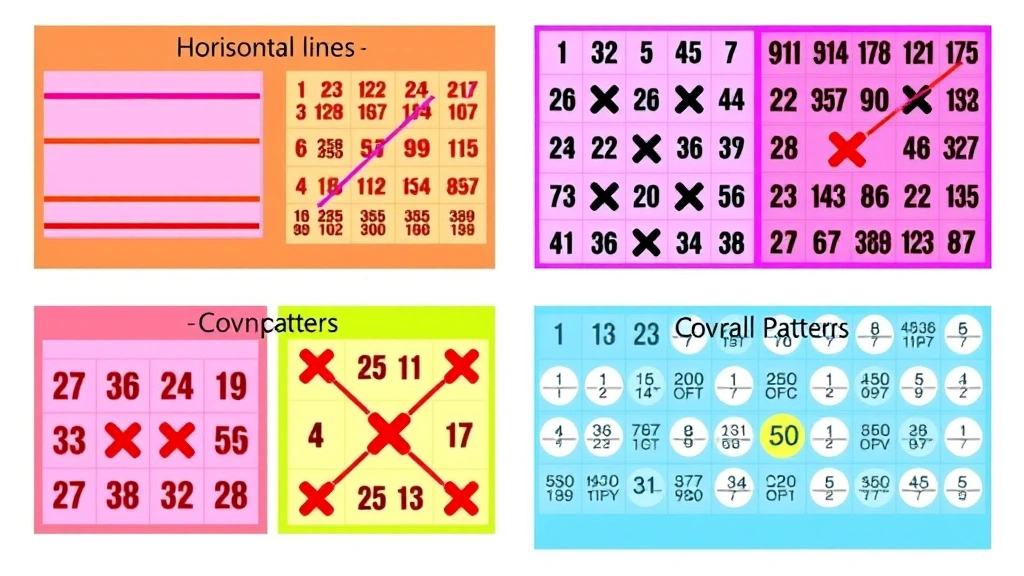
Horizontal lines are among the easiest patterns to achieve because players only need to mark five consecutive numbers in a single row. The top row requires numbers from the B column (1-15), the middle row uses numbers from the I column (31-45), and the bottom row features O column numbers (61-75). Each row has different probabilities based on the distribution of called numbers.
Vertical lines operate similarly but across columns. The B column contains 15 possible numbers, the I column contains 15 numbers, and so forth. Many experienced players track vertical patterns more carefully because they often appear before other complex patterns in typical games. The diagonal patterns—from top-left to bottom-right or top-right to bottom-left—are slightly more challenging because they combine numbers from multiple columns, creating unique probability distributions.
The four-corner pattern requires marking the four corner squares of your bingo card: B1, B5, O1, and O5. Despite involving only four numbers plus the free center space, this pattern is surprisingly difficult because the corner numbers are distributed across multiple columns, and their selection is relatively random throughout a typical game. Many experienced players monitor this pattern less aggressively than line patterns.
Board game enthusiasts often appreciate bingo’s strategic elements, which share similarities with traditional tabletop gaming. The pattern recognition required in bingo translates well to other strategic games that demand spatial awareness and probability assessment.
Advanced Geometric Patterns
As bingo evolved, game organizers introduced increasingly complex patterns to maintain player engagement and create more challenging winning conditions. The X pattern requires marking both diagonals simultaneously—creating an X shape across your card. This pattern combines 9 marked squares (including the free center) and has moderate difficulty because it requires balanced distribution across multiple columns.
The postage stamp pattern involves marking any 2×2 square within your bingo card. This seemingly simple pattern actually creates multiple possible winning combinations, as players can form stamps in the corners or any adjacent four-square arrangement. The probability of completing a postage stamp varies significantly depending on which section of the card you’re tracking.
More complex patterns include the coverall or blackout pattern, which requires marking every single square on your card. This pattern is the most challenging and typically offers the largest prize pool. Games featuring coverall patterns often extend significantly longer than standard games, as achieving 25 marked squares requires considerable luck and time.
The inside square pattern demands marking the nine interior squares of your card (the entire card minus the outer border). This creates an interesting strategic element because players must avoid focusing too heavily on outer numbers while ensuring they mark enough inner numbers to complete the pattern. Many tournament players consider this pattern one of the most strategically interesting because it requires balancing multiple number distributions.
Strategic Pattern Selection
Successful bingo players develop sophisticated strategies for selecting which patterns to prioritize during gameplay. This decision-making process begins before cards are even purchased. Analyzing the prize structure, number of players, and pattern combinations can help you determine optimal card selection strategies.
When multiple patterns are possible on a single card, players must decide whether to pursue the pattern most likely to win or the pattern offering the largest prize. This creates fascinating strategic dilemmas that separate casual players from experienced competitors. Some players advocate for focusing on patterns that naturally complement each other—for example, pursuing both horizontal lines and the coverall simultaneously, as marking lines inevitably contributes to the coverall goal.
Card management becomes increasingly important when playing multiple cards simultaneously. Professional players often arrange their cards in specific ways, using color-coding or positioning strategies to track multiple patterns without confusion. The cognitive load of monitoring 6-12 cards at once while tracking 3-4 different patterns requires significant practice and mental discipline.
Experienced players from the party gaming community often bring bingo to social gatherings, and they’ve developed interesting variations and house rules that modify standard patterns. These adaptations demonstrate how flexible and customizable bingo patterns can be while maintaining the core strategic elements that make the game compelling.
Digital Bingo and Pattern Recognition
Digital bingo platforms have revolutionized how players interact with patterns. Online bingo games automatically highlight potential winning patterns as numbers are called, allowing players to focus on strategy rather than manual pattern tracking. This technological advancement has democratized competitive bingo, enabling newer players to compete effectively against experienced opponents.
Many digital platforms offer pattern variations unavailable in physical bingo halls. Computer-generated patterns can include complex geometric shapes, mathematical sequences, or themed patterns aligned with specific game versions. These digital innovations have attracted younger players to bingo, transforming it from a traditional game into a modern digital experience.
Mobile bingo applications feature real-time pattern recognition algorithms that instantly notify players when they’re one number away from completing multiple patterns simultaneously. This feature introduces new strategic considerations—players must decide whether to maintain focus on one pattern or attempt to complete multiple patterns before their opponents do.
The integration of bingo with family gaming platforms has created accessible versions suitable for players of all ages. These adaptations maintain pattern recognition elements while simplifying gameplay for younger audiences, introducing the next generation to strategic gaming concepts.
Probability and Pattern Mathematics
Understanding the mathematical foundation of bingo patterns separates casual players from serious competitors. Each pattern has a distinct probability distribution based on how many numbers must be called and which columns those numbers occupy. The B column contains numbers 1-15, I column contains 16-30, N column contains 31-45, G column contains 46-60, and O column contains 61-75.
Horizontal patterns have relatively straightforward probability calculations because all five numbers come from the same column. A top-row pattern requires five specific numbers from the 15 available B-column numbers. As more numbers are called, the probability of completing this pattern increases predictably.
Diagonal patterns present more complex probability scenarios because they combine numbers from all five columns. The probability calculations require considering the distribution of called numbers across multiple columns simultaneously. This complexity is why diagonal patterns typically appear later in games compared to horizontal or vertical lines.
The free center space dramatically impacts all pattern probabilities by guaranteeing one marked square on every card. This free space is particularly valuable for patterns incorporating the center square, such as X patterns or inside squares. Mathematically, the free space reduces the number of numbers needed to complete certain patterns from five to four, significantly improving completion probability.
Advanced players utilize probability charts and historical data from game analysis resources to inform their strategic decisions. These data-driven approaches have transformed bingo from a purely luck-based game into one requiring genuine mathematical analysis and strategic planning.
Professional Player Strategies
Tournament bingo players employ sophisticated strategies that combine pattern recognition, probability analysis, and psychological elements. The most successful professionals manage multiple cards without losing focus, maintain detailed mental maps of pattern progress across all cards, and adjust their strategies based on game progression.
Professional players often employ the daubing strategy, which involves systematically marking numbers in specific patterns rather than randomly. This approach helps prevent marking errors and ensures efficient pattern completion. Some professionals use colored markers to distinguish between different patterns, making visual pattern recognition faster and more accurate.
Card selection strategy proves critical in professional bingo. Experienced players analyze card distribution before purchasing, looking for cards with favorable number distributions for the specific patterns being played. Some professionals avoid cards with clustered numbers in certain columns, preferring more balanced distributions that improve probability across multiple patterns.
The psychological element of professional bingo involves maintaining focus during extended games while managing the stress of competing for significant prize pools. Top players develop mental techniques for maintaining concentration, managing emotions during near-misses, and recovering quickly from games where other players win.
Many professional bingo players also engage with strategic gaming communities where they exchange insights about pattern analysis and probability calculation. These communities have produced comprehensive guides to advanced bingo strategies that benefit players at all competitive levels.
Tournament circuits have emerged worldwide, with organized competitions featuring standardized pattern sets and prize structures. These professional competitions have elevated bingo to legitimate esports status, with players earning substantial prize money and sponsorships. Organizations like Bingo Games for Fun coordinate international tournaments featuring complex pattern variations and challenging competitive environments.
The competitive bingo scene has also attracted coverage from major gaming outlets. IGN and GameSpot have featured articles exploring the strategic depth of competitive bingo, helping introduce broader gaming audiences to the pattern recognition elements that make the game compelling.
Modern bingo technology has introduced electronic tracking systems that allow tournament organizers to verify pattern completion instantly and prevent disputes. These systems display real-time pattern status for all players, adding transparency to competitive matches while maintaining the excitement of close competitions.
FAQ
What’s the most common winning bingo pattern?
The single line pattern—whether horizontal, vertical, or diagonal—remains the most common winning pattern in traditional bingo games. These patterns are statistically more likely to be completed earlier in games, making them popular for shorter, casual matches. However, prize structures often favor less common patterns with higher difficulty levels.
How many bingo cards should I manage simultaneously?
Experienced players typically manage 3-6 cards simultaneously in casual settings, while professional tournament players may handle 6-12 cards. The optimal number depends on your pattern tracking ability, the complexity of patterns being played, and how quickly numbers are called. Most players find managing more than 12 cards simultaneously becomes counterproductive due to cognitive overload.
Does the free center space really affect winning probability?
Yes, significantly. The free center space is automatically marked on every card, reducing the numbers you need to mark for patterns incorporating the center square. For patterns like X patterns or inside squares, this free space improves your probability of completion by approximately 20% compared to patterns that don’t utilize it.
Are there bingo patterns designed specifically for online games?
Many digital bingo platforms feature exclusive patterns unavailable in traditional halls. These might include themed patterns, mathematical sequences, or complex geometric shapes that would be difficult to manage manually. Online platforms leverage their technological capabilities to offer innovative pattern variations that enhance gameplay variety.
How do professional players improve their pattern recognition speed?
Professional players practice extensively with timed pattern recognition exercises, develop systematic scanning techniques for their cards, and use color-coding systems to distinguish between different patterns. Many professionals also study historical pattern completion data to anticipate which patterns might complete earliest in specific game conditions.
Can pattern strategy really improve my bingo winning chances?
While bingo fundamentally depends on random number selection, strategic pattern analysis can improve your competitive position. Understanding pattern probability, managing multiple cards effectively, and selecting optimal card combinations based on pattern structures can increase your likelihood of winning compared to casual players using random strategies.